Factory-direct OEM & ODM configurations engineered for surgical repeatability, high thermal endurance during autoclave cycles, and micro-concentric bone penetration.







How next-generation metallurgical alloys, hermetic sealing technologies, and sensorless brushless DC (BLDC) motors are redefining the boundaries of operating room power tools.
For decades, surgical tool procurement relied heavily on unit acquisition expense. Contemporary hospital networks and hospital purchasing organizations (GPOs) evaluate handpieces based on per-procedure sterilization survival. Standard carbon-brush handpieces experience carbon accumulation, contact degradation, and thermal dissipation failures after 60–80 steam autoclave cycles (134°C at 2.2 bar). Modern high-durability surgical handpieces overcome this with potted brushless stators capable of surviving over 500 autoclave cycles, reducing handpiece replacement expenditures by up to 62% across a 5-year capital equipment depreciation cycle.
Thermal osteonecrosis occurs when cortical bone temperature surpasses 47°C for more than one minute during reaming or drilling. As an experienced OEM manufacturer, our research and development framework focuses on low-loss electromagnetic circuit design. By utilizing high-grade samarium-cobalt (SmCo) permanent magnets that retain magnetic flux density up to 250°C and balancing rotor assemblies to within G1.0 balancing standards, mechanical energy conversion reaches 88% efficiency. This direct drive control restricts handpiece surface heat rise to less than 2.0°C during continuous heavy-load acetabular reaming.
High-pressure saturated steam remains the harshest operating environment for electronic and electromechanical medical devices. Moisture penetration into the gear-train and planetary reduction stages leads to lubricant washout, gear tooth pitting, and catastrophic seizure. SNK designs its durable handpieces with triple-barrier dynamic fluorosilicone sealing rings and laser-welded austenitic medical-grade stainless steel housings, guaranteeing IPX8 and IPX9K ingress resistance against pulsating vacuum sterilizers and alkaline automated washer-disinfectors.
Analyzing technical hurdles faced by orthopedic instrument brand owners, multinational hospital conglomerates, and specialized medical device distributors.
With the European transition from MDD to CE-MDR (EU) 2017/745, dozens of historical suppliers lost market authorization due to insufficient clinical data, lack of Biocompatibility (ISO 10993) dossier updates, or non-compliant Quality Management Systems. Buyers face stockouts on essential bone drills and oscillating handpieces.
Tier-1 medical multinationals deliberately enforce proprietary quick-coupling chucks to tie hospital procurement to expensive consumables. Distributors demand high-precision OEM tool platforms with modular, universal Jacobs chucks, AO couplings, Hudson fittings, and Zimmer attachments on a unified drive handpiece.
Conventional medical contract manufacturers require 6 to 9 months to deliver modified tool speed profiles or customized cannulated inner shaft diameters. In contrast, agile OEM buyers seek partners equipped with in-house CNC wire cutting, 5-axis machining, and rapid clinical prototyping lead times under 4 weeks.
Long orthopedic reconstructive interventions, such as total knee arthroplasty (TKA) and spinal fusion, demand balanced handpieces that prevent hand tremor. Unbalanced motor weights or excessive tool kickback compromise osteotomy accuracy, causing micro-fracturing along prosthetic contact surfaces.
A deep-dive technical blueprint exploring how SNK solves critical operational failure modes in medical-grade powered surgical instruments.
The following matrix highlights the engineering distinctions between commodity market drills and SNK factory-controlled medical drive architectures validated according to ISO 6475, ASTM F2180, and DIN 13972 testing standards.
| Engineering Attribute | Standard Commercial Tool | SNK Medical Brushless System | Clinical Advantage |
|---|---|---|---|
| Motor Drive Type | Carbon-brush mechanical commutator | 3-Phase Sensorless Brushless DC (BLDC) | Zero brush particulate contamination; 5x longer motor lifespan. |
| Torque Stability | ± 8.5% deviation under load | < ± 1.5% deviation under load (ISO 6475) | Prevents stalling during deep cortical bone entry and reaming. |
| Maximum Rotational Runout | 0.08 mm to 0.12 mm at chuck | < 0.02 mm dynamic concentricity | Prevents hole ovalization and micro-fracturing during K-wire placement. |
| Continuous Thermal Rise | Surface temp climbs > 12.0°C in 3 min | Surface temp rise controlled < 2.0°C (ASTM F2180) | Eliminates risk of thermal necrosis in tissue contact areas. |
| Autoclave Life Span | 50 to 80 steam cycles before rebuild | 200+ validated cycles (134°C / 2.2 bar) | Dramatically reduces recurring cost of ownership for hospital OR suites. |
| Chassis Metallurgy | Standard 304 Stainless / Cast Alloy | Custom Aerospace Titanium & 316L VM Stainless | Enhanced resistance against enzymatic chemical corrosion and pit wear. |
To deliver high low-end torque for acetabular reaming (up to 20 N·m) while retaining the ability to switch into high-speed cannulated drilling (up to 1,600 RPM), our gearboxes utilize case-hardened 17-4 PH stainless steel planetary gears. Precision teeth geometry minimizes friction heat, guaranteeing seamless torque transfer with less than 0.5° of mechanical backlash.
Trauma intramedullary nailing relies heavily on accurate guide wires (K-wires). Any angular deviation in the drill's cannulated lumen creates friction, burr shedding, and guide wire galling. SNK leverages precision electrochemical gun-drilling to ensure an ultra-smooth internal cannulation bore (4.0 mm to 4.5 mm) with radial concentricity below 0.02 mm.
Repeated immersion in automatic washer-disinfectors exposes instruments to caustic enzymatic cleaning detergents (pH 10.5–12.0). To counter pitting corrosion, our surgical tool housings receive Physical Vapor Deposition (PVD) titanium aluminum nitride (TiAlN) or diamond-like carbon (DLC) surface treatments, preserving pristine surface passivation for years.
Overcoming cross-border medical device compliance hurdles with pre-validated Technical Documentation, EUDAMED traceability, and MDSAP certifications.
While legacy suppliers struggle to transition from MDD 93/42/EEC, SNK's complete surgical power portfolio is certified under the strict European Medical Device Regulation (CE-MDR) covering Class I, Class IIa, and Class IIb active surgical instruments. Every handpiece batch is assigned a Basic UDI-DI with full EUDAMED registration, enabling seamless import and distribution across all 27 EU member states.
Our Shanghai production center operates under audited Medical Device Single Audit Program (MDSAP) standards, covering five major global medical device jurisdictions: United States (FDA), Canada (Health Canada), Australia (TGA), Brazil (ANVISA), and Japan (MHLW/PMDA). This unifies process controls and allows OEM partners to leverage our quality dossiers for fast-track local country registrations.
Hospital operating rooms cannot afford downtime. SNK backs its global OEM distributor network with rapid-response logistics hubs. Our regional support frameworks guarantee dispatch of emergency backup handpiece sets within 24 hours, and maintain over 200 ready-to-ship standby power systems in stock.
Pioneering the convergence of surgical power mechanics with robotics navigation, wireless OR telemetry, and active haptic feedback.
As robotic-assisted orthopedic surgery (RAOS) transforms joint replacement, surgical power tools must evolve from purely manual handpieces into digitally responsive end-effectors. SNK’s technology roadmap integrates open CAN-bus and EtherCAT communication protocols into our brushless control boards, enabling sub-millisecond safety shutoff when surgical navigation systems detect drill emergence outside pre-planned 3D bone boundaries.
Future iterations of our durable surgical systems incorporate internal microchips that automatically monitor, log, and transmit real-time telemetry. Embedded temperature, vibration, and duty-cycle sensors record exact cumulative autoclave exposures and motor stress parameters, alerting central sterile supply departments (CSSD) before component fatigue causes an intra-operative stoppage.
Traditional nickel-cadmium and standard lithium-ion surgical battery packs suffer from thermal runaway concerns and capacity degradation during rapid re-charging. SNK is engineering next-generation solid-state lithium chemistry cells that endure aggressive steam sterilization without cumbersome external transfer shields, delivering up to 30% higher power-to-weight density for complex trauma procedures.
A reliable, scalable Chinese manufacturing powerhouse delivering high precision, certified cleanroom assembly, and custom brand engineering.
We adapt our motor controllers to your precise surgical discipline requirements. Whether you require an ultra-high-speed neurosurgical cranial mill operating at 80,000 RPM or a high-torque low-speed acetabular reaming drill configured to lock output at 300 RPM with 20 N·m of force, our firmware and gear ratios are fully configurable.
Establish a distinct brand presence in your target market. Our OEM services include custom CNC-machined ergonomic handle silhouettes, laser micro-engraving of brand logos, customized anodized color codings for quick surgical tray identification, and customized high-impact medical-grade sterilization cases (aluminum or PPSU).
While Western contract manufacturers demand 8 to 12 weeks for production re-tooling, SNK’s 16 automated lean manufacturing lines and vertically integrated component tooling enable rapid sample iterations within 3 weeks and volume batch production with guaranteed delivery timelines.
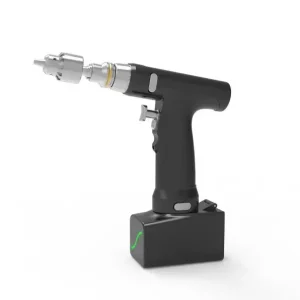
Precision-crafted attachments, high-torque carbon drills, and specialized trauma drivers designed for inter-operative reliability.






Authoritative answers to critical inquiries raised by hospital purchasing committees, orthopedic OEM project directors, and biomedical engineers.
