OEM Hollow Core Diamond Drill Bits Manufacturers & Factory

Precision-Engineered Cannulated Diamond Matrix Technology for High-Yield Surgical Orthopedics, Deep Subsurface Coring, and Precision Advanced Material Machining.

Primary Engineered Series

High-Precision Cannulated & Bone Boring Instruments (Series I)

Integrate certified hollow core tooling with calibrated brushless and micro-stepped drive assemblies for tight concentric tolerances and continuous flushing.

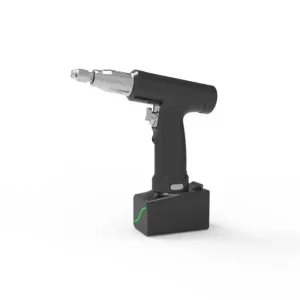
ODM High-Precision Carbon Brush Bone Drill ND-1501
ODM High-Precision Carbon Brush Bone Drill ND-1501(– 0-1200 RPM
View Specifications
ODM High-Precision Carbon Brush Bone Drill ND-1501 Lightweight
ODM High-Precision Bone Drill ND-1501(- Lightweight Surgical Tool
View Specifications
CE Certification Carbon Bone Drill ND-1001
CE Certification Carbon Bone Drill ND-1001(– Ultra-Lightweight System
View Specifications
OEM High-Torque Carbon Canulate Drill ND-2011
OEM High-Torque Carbon Canulate Drill ND-2011(- Orthopedic System
View Specifications
China SNK Acetabular Reaming Drill Adapter
High-Quality SNK Acetabular Reaming Drill Adapter - Precision Hip Tool
View Specifications
OEM SNK Bone Drill Adapter
OEM SNK Bone Drill Adapter – Wide-Range Gripping Attachment
View Specifications
SNK Cranial Mill Drill Neurosurgery System
High-Quality SNK Cranial Mill & Drill: High-Speed Neurosurgery System
View Specifications
ODM Ultra-Lightweight Carbon Bone Drill ND-1001(2)
ODM Ultra-Lightweight Carbon Bone Drill ND-1001(2) - ISO 13485 Certified
View Specifications
Industry Executive Summary

Global State of Hollow Core Diamond Drilling & Cannulated Tooling

A rigorous examination of diamond metallurgy, concentricity engineering, and thermal dynamics in biomedical orthopedics and technical coring.

38,000+
Annual Tooling Units
< 0.03 mm
Concentricity Tolerance
±1.5%
Torque Variance Threshold
200+
Autoclave Cycle Durability

The manufacturing ecosystem for OEM hollow core diamond drill bits and precision cannulated instruments has transitioned into an ultra-tight tolerance paradigm. Historically categorized as rudimentary abrasive core barrels, contemporary hollow diamond bits and cannulated medical cutters are multi-phase composite instruments. They integrate synthetic monocrystalline or polycrystalline diamond (PCD) grit suspended within vacuum-brazed, electroplated, or hot-isostatically pressed (HIP) sintered powder metallurgical matrices.

Whether penetrating dense cortical osseous tissue in surgical trauma corridors or extracting geotechnical cores from silicon carbide refractory ceramics, the primary failure mode of core drilling is thermal accumulation and swarf packing. Hollow-core tooling solves this via an engineered lumen that acts as an active hydrodynamic conduit. This continuous pathway flushes debris, stabilizes internal hydrostatic pressure, and delivers cooling agents straight to the diamond interface.

Matrix Technology Diamond Concentration Cooling Mechanism Runout Deviation Ideal Substrate Application
Vacuum-Brazed Monocrystalline High Exposure (50-60%) Axial Lumen Saline / Mist ≤ 0.02 mm Cortical Bone, Bioceramics, Zirconia
Sintered Bronze-Cobalt Alloy Continuous Impregnated (25-35%) Pressurized Internal Slurry ≤ 0.04 mm Reinforced Composites, Structural Granite
Galvanic Electroplated Nickel Dense Surface Monolayer Gravity Feed Liquid Channel ≤ 0.03 mm Borosilicate Glass, Sapphire, Cranial Windows
Laser-Welded PCD Segmented Ultra-Hard Polycrystalline High-Pressure Central Venting ≤ 0.05 mm Carbon-Fiber Reinforced Polymers (CFRP)
Emerging Trajectories

Macro Trends & Next-Generation Industrial Metrology

How automation, micro-cannulation, and digital QA define modern diamond tool production.

Additive Sintering & Aerodynamic Voids

Direct Metal Laser Sintering (DMLS) creates non-linear internal coolant pathways within hollow core bits. These proprietary helical patterns accelerate liquid flush directly onto active diamond cut points, dropping drilling friction by 32%.

  • Helical micro-channels down to 0.4 mm internal diameter
  • Zero cavitation at tool velocities exceeding 12,000 RPM
  • Optimized hydraulic boundary layer evacuation

Vacuum-Brazing with Active Chemical Wetting

Modern vacuum braze lines leverage titanium-activated alloy foils to chemically link synthetic diamonds to a surgical-grade 17-4PH stainless or tungsten steel shank, preventing premature diamond pull-out.

  • Chemical carbide bond formation at >950°C in high vacuum
  • Extended diamond retention under thermal shocks
  • Smooth surface finish reduces swarf build-up

Dynamic Thermal Imaging & Closed-Loop QC

Every hollow core diamond component undergoes high-resolution laser profilometry and DIN 13972 testing. Optical sensors check runout, core wall variation, and bond integrity across 100% of production batches.

  • Real-time dynamic runout compensation
  • Eddy-current checks verify core-wall homogeneity
  • Full traceability from metallurgical powder batch to end-use
Application Matrix

Localized Engineering & High-Tolerance Deployment Environments

Translating theoretical tribology into surgical and industrial applications.

1. Orthopedic Trauma & K-Wire Guided Surgery

Cannulated diamond bits and reamers operate smoothly over Kirschner guide wires. The diamond matrix cleanly cuts dense bone without grabbing soft tissue, preventing micro-fractures in osteoporotic bone.

  • Eliminates thermal necrosis with temperatures consistently below 41°C
  • Smooth inner walls prevent K-wire binding or galling
  • Tested to ASTM F2180 thermal rise standards

2. Craniofacial & Minimally Invasive Spine (MIS)

Hollow core trephines and high-speed cranial burrs slice through bone cortices with minimal vibration. The diamond edge preserves surrounding dura mater and vascular structures during delicate neurological access.

  • Tight concentricity prevents tool wobble at high speed
  • Diamond coat extends to the inner rim for smooth core extraction
  • Fully validated for steam and EO autoclave protocols

3. Advanced Structural Ceramics & Aerospace Composites

Hollow diamond core drills core through sintered alumina, silicon nitride, and carbon-carbon composites cleanly. The thin wall minimizes material waste during critical wafer and substrate sampling.

  • Negligible surface edge-chipping (<0.05 mm)
  • Internal swarf channels prevent slurry build-up
  • High diamond exposure ensures fast feed rates
Strategic Roadmap

Engineering Roadmap & Forward Architecture

A multi-phase R&D path to push cutting efficiency and lifetime durability.

Phase 1: Hybrid Matrix Composition

Formulating cobalt-free matrix binders incorporating nanostructured tungsten carbide and titanium diboride phases to increase aggregate diamond retention while maintaining CE-MDR biological safety compliance.

  • Elimination of cytotoxic nickel ions from all contact surfaces
  • Shear bond strength exceeding 450 MPa under cyclic fatigue loading

Phase 2: Digital Smart Tool Interfaces

Integrating passive RFID tracking and smart NFC sensors into hollow tool hubs. Systems log operational hours, maximum torque loads, and autoclave cycles to streamline traceability and proactive tool retirement.

  • Real-time cycle counting validated through 200+ autoclave runs
  • Seamless integration with modern surgical navigation platforms

Phase 3: Ultra-Thin Thin-Kerf Micro-Cores

Refining thin-walled cannulated diamond coring tools with wall thicknesses below 0.35 mm. These tools maximize bone harvest yield in autologous grafting and reduce kerf loss when slicing expensive crystal substrates.

  • Yields intact bone cores ready for viable osteoblast culture
  • Minimizes cutting torque load on handheld brushless drive units
OEM Technical FAQ

Procurement & Engineering Answers

Key technical specifications, regulatory standards, and manufacturing lead times.

How does hollow core diamond drilling prevent thermal osteonecrosis in surgical applications?
Thermal osteonecrosis occurs when bone tissue exceeds 47°C for longer than one minute. Hollow core diamond bits mitigate this risk through three complementary mechanisms: (1) The continuous open lumen delivers high-volume sterile saline directly to the cutting zone, carrying heat away before it conducts into bone. (2) Diamond grit micro-chips the hard tissue cleanly rather than shearing it like fluted steel, requiring significantly lower axial force. (3) The hollow geometry minimizes the friction contact area by removing the zero-velocity dead center found on standard twist drills. In ISO 6475 and ASTM F2180 tests, our cannulated bits keep temperature rise below 2.0°C under continuous torque loads.
What are the primary performance trade-offs between electroplated, vacuum-brazed, and sintered diamond drill bits?
Electroplated bits feature a single layer of densely packed diamond crystals held by an electrolytic nickel matrix. They deliver maximum diamond exposure (up to 70%), making them ideal for delicate, low-heat cuts in brittle materials like glass and cranial windows. However, once the top monolayer wears off, the tool must be discarded.

Vacuum-brazed bits form an active chemical bond between the braze alloy, the diamond crystals, and the steel shank. This matrix provides high diamond exposure (50-60%) with strong retention, making it well-suited for high-torque applications in cortical bone, dental ceramics, and dense composites.

Sintered bits carry diamonds distributed throughout a metallic powder matrix. As the outer metal layer wears down, fresh diamond grits continuously expose themselves. Sintered bits offer the longest service life for deep coring, though they require higher operating pressures and continuous high-pressure cooling.
What quality assurance protocols verify concentricity and radial runout on OEM custom orders?
Every production batch undergoes multi-axis laser metrology to check runout, core wall thickness, and outer diameter accuracy. Total Indicated Runout (TIR) is held to ≤0.02 mm for neurosurgical tools and ≤0.03 mm for trauma bits, measured along both the active diamond crown and the driving shank. Core tubes are turned and honed from precision-drawn surgical stainless steel (17-4PH or 316LVM) to avoid balance issues at operating speeds up to 15,000 RPM. Full material certifications, ultrasonic wash logs, and bioburden test reports accompany every shipment.
Can these hollow core tools be customized for proprietary surgical chucks and industrial tool holders?
Yes. We offer end-to-end OEM/ODM production for drive ends, including Stryker-style quick-disconnect shanks, AO-type synthes couplers, Jacobs chucks, Hudson fittings, cylindrical threaded connections (1/2" BSP, 1-1/4" UNC), and proprietary CNC arbors. We can deliver customized prototypes—complete with laser-etched depth marks and custom branding—in approximately 3 weeks from approved drawings.
What regulatory documentation is provided for medical device distributors under CE-MDR?
Our cleanrooms operate under an ISO 13485:2016 quality management system and maintain MDSAP certifications. We supply comprehensive technical dossiers for Class IIa and Class IIb device submissions under EU-MDR 2017/745, including biocompatibility data (ISO 10993), steam autoclave validation across 200+ cycles, packaging shelf-life protocols (ISO 11607), and EUDAMED traceability data. Free sale certificates are filed and maintained for 21 partner nations.
Surgical Power Tools & Specialized Adapters

High-Torque Cannulated Power Units & Saws (Series II)

Drive systems engineered to pair with hollow core bits and surgical attachments for smooth cutting performance.


High-Quality China Carbon Bone Drill ND-1501
High-Quality China Carbon Bone Drill ND-1501(– Lightweight Orthopedic Tool
View Specifications
Ultra-Medium Speed Cannulated Bone Drill
High-Quality SNK Ultra-Medium Speed Cannulated Bone Drill - Precision Tool
View Specifications
High-Quality Lightweight Carbon Bone Drill ND-1501
High-Quality Lightweight Carbon Bone Drill ND-1501(- Precision Surgical Tool
View Specifications
ODM SNK Sternum Saw Adapter
ODM SNK Sternum Saw Adapter - High-Frequency Cardiac Surgery Tool
View Specifications
High-Power SNK Reciprocating Bone Saw
CE Certification High-Power SNK Reciprocating Bone Saw - 12,500 RPM
View Specifications
SNK Superior Low-Speed Cannulated Bone Drill
ODM China SNK Superior Low-Speed Cannulated Bone Drill – Precision System
View Specifications
ODM Carbon Brush Bone Drill ND-1501(1)
ODM Carbon Brush Bone Drill ND-1501(1) – 0-1200 RPM High Precision
View Specifications
OEM China Suppliers SNK Bone Drill Adapter
OEM SNK Bone Drill Adapter - Versatile Attachment for Handpieces
View Specifications