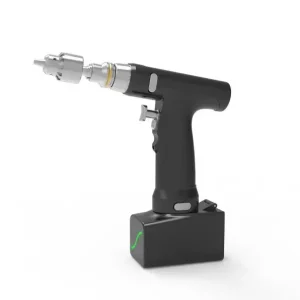
Direct OEM delivery from ISO 13485:2016 verified cleanroom manufacturing facilities. Browse our standard modular configurations below.
From pneumatic reliance to closed-loop fluid-power and electromagnetic-hydraulic hybrids, bone cutting demands higher kinetic precision with minimal thermal collateral damage.
Traditional high-friction bone sawing raises temperatures above 47°C, instigating bone cell death. Next-generation hydraulic and reciprocating mechanisms utilize high stroke frequency with micro-amplitude tuning to maintain temperatures below 41°C (ASTM F2180 compliant), ensuring rapid postoperative osteointegration.
Hydraulic reciprocating saws and adapters overcome the torque stalling prevalent in battery-driven micro-motors during heavy cortical bone penetration or thick titanium plate removal. Stable hydraulic pressure profiles guarantee uniform linear speed under sudden bone-density variations.
Enduring 200+ high-pressure steam autoclave cycles at 134°C demands medical-grade fluororubber micro-gaskets and dual dynamic lip seals. Modern factories ensure zero fluid leakage and an adverse event rate well under 0.03 ppm across clinical lifespans.
Purchasing directors, biomedical procurement bodies, and private-label OEMs assess systemic manufacturing resilience, regulatory documentation, and design adaptability.
European and global distribution channels require seamless integration with the EUDAMED database, comprehensive Risk Assessment files (ISO 14971), and Class IIa/IIb device certificates backed by notified bodies rather than legacy MDD declarations.
Hospitals run standardized theatre platforms. Sourcing teams prioritize modular quick-coupling attachments compatible with high-speed cannulated drills, acetabular reamers, sternum saw guides, and neurosurgical cranial burrs on a single unified console.
OEM brand buyers require customized stroke lengths (2.5mm to 4.2mm), adjustable speeds from 500 to 15,000 rpm, proprietary ergonomics, private laser etching, and custom-molded sterilizing containment boxes finalized within a 3-week prototype sprint.
How modern Shanghai smart factories have evolved beyond simple cost competitiveness to establish world-class manufacturing fidelity for orthopedic cutting tools.
Our intelligent smart manufacturing infrastructure integrates 16 automated production lines operating within an ISO 14644-1 Class 7 cleanroom environment. Every reciprocating saw shaft and transmission gear undergoes 5-axis CNC machining with tolerances calibrated down to ±0.002 mm. This precision minimizes friction vibration and cuts handpiece fatigue for surgeons during marathon orthopedic procedures.
In-house DIN 13972 bone drill accuracy testing and dynamic balancing benches ensure that reciprocating transmission error remains strictly below 0.03 mm even after 200 consecutive high-temperature autoclave cycles. Combined with real-time torque load monitoring, the factory maintains an ultra-low adverse event rate below 0.03 ppm across an annual output of 38,000 surgical sets.
Engineered for multi-specialty clinical utility spanning traumatology, cardiothoracic access, minimally invasive spine osteotomy, and revision arthroplasty.
Rapid, high-amplitude linear strokes enable rapid shaft resection through dense femoral and tibial cortical bone, reducing operating table exposure time and hemorrhagic shock in acute emergencies.
Coupled with dedicated safety guards, our reciprocating sternum systems make rapid, precise midline incisions through the sternum, safeguarding mediastinal soft tissue and underlying pericardial structures.
Specialized narrow reciprocating blades access deep intramedullary canals to extract stubborn bone cement matrices or failed prosthesis stems without compromising the structural integrity of host bone.
Micro-reciprocating saw profiles fit deep within tubular retractors, performing delicate pedicle decortication and facetectomy while keeping soft tissue heating well within safe tolerances.
Direct engineering answers on motor dynamics, customization, sterilization validation, and international regulatory readiness.
Integrate our modular medical tool assemblies into your hospital network or brand distribution catalog.