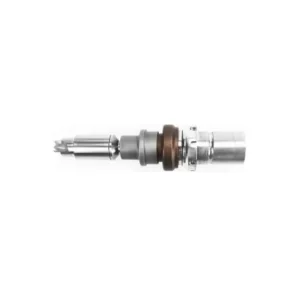
Engineered to integrate seamlessly with standard orthopedic power handpieces. Featuring high-cycle autoclavable seals, zero-lash couplings, and medical-grade metallurgy.



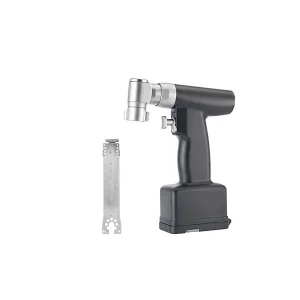




An authoritative deep dive into Joint Clinical Bone (JCB) reciprocating saw biomechanics, drive-train micro-commutation, and thermo-mechanical bone resection integrity.
In modern reconstructive arthroplasty, trauma fixation, and total joint arthroplasty revisions, the surgical reciprocating saw occupies a mission-critical position. Termed within clinical OEM design as the **JCB (Joint Clinical Bone) Reciprocating System**, this specialized class of surgical power tool transforms high-frequency linear excursion into rapid, non-deviating osteotomies. Unlike oscillating swing saws that sweep through an angular arc, reciprocating saws operate on a straight push-pull vector. This linear kinematics is indispensable for trans-femoral osteotomies, deep pelvic resections, sub-trochanteric realignments, and sternal entries where lateral clearance is strictly confined by neurovascular margins.
The primary clinical adversary in powered bone resection is thermal osteonecrosis. Scientific literature confirms that maintaining localized cortical bone temperatures below 47°C during instrumentation is vital to preserve osteocyte viability and avoid delayed non-union. The SNK OEM JCB Reciprocating Saw utilizes advanced micro-commutation algorithms combined with optimized tooth-geometry clearance angles. By operating at continuous velocities up to 12,500 to 15,000 cycles per minute (CPM) with a calibrated stroke length between 2.5 mm and 3.2 mm, the tool ejects micro-bone particulate efficiently before shear friction can elevate the osteotomy site temperature above 41°C under saline irrigation protocols.
Furthermore, our manufacturing plant incorporates dual-eccentric counterbalanced crankshafts into the handpiece nosepiece. Traditional reciprocating saws are prone to excessive longitudinal resonance, accelerating surgeon hand fatigue and causing micro-chatter along the cutting kerf. By utilizing aerospace-grade titanium-aluminum alloy (Ti6Al4V) pushrods and balancing counterweights to within 0.05 gram-millimeters, SNK delivers an ultra-smooth handpiece vibration curve (< 2.5 m/s² total vector sum), enabling sub-millimeter precision in complex reconstructive surgical corridors.
Hall-effect sensorless BLDC architecture provides instant peak torque without internal carbon friction, eliminating particulate emissions in sterile fields.
Engineered with multi-lip fluorosilicone gaskets and laser-welded austenitic housings, passing over 200 consecutive vacuum-steam autoclave cycles.
Hardened 17-4PH stainless steel ball-detent tool-less locking mechanism facilitates instantaneous blade orientation in 360° increments.
Navigating hospital capital expenditure shifts, distributor inventory resilience, and OEM private-label differentiation in regulated markets.
Healthcare institutions across Europe, the Americas, and the Asia-Pacific region are undergoing aggressive procurement restructuring. High interest rates, centralized national tender systems (such as the UK NHS Supply Chain, German G-BA reimbursement caps, and American IDN contracting), and rising labor costs have made single-source Tier-1 surgical power instruments commercially prohibitive. A single legacy Western-branded reciprocating saw system frequently demands list prices exceeding $18,000 to $25,000 USD per set, burdening secondary hospitals, trauma centers, and Ambulatory Surgical Centers (ASCs).
This financial reality has catalyzed massive global demand for tier-one qualified OEM/ODM manufacturing partners. Forward-thinking distributors no longer wish to act as mere sales agents for monolithic global conglomerates whose high margins leave limited distributor profits. Instead, specialized orthopedic distributors are sourcing directly from certified factories like SNK to establish proprietary private-label brands. By offering high-tier brushless reciprocating saws and modular cannulated drill systems at a 40% to 55% reduction in total cost of ownership (TCO), these regional distributors win major multi-year hospital tenders while expanding their gross margins.
A rigorous procurement audit evaluates more than initial acquisition cost; true lifecycle expenses are dictated by battery service longevity, reprocessing survival rates, and adapter modularity. Conventional surgical power systems lock healthcare facilities into proprietary consumables and closed battery architectures that fail after 80 to 120 autoclave cycles. Replacement battery packs are routinely billed at 30% of total handpiece capital cost.
SNK redefines this economic model. Our OEM JCB reciprocating saw ecosystem is built upon an open modular platform. One high-power brushless handpiece core can power reciprocating saw adapters, sternum saw guards, sagittal oscillating heads, and high-speed cranial burs via tool-less quick-disconnect couplings. Furthermore, our lithium iron phosphate (LiFePO4) and advanced nickel-metal hydride cell configurations are enclosed in hermetically insulated PEEK casings, maintaining over 80% original capacity after 300 automated autoclave sterilization cycles. This delivers demonstrable lifecycle savings that resonate forcefully with hospital biomedical engineering boards.
Every parameter is verified in our in-house DIN 13972 testing laboratory and audited under ISO 13485:2016 quality management frameworks.
| Performance Specification | JCB Brushless System (Ultra-Series) | JCB Carbon-Drive Platform | Clinical Verification Standard |
|---|---|---|---|
| Nominal Oscillation Frequency | 0 – 15,000 CPM (Infinitely Variable) | 0 – 12,500 CPM (Trigger Controlled) | DIN EN ISO 6475 Benchmarking |
| Effective Stroke Amplitude | 3.2 mm calibrated linear travel | 2.8 mm linear travel | Laser Interferometer Verified |
| Motor Architecture | High-Torque 3-Phase Brushless DC | Heavy-Duty Sealed Carbon Commutator | IEC 60601-1 Medical Electrical Safety |
| Torque Deviation Tolerance | < ±1.5% across load variations | < ±3.8% across load variations | Dynamic Load Cell Calibration |
| Operating Handpiece Noise | ≤ 62 dB(A) at 1 meter | ≤ 68 dB(A) at 1 meter | ISO 3744 Acoustic Free-Field Chamber |
| Sterilization Reprocessing | 134°C Steam Autoclave / EO / Plasma | 134°C Steam Autoclave / Ethylene Oxide | ISO 17665-1 Steam Sterilization Standard |
| Transmission Backlash (Post 200 Cyc) | < 0.03 mm axial kerf deviation | < 0.05 mm axial kerf deviation | Optical Coordinate Metrology (CMM) |
| OEM Private Label Availability | Full Housing, Laser Etching, Custom UI | Laser Etching, Custom Color Rings | OEM Program Delivery: ~3 Weeks |
Operating across 16 fully automated robotic assembly and CNC milling cells, SNK achieves military-grade component repeatability, minimizing clinical adverse events.
All sub-assemblies, bearing pack lubrications, and final hermetic sealings occur inside pressurized cleanrooms to ensure pristine particulate-free operations.
Our engineering team continuously expands proprietary patents covering anti-stall electronic commutation, dual-cam counter-balancing, and cold-cut thermal blade geometry.
Fast-tracking product registrations across European, Latin American, Middle Eastern, and Asian markets with ready-to-file regulatory dossiers.
The implementation of the European Medical Device Regulation (EU) 2017/745 (CE-MDR) has created unprecedented disruption across the surgical device supply chain. Dozens of legacy manufacturers have chosen to sunset older orthopedic power lines due to the intense financial and clinical data burdens imposed by notified bodies. Distributors across Europe face sudden stockouts, discontinued spare parts, and invalidated CE certificates.
SNK solved this dilemma proactively. Our entire power system range—including our core reciprocating saws, sternum adapters, cannulated drills, and cranial systems—is certified under CE-MDR Class I, IIa, and IIb designations with full European Databank on Medical Devices (EUDAMED) UDI-DI traceability. When distributors partner with SNK for OEM or branded supply, they receive a fully harmonized Technical Documentation File (TDF), complete clinical evaluation reports (CER compliant with MEDDEV 2.7/1 Rev. 4), ISO 10993 biological safety reports, and full EMC/electrical safety certifications per IEC 60601-1-2 4th Edition.
In addition to CE-MDR credentials, our manufacturing facility maintains an active Medical Device Single Audit Program (MDSAP) certification. This singular quality audit satisfies regulatory requirements across five major world markets simultaneously: the United States (FDA), Canada (Health Canada), Australia (TGA), Brazil (ANVISA), and Japan (MHLW/PMDA). For private-label clients seeking customized branding, we supply complete localization packs—including localized Instruction For Use (IFU) translations in 18 languages, localized laser engraving layouts, and country-specific electrical plug validations.
Pre-authenticated Certificates of Free Sale registered and consularized for over 21 global ministry of health jurisdictions, ensuring immediate tender compliance.
Strategically located hubs ensure European inventory dispatch within 48 hours and Asia-Pacific dispatch within 24 hours. Emergency surgical toolkits ship same-day.
We provide distributor service engineers with full repair calibration fixtures, oscilloscope diagnostic guides, and original replacement spare parts kits for local maintenance autonomy.
Pioneering the convergence of high-frequency bone resection with haptic robotic arms, acoustic bone-density sensing, and active feedback loops.
Developing direct CAN-bus and RS-485 digital telemetry handpieces that interface directly with orthopedic robotic cutting arms (Mako, ROSA, and open-platform systems).
Integrating piezoelectric acoustic sensors within the reciprocating saw housing to detect resonance variations between cancellous bone, dense cortical bone, and soft tissue.
BLE 5.4 encrypted data reporting transmits motor thermal curves, runtime hours, and autoclave exposure logs straight to the hospital biomedical equipment dashboard.
In-depth technical, regulatory, and commercial clarifications for enterprise medical device buyers, OEM brand managers, and hospital tender committees.
Complete your surgical power ecosystem with cannulated bone drills, cranial mill attachments, precision micro-oscillators, and high-frequency cutters.