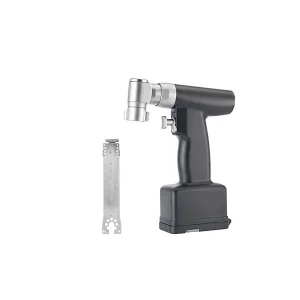
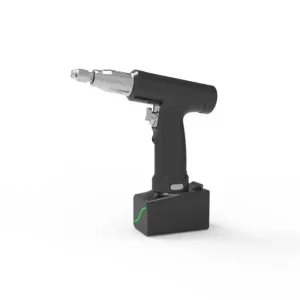
Engineered for high-duty trauma, joint reconstruction, and neurosurgery. Each powered surgical tool and rapid-coupling adapter undergoes DIN 13972 verification and ISO 13485:2016 quality gating.
In demanding mechanical cutting environments—ranging from clinical orthopedic arthroplasty, osteotomy, and emergency sternotomy to industrial heavy-duty compound material resection—the demand for Hyper Tough reciprocating saw platforms is defined by severe torque resilience, non-oscillating thermal deflection, continuous high-frequency duty cycles, and micro-machined internal kinematics. When global enterprise procurement teams evaluate an OEM reciprocating saw partner or contract manufacturing facility, specifications must reach far beyond external cosmetics. Reliability depends on three interrelated core parameters: drive-train longevity under axial force, internal heat dispersion below critical thermal necrosis or motor winding breakdown thresholds, and structural hermetic sealing capable of enduring high-pressure chemical exposure or aggressive autoclaving.
Conventional high-power saws frequently experience blade chatter, micro-gear pitting, and motor stall under load pressures exceeding 25 N. Snaikang Technology Development Co., Ltd. (SNK Medical), an ISO 13485:2016 verified leader founded in 2009 in Baoshan, Shanghai, engineers its hyper-tough reciprocating mechanisms with dynamic counterbalance weights, custom CNC double-eccentric crankpins, and closed-loop sensored brushless DC (BLDC) motors capable of oscillating at frequencies up to 12,500 to 15,000 SPM (Strokes Per Minute) with less than ±1.5% torque fluctuation.
Precision Engineering
Continuous medical power-tool manufacturing since 2009.
Factory Production
Closed-loop automated Industry 4.0 production capacity.
Patented Innovations
Proprietary drive gears, anti-vibration & seal patents.
Adverse Event Rate
Documented EUDAMED post-market traceability benchmark.
Global buyers must weigh long-term total cost of ownership (TCO) against procurement target prices. In heavy-repetition applications, carbon brushes generate microscopic carbon dust particles, degrade contact spring tension over consecutive thermal cycles, and suffer commutator oxidation. Brushless electronic commutation replaces mechanical brush contacts with solid-state Hall-effect position sensors and digital microcontroller gate drivers, ensuring continuous smooth power delivery across full load ranges.
| Kinematic Parameter | Standard Commercial Reciprocating | SNK Hyper Tough Surgical Brushless | SNK Heavy-Duty Carbon ND-1501 |
|---|---|---|---|
| Motor Drive Type | Standard 2-pole Brushed DC | 3-Phase Electronic Commutated BLDC | Enhanced Carbon Brush Dual-Winding |
| Oscillation / Stroke Rate | 0 – 3,000 SPM | 0 – 12,500 / 15,000 SPM | 0 – 1,200 RPM (Cannulated Drill Drive) |
| Stroke Length | 20 – 28 mm | 3.2 – 4.5 mm (Controlled Precision) | Rotational / Collet Coupled |
| Thermal Rise Under Load | ΔT > 18 °C after 4 min | ΔT < 2.0 °C (ASTM F2180 Compliant) | ΔT < 6.5 °C with Airflow Channel |
| Autoclave / Reprocessing Cycles | Non-submersible / Disposable | 200+ Cycles (134 °C @ 2.2 bar) | EO Gas / Plasma Reprocessable |
| Transmission Runout Error | ±0.25 mm | < 0.03 mm after 200 test cycles | < 0.05 mm concentricity |
Global supply chains have experienced unprecedented volatility across freight stability, raw material spot pricing, and regulatory divergence. As the premier Chinese manufacturer of surgical power tools and OEM hyper-tough reciprocating platforms, SNK Medical combines deep regional industrial clusters in the Yangtze River Delta with integrated Class 7 cleanrooms, automated Swiss 5-axis DMG MORI CNC milling centers, and automated sub-assembly robotics.
Unlike small-scale assemblers who outsource critical transmission tooling, SNK controls 100% of the value chain in Shanghai. Raw medical-grade titanium alloy (Ti-6Al-4V ELI) and custom-heat-treated 440C martensitic stainless steel undergo in-house multi-axis wire EDM, surface passivating, vacuum nitriding, and microscopic gear deburring. This closed-loop process delivers consistent tolerances within 2.5 microns, ensuring that when reciprocating saw blades oscillate under heavy resistance, dynamic gear backlash is kept below 0.015 mm.
Production environments conform strictly to ISO 14644-1 Class 7 environmental air purity standards. Automated bioburden management protocols prevent airborne particulate contamination inside motor gearheads and electronic control modules prior to ultrasonic sealing.
Every reciprocating saw and bone drill batch undergoes physical DIN 13972 bone-cutting simulation, continuous stall torque testing, dynamic thrust strain checks, and laser vibrometer validation. ISO 6475 trauma drilling torque deviation is validated under ±1.5%.
While Western and legacy assembly plants require 8 to 12 weeks for customized private label tooling, SNK’s flexible modular manufacturing architecture facilitates complete customized gear ratios, custom collets, handpiece color-anodizing, and sterile packaging within 21 days.
OEM reciprocating saws must solve diverse mechanical challenges depending on their intended operating environment. By engineering a unified brushless platform capable of interchanging specialized quick-disconnect chucks, SNK delivers versatile macro-industry solutions:
During total knee and total hip arthroplasty (TKA/THA), bone resection must leave clean, flat planar osteotomy margins without mechanical micro-fracturing or osteocyte devitalization. The SNK Hyper Tough reciprocating and oscillating saw handpieces feature an active dampening harmonic compensator that minimizes surgeon wrist fatigue and limits tissue interface temperature rise to under 41 °C.
Cardiovascular surgical intervention demands immediate, uncompromising reliability. The S2150 and sternum saw adapters incorporate blade guards and high-speed linear oscillation (up to 15,000 SPM) to cleave cortical bone cleanly in under 12 seconds, preventing retrosternal soft tissue laceration through precision depth-limitation stops.
For commercial brand owners specifying private-label Hyper Tough tools for industrial, plumbing, structural salvage, and pipe cutting, SNK’s heavy-duty drivetrains supply high stall-torque resilience, IP67 dust/fluid ingress protection, and anti-kickback shoe designs capable of slicing cast iron, composite panels, and structural timber continuously.
The future of powered surgical tools and heavy-duty reciprocating saws lies in the convergence of electro-mechanical drives with smart sensor telemetry, AI-assisted resistance profiling, and closed-loop surgical navigation protocols.
Next-generation microcontrollers monitor high-frequency armature current at 20 kHz. When transitioning from hard cortical bone to softer trabecular bone or soft connective tissue, the motor drops stroke rate in under 1.8 milliseconds, dramatically reducing plunge risk.
SNK platforms support 12 open communication protocols for optical and electromagnetic surgical navigation trackers (Stryker, Medtronic, Brainlab). Integrated vibration alerts warn operators when approaching pre-planned resection boundaries.
Developing graphene-enhanced solid-state lithium cells rated for full autoclave immersion up to 134 °C. Eliminates cumbersome aseptic transfer shields and heavy external cord tethering while maintaining 3.5 hours of continuous cutting power.
Generative topological design reduces handpiece housing weight by 28% without sacrificing torsional rigidity. Magnesium alloy skeletons absorb resonant high-frequency chatter before it radiates to the operator’s hand.
Transitioning from legacy European MDD (Medical Devices Directive) to the rigorous CE-MDR (EU) 2017/745 regulatory standard has created substantial supply interruptions for distributors whose suppliers lacked technical documentation depth. SNK Medical is fully certified under CE-MDR for Class I, IIa, and IIb powered surgical handpieces and blades, with live EUDAMED registration and traceability.
| Target Market | Certification / Standard | Documentation Provided | Local Support Level |
|---|---|---|---|
| European Union | CE-MDR (EU) 2017/745, ISO 13485:2016 | Full CER, Technical Files, EUDAMED UDI-DI | ≤ 48-Hour Hub Logistics, Multi-Language IFUs |
| North America | FDA 510(k) Ready, MDSAP Quality Audited | Biocompatibility (ISO 10993), Electrical Safety (IEC 60601-1) | Engineering Direct ODM Collaboration, CAD/CAM Data |
| Middle East & Africa | MOH Free Sale Certificates (21 Countries) | Consular Attestations, Clean In-Country Tender Dossiers | Complete Trauma Set Packaging, On-Site Training |
| Asia-Pacific & LATAM | MDSAP, ISO 13485, Local Ministry Approvals | Factory Audit Dossiers, In-House DIN 13972 Test Data | ≤ 24-Hour Dispatch from Shanghai Manufacturing Core |
Experienced procurement executives for medical device multinationals, tier-1 hospital systems, and hardware brands utilize strict multi-point scorecards when selecting reciprocating saw manufacturing partners. Beyond competitive unit pricing, top purchasing parameters include:
Every batch of raw medical alloy, planetary gear set, and surface seal must be tracked back to the mill test certificate and CNC heat-treatment lot, ensuring zero batch-to-batch variation under surgical stress.
Unplanned hospital theatre downtime can cost upwards of $100 per minute. SNK maintains 200+ finished standby handpieces and emergency spare adapter modules in stock, ready for immediate priority international dispatch.
Distributors demand custom industrial design housings, customized battery pin-outs, private-label laser etching, custom sterilization tray arrangements, and localized IFUs translated across 16 world languages.
Explore our certified surgical reciprocating bone cutters, K-wire attachments, sternotomy adapters, and precision trauma drill systems ready for OEM brand labeling.
Definitive technical, regulatory, and logistics answers compiled for biomedical directors, surgical procurement managers, and commercial brand partners.