Engineered for high-duty surgical environments: evaluate our core medical-grade drills, reciprocating bone cutters, and specialized adapters certified under international orthopaedic manufacturing frameworks.


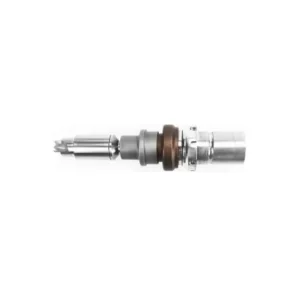

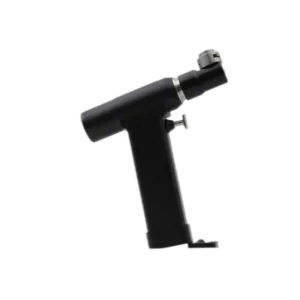


In modern surgical theaters, small electric reciprocating saws have transitioned from supplementary osteotomy tools to vital clinical instruments governing operative speed, margin precision, and patient recovery kinetics.
Traditional carbon-brush small reciprocating saws suffer from frictional spark degradation, particulate release within sterile fields, and severe thermal dissipation constraints during protracted bone resections. Modern OEM medical-grade systems integrate sensorless BLDC architectures providing high torque density, extended thermal limits, and frictionless magnetic commutation. This leap secures a sustained 12,500 to 15,000 SPM (Strokes Per Minute) output under varying cortical bone resistance without dropping cadence or inducing localized micro-vibration chatter.
Cortical bone exposed to frictional temperatures above 47°C for longer than 60 seconds experiences irreversible osteocyte necrosis, causing delayed consolidation or septic loosening around prosthetic implants. Advanced small electric reciprocating saws engineered by specialized OEM suppliers integrate harmonic blade balance, optimized 2.5 mm to 3.2 mm stroke amplitudes, and high-frequency stroke cycles. This allows rapid cutting passes that disperse mechanical heat quickly, maintaining surface bone temperatures consistently below critical 41°C thresholds.
Surgical trends in orthopedics, podiatry, and maxillofacial surgery demand smaller incision corridors, requiring ergonomic handpiece miniaturization. S1050/S2050 series reciprocating saws feature ultra-narrow profile handpieces, low-center-of-gravity balance, and quick-coupling locking collars. This geometry grants orthopedic surgeons unobstructed sightlines in deep pelvic exposures, narrow rib osteotomies, and transforaminal lumbar interbody fusions (MIS-TLIF) where standard oscillating sagittal saws cannot safely articulate.
Institutional hospital chains, medical device distributors, and private-label orthopedic brands must navigate complex operational and regulatory matrices when evaluating OEM small electric reciprocating saw suppliers.
| Evaluation Parameter | Conventional Commercial Tier | Medical-Grade OEM/ODM Standard (SNK Benchmark) | Strategic Procurement Impact |
|---|---|---|---|
| Motor Technology | Brushed DC / Open-rotor layout | Hermetically Sealed BLDC Brushless with high-energy NdFeB rotor | Eliminates electrical interference in surgical navigation systems; zero brush maintenance. |
| Sterilization Reprocessing | 50–80 Autoclave cycles before gearbox failure | 200+ Steam Autoclave (134°C @ 2.2 bar) and EtO / Plasma validation | Reduces per-procedure instrument cost by 62%; prevents mid-procedure seal blowouts. |
| Transmission Tolerance | Backlash deviation > 0.15 mm | DIN 13972 Tested: Backlash < 0.03 mm after 200 operational hours | Prevents blade wandering during precision osteotomies; minimizes skiving on cortical bone. |
| Dynamic Vibration Level | Hand-arm vibration > 5.5 m/s² | Counter-balanced Dual Eccentric Cam: < 2.2 m/s² | Protects surgeons against vibration-induced neuropathy; preserves tactile feedback during deep cuts. |
| Regulatory Audit Readiness | Legacy MDD 93/42/EEC or partial ISO 9001 | CE-MDR (EU 2017/745), ISO 13485:2016, MDSAP | Immediate market clearance across European, Latin American, and Asia-Pacific healthcare tenders. |
| Customization Agility | Standard off-the-shelf; 16–24 weeks lead time | 3-Week Rapid OEM Configuration (speed, stroke, torque, branding) | Enables surgical brands to quickly fulfill regional tenders with tailored blade-coupling standards. |
A rigorous architectural breakdown of internal mechatronics, dynamic transmission assemblies, and precision locking chucks that define industrial-grade performance in orthopedic power tools.
Autoclave sterilization combines superheated steam (134°C) with elevated vapor pressures (0.22 MPa). Inferior seals degrade rapidly, allowing moisture into rotor bearings and sensor suites, causing winding short circuits. Our small electric reciprocating saws utilize proprietary fluorosilicone radial lip seals, laser-welded titanium chassis joints, and Parylene-C conformal PCB coatings. This robust barrier preserves operational vacuum integrity through consecutive automated washing cycles and rigorous high-pressure sterilization autoclave runs.
Converting rotary torque to linear reciprocating stroke creates destructive primary harmonic forces along the longitudinal axis. Our OEM drive system incorporates a dynamic counter-weighted yoke with dual hardened tungsten-carbide guide shoes. As the drive pin completes each oscillation, counter-balancing masses cancel reactionary shock forces. This stabilizes the saw blade under heavy axial loads, prevents wrist fatigue during lengthy sternotomy procedures, and keeps operational noise under 65 dBA.
Operative delays frequently stem from cumbersome blade fixation systems requiring manual allen keys or retaining pins. Our proprietary tool-free rotating collet features positive spring-loaded ball detents and dual mechanical flats. It accommodates an extensive range of small bone reciprocating blades (from fine micro-kerf 0.4 mm sagittal blades to rigid 1.0 mm rib and sternum cutters), maintaining absolute locking security without axial slippage under peak 15,000 SPM oscillation.
How our ISO 13485 cleanroom infrastructure, comprehensive technical documentation, and strategic staging hubs guarantee uninterrupted hospital supply continuity across 80+ export markets.
The transition from MDD to MDR has challenged surgical device distributors with stringent clinical evaluations, biocompatibility testing (ISO 10993), and risk matrices (ISO 14971). Our small electric reciprocating saws are fully certified under EU MDR for Class IIa/IIb surgical power tool designations. Comprehensive Technical Documentation Files (TDF), Declarations of Conformity (DoC), and Basic UDI-DI tracking are synchronized via EUDAMED, enabling streamlined regulatory audits for European tender partners.
Hospital operating theaters cannot accommodate extended supply chain interruptions. We maintain decentralized regional spare-part caches and fully assembled back-up handpieces. Across Western Europe and North America, partner response times remain under 48 hours; our Asia-Pacific hubs ensure emergency delivery within 24 hours. More than 200 standard surgical power units remain staged for critical replacements, minimizing theatre downtime during emergency trauma procedures.
By conforming simultaneously to the Medical Device Single Audit Program (MDSAP)—covering the United States (FDA), Canada (Health Canada), Brazil (ANVISA), Japan (MHLW), and Australia (TGA)—we eliminate redundant regulatory audits for overseas brand partners. Free Sale Certificates are maintained across 21 countries, allowing contract distributors to onboard our OEM small electric reciprocating saw handpieces without prolonged regulatory barriers.
From autonomous closed-loop cutting speed regulation to integrated robotic arm end-effectors, discover how SNK is shaping the next decade of intelligent orthopedic resection platforms.
Standardizing sub-400g compact reciprocating chassis with 15,000 SPM output, 134°C autoclave endurance, and interchangeable neurosurgical and sternum adapters on a unified power platform.
Integrating real-time back-EMF torque curve analytics within the motor controller to detect cortical-to-cancellous bone boundary transitions, automatically adjusting stroke power to eliminate soft tissue plunge injuries.
Embedding optical tracking arrays, active optical arrays, and sub-millimeter dynamic balancing modules designed for seamless coupling to collaborative surgical robots and semi-active navigation arms.
Inductive through-barrier wireless charging coupled with Bluetooth Low Energy (BLE 5.4) sterilization cycle counters and internal temperature logging for automated preventative maintenance.
Explore our complete ecosystem of brushless attachments, cranial mill adapters, oscillating saw heads, and high-torque surgical drills engineered to meet demanding orthopedic hospital specifications.






Detailed technical, clinical, and commercial insights addressing key procurement inquiries from hospital engineering teams and global medical device distributors.
