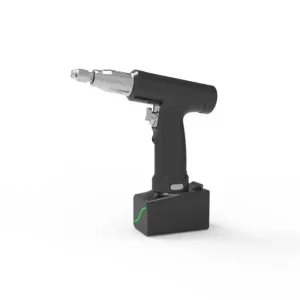
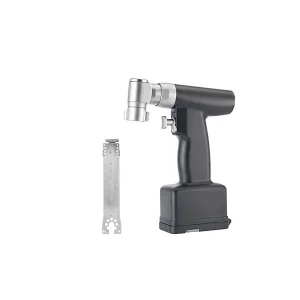
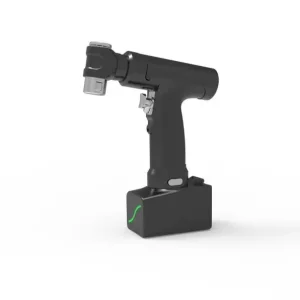
Direct OEM manufacturing and aftermarket replacement solutions engineered for universal Stryker-compatible sternal and oscillating handpieces.
Analysis of surgical dynamics, clinical heat-mitigation protocols, and replacement blade market demands for median sternotomy procedures worldwide.
Modern cardiothoracic surgery demands thinner kerf widths (≤0.75 mm) to preserve parasternal marrow viability and accelerate rigid post-op bone stabilization. OEM blades engineered with asymmetric kerf angles mitigate bone splintering and significantly diminish micro-fracture propagation along the costal cartilage junctions during rapid longitudinal sternotomy.
Cortical bone exposed to cutting temperatures exceeding 47°C for more than one second suffers irreversible alkaline phosphatase enzyme inactivation and cell necrosis. High-frequency OEM blades must incorporate specialized friction-reducing coatings (such as physical vapor deposited titanium nitride or electro-polished micro-finishing) that hold operational cut-line spikes below 41°C.
With legacy MDD transitioned strictly to CE-MDR (EU) 2017/745, global healthcare networks and distributor consortia can no longer risk non-traceable single-use or reusable saw consumables. Sourcing from an ISO 13485:2016-certified factory that actively logs UDI-DI indexes inside the EUDAMED database has become mandatory for risk mitigation.
Historically, hospital operating rooms have been tethered to exorbitant original equipment consumable costs. Third-party engineering validation demonstrates that specialized Chinese OEM/ODM contract manufacturers utilizing customized Swiss-machined stamping and CNC profile grinding achieve identical kinematic stability and hub retention tolerances (±0.005 mm) compared to OEM Stryker System 6, 7, and 8 sternum blades, at a 40% to 65% procurement delta.
Inside our Shanghai industrial hub: how closed-loop Swiss automated grinding, cleanroom EDM wire cutting, and medical grade 420J2/440A stainless steel processing drive unrivaled batch uniformity.
The core structural integrity of a sternal saw blade depends on vacuum heat treatment and precision cryogenic tempering. Raw martensitic surgical steel (AISI 420J2 or 440A customized alloys) undergoes controlled transformation cycles to establish a core toughness of 48-52 HRC while the tooth tips maintain micro-hardness up to 54-56 HRC. This differential gradient stops brittle tooth fracture mid-sternotomy while preventing blade bowing under axial surgeon loads.
| Mechanical Parameter | SNK OEM Standard | Industry Baseline |
|---|---|---|
| Hub Hardness Gradient | 50 - 52 HRC Vacuum Tempered | 42 - 46 HRC Conventional |
| Axial Blade Deflection Limit | < 0.08 mm under 15N Load | < 0.18 mm under 15N Load |
| Surface Ra Microfinish | Ra 0.18 µm (Electro-polished) | Ra 0.45 µm (Standard ground) |
| Autoclave Dimensional Drift | < 0.03 mm after 200 cycles | > 0.09 mm after 100 cycles |
Our facility operates 16 automated high-speed multi-axis stamping and 5-axis CNC tool grinding centers. Optical coordinate measuring machines (CMM) and laser micrometer arrays verify tooth pitch, rake pitch clearance, and latch geometry on 100% of manufactured batches.
Addressing the nuanced demands of acute surgical theaters, hospital central sterile supply departments (CSSD), and international OEM brand owners.
In re-operative cardiac procedures where substernal adhesions anchor the right ventricle or aorta directly against the posterior sternal plate, standard aggressive forward-cutting oscillating blades carry prohibitive hemorrhagic risks. Our OEM custom-profile sternum blades with integrated safety depth-guards and curved tips allow thoracic surgeons to cleave outer and inner cortical tables cleanly while preventing laceration to retrosternal mediastinal vascular beds.
Modern hospital sterilization units utilize alternating cycles of dynamic pulsed vacuum steam autoclaving (134°C) and low-temperature hydrogen peroxide vaporized gas plasma (VHP/STERRAD). Low-tier replacement blades degrade through pinhole corrosion and loss of temper after repeated wash-disinfect-sterilize runs. SNK medical-grade passivation forms a thick, dense chromium oxide layer compliant with ASTM A967, preserving anti-pitting resistance across 200+ autoclave rounds.
For orthopedic and cardiothoracic brand owners aiming to launch replacement consumables under their proprietary mark, we provide complete turnkey OEM programs within 3 weeks. From custom hub milling, laser engraving, customized multi-pack medical blister packaging (Tyvek-to-PETG heat-sealed pouches), to providing ready-to-submit Technical Construction Files (TCF) conforming to MDR Annex II, we simplify the distributor path to market entry.
Comprehensive engineering audit cross-referencing geometrical parameters, metallurgy, and performance metrics against generic and Tier-1 market counterparts.
| Evaluation Attribute | SNK Factory OEM Precision Series | Generic / Uncertified Aftermarket | Tier-1 OEM Reference Benchmark |
|---|---|---|---|
| Hub Geometry Fit | Micron Ground Keyed hub matches Stryker System 5/6/7/8 securely (±0.005mm) | Loose press-stamped hub; prone to collet play and micro-vibration | Proprietary locking hub fit tightly controlled |
| Tooth Profile Engineering | Progressive multi-faceted tooth kerf with precision relief angles | Standard symmetrical punched teeth; induces rapid thermal spiking | Patented aggressive multi-faceted tooth geometry |
| Raw Material Origin | Custom-melted AISI 420J2/440A certified medical surgical grade | Standard commercial 304 or 420 industrial sheet metal | Custom proprietary surgical stainless alloy |
| Median Cutting Velocity | Complete longitudinal sternotomy in < 9.4 seconds | 16.5 - 22.0 seconds with marked friction resistance | 8.8 - 9.8 seconds |
| Post-Resection Thermal Delta | Bone margin temperature rise ≤ 2.4°C (well below 41°C threshold) | Temperature excursion often exceeds 49.5°C causing bone necrosis | Temperature rise ≤ 2.8°C |
| Quality Certification Scope | ISO 13485:2016, CE-MDR (EU) 2017/745 Class IIa, MDSAP certified | Unverified CE under expired MDD or missing EUDAMED listings | FDA 510(k), CE-MDR, MDSAP, PMDA registered |
Expert answers addressing the regulatory, metallurgical, operational, and supply-chain queries of biomedical engineers and OEM purchasers.
Complete surgical tool attachments, high-speed modular handpieces, and adapters complementing our sternum and trauma blade production lines.