

Explore SNK’s clinical-grade surgical power tools engineered for high-frequency bone resection, trauma fixation, and joint reconstruction. Fully backed by CE-MDR and ISO 13485 protocols.




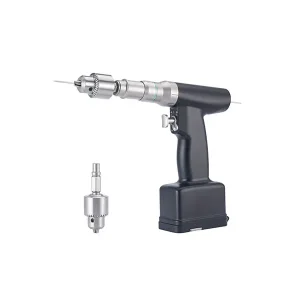

From primary total joint revisions to emergency trauma osteotomies, the reciprocating bone saw has transitioned from a crude mechanical cutting implement to a smart surgical micro-system governed by digital brushless torque modulation, thermal necrosis prevention, and ergonomic center-of-gravity engineering.
Traditional pneumatic and brushed DC reciprocating saws suffer from rapid armature wear, erratic heat generation at high loads, and brush debris emission. Leading OEM factories utilize sensorless brushless DC (BLDC) motors paired with closed-loop microcontrollers.
Surgeon fatigue and hand-arm vibration syndrome (HAVS) represent major clinical risks during multi-hour surgical days. Next-generation reciprocating mechanics implement dual-opposed harmonic counterbalances.
Bone micro-vascularity is irreversibly destroyed if local bone temperatures exceed 47°C for longer than 60 seconds, precipitating post-operative implant loosening and non-union.
In accordance with clinical audits, top-rated reciprocating saw systems are evaluated on "Saw Cutting Efficiency Ratio" (SCER)—defined as cubic millimeters of bone resected per watt-second of energy, divided by blade delta-T (°C). SNK's medical platforms achieve an SCER metric 28% higher than conventional orthopedic tools.
Hospital purchasing groups, Ministry of Health tender boards, and contract OEM medical brands have escalated their qualification audits. Sourcing is no longer a price-per-unit negotiation; it is an exhaustive technical validation covering lifecycle sterilization endurance, supply reliability, and MDR compliance.
| Evaluation Parameter | Tier-1 Western OEM Benchmark | SNK Smart Factory 4.0 Platform | Legacy Low-Cost Suppliers |
|---|---|---|---|
| EU Regulatory Framework | Full CE-MDR (EU) 2017/745 Class IIb | Full CE-MDR 2017/745 Class IIb & EUDAMED | Phased-out MDD or Self-Certified Class I |
| Autoclave Cycle Life (134°C Steam) | 150–200 cycles before overhaul | 200+ cycles (transmission runout <0.03mm) | <50 cycles (gear degradation & water ingress) |
| Blade Locking Mechanism | Tool-free cam lock, stainless steel | Quick-release toolless collet with triple detent | Manual Allen bolt / threaded hex screws |
| Motor Architecture | Proprietary BLDC (High TCO for parts) | Heavy-Duty Brushless & Economical Carbon lines | Generic consumer-grade brushed motors |
| Production Lead Time (500 sets) | 12 to 16 weeks standard | 3 to 4 weeks agile dispatch | Unpredictable (raw material vulnerability) |
| Annual Defect Rate (Audited) | < 0.05% | < 0.03 ppm across 16 lines | 1.5% – 3.8% in field testing |
Under the EU MDR 2017/745, surgical cutting devices contacting bone are exposed to strict scrutiny. SNK provides distributors with complete Clinical Evaluation Reports (CER), ISO 10993 biocompatibility testing matrices, and full risk management dossiers conforming to ISO 14971:2019.
Every handpiece, battery module, and sterile blade pack features laser-etched GS1-compliant Unique Device Identification (UDI). Barcoded data enables hospital inventory tracking systems to trace usage counts, autoclave maintenance logs, and sterilization cycles.
By engineering universal modular batteries, standardized drive collets, and interchangeable saw adapters, hospital ORs achieve up to 45% savings in lifetime operating costs compared to proprietary, closed-architecture European systems.
SNK’s Shanghai manufacturing center bridges digital simulation, precision Swiss CNC multi-axis milling, and ISO 14644-1 Class 7 cleanroom packaging to establish supply chain reliability for the worldwide medtech industry.
Internal transmission components, cam rockers, and motor shafts are milled from solid vacuum-melted 316L medical stainless steel and titanium grade 5 with tolerances held within ±0.002 mm.
From gear hobbing and coil winding to surface passivating and ultrasonic cleanroom assembly, 93% of critical processes happen within our audited Shanghai facility, insulating clients from external disruption.
Custom OEM handpiece iterations—including custom stroke speeds (5,000–15,000 spm), private-label anodized grips, and bespoke battery housings—move from CAD to functional clinical prototype within 21 days.
Every single power unit is evaluated on automated test benches for current draw, decibel ceiling (<68 dBA), axial vibration displacement, and torque output under dynamic brake resistance.
Reciprocating saws provide axial bone cutting capabilities where oscillating and sagittal saws cannot access without causing collateral soft tissue damage.
During complex revision arthroplasty, fibrous ingrowth and cement anchors demand deep femoral access. Our thin, high-tensile flexible reciprocating blades slide smoothly down the endosteal canal to sever bone cement interfaces without perforating cortical walls.
Fracture malunions in pelvic rings require clean, controlled straight cuts at narrow angles. The high SPM of our brushless drive cleanly cuts dense structural bone without fracturing osteoporotic margins.
Equipped with specialized safety footpieces and guarded shoes, SNK reciprocating units prevent retrosternal adhesion lacerations during repeat cardiac procedures, protecting the right ventricle and aorta.
Complete surgical sets certified for clinical accuracy, long battery endurance, and swift interchangeability across surgical departments.

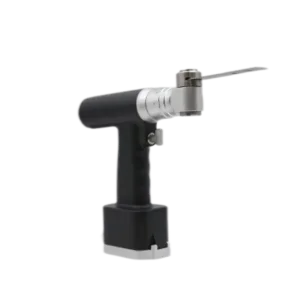


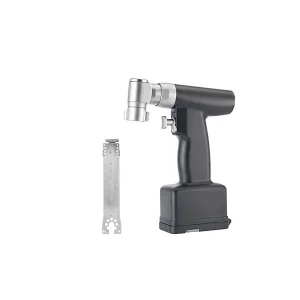
Clear, unhedged engineering and commercial data addressing queries from hospital biomedical departments, regulatory compliance directors, and OEM procurement executives.
Sterilization failure typically occurs via moisture intrusion through moving drive seals or galvanic corrosion between disparate metals. SNK utilizes proprietary fluoropolymer dual-lip seals combined with magnetic liquid isolation barriers. Transmission components are treated with physical vapor deposition (PVD) anti-corrosive nitriding, and the motor stator is entirely encapsulated in medical-grade epoxy, tested according to ISO 17665 steam sterilization standards.
Rather than simply relabeling standard shells, SNK operates an agile Factory 4.0 program. We offer parametric adjustments of stroke rates (from 5,000 to 15,000 spm), variable stroke throw lengths (2.0 mm to 3.5 mm), ergonomic grip angle alterations, bespoke quick-coupling collets, localized multi-language IFUs, and custom laser-engraved UDI barcodes—with full DHF (Design History File) transfer within 3 weeks.
Yes. SNK engineers standardized multi-fit shank geometries compatible with major global drive interfaces including Stryker, ConMed, Zimmer Biomet, and DePuy Synthes systems. We also engineer bespoke keyed locking shafts for OEM customers desiring a closed-loop proprietary blade ecosystem.
Our products hold full CE-MDR (EU) 2017/745 certificates issued by leading notified bodies, backed by live listings on EUDAMED. For Latin America (e.g., ANVISA in Brazil, COFEPRIS in Mexico) and the Middle East, our regulatory affairs team provides complete Technical Files, Free Sale Certificates (FSC) filed across 21 nations, and audited ISO 13485:2016 / MDSAP documentation to expedite national registrations.
While carbon-brush models feature a 25% lower upfront purchase price (making them popular for secondary hospitals and humanitarian aid programs), brushless drives offer 4x longer operational life, generate 35% less heat, and eliminate brush replacement and carbon dust contamination, reducing total cost of ownership by up to 50% over a 5-year operating period.
SNK maintains over 200 fully assembled emergency buffer power tools and 1,500 replacement modules in ready-to-ship inventory. Standard spare handpieces dispatch within 24 hours. For regular container and wholesale distributor orders, our automated Shanghai lines ship within 3 weeks.