Engineered for high-throughput trauma, reconstruction, and arthroplasty procedures across Sunnybrook Health Sciences, UHN, and Ontario specialized surgical surgical suites.
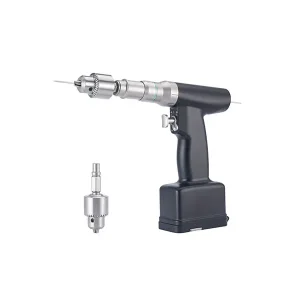


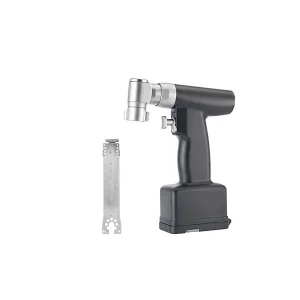
How the Greater Toronto Area (GTA) and the Toronto-Waterloo Innovation Corridor drive surging demand for specialized, sterilizable Brushless DC (BLDC) motor platforms.
Toronto houses North America's highest concentration of urban medical research, anchored by the MaRS Discovery District, the University Health Network (Princess Margaret, Toronto General, Toronto Western), and Mount Sinai Hospital. Academic surgical programs in the GTA carry massive caseloads, creating strict technical mandates for high-power-density, autoclavable BLDC handpieces capable of enduring back-to-back operating room turnovers without thermal runaway.
The GTA extends into Waterloo and Markham, creating an epicenter for surgical robotics, orthopedic navigation systems, and computerized rehabilitation exoskeletons. Medical device OEMs across Ontario require micro brushless motors with closed-loop Field-Oriented Control (FOC), absolute encoder integration, and near-zero electromagnetic interference (EMI) that protects sensitive digital intraoperative navigation systems and fluoroscopy equipment.
Ontario healthcare networks operate within consolidated hospital procurement structures. With budgetary accountability overseen by Ontario Health, clinical engineering teams prioritize Total Cost of Ownership (TCO). Replacing failure-prone brushed motors with maintenance-free brushless systems eliminates mechanical brush degradation, dramatically lowers hospital sterilization maintenance cycles, and slashes instrument down-time.
A rigorous examination of coreless stator topology, rare-earth magnet stability under autoclave conditions, and closed-loop electronic commutation.
Autoclave sterilization cycles (134°C saturated steam at 2.2 bar) cause insulation breakdown in generic motors. SNK brushless medical motors incorporate high-grade polyimide insulation coatings and vacuum-pressure molded epoxy encapsulation. Rotor shafts utilize biocompatible 440C martensitic stainless steel with titanium nitride (TiN) protective barriers, preventing moisture ingress and stator winding oxidation over hundreds of surgical autoclave routines.
Precise tactile feedback is essential during delicate procedures such as cranial trepanation or spinal decortication. By implementing an optimized slotless/coreless stator design, detent torque (cogging) is eliminated. The resulting smooth rotational profile across ultra-low RPM (re-reaming) and high RPM (cutting) ranges protects surgeons against micro-hand vibrations, ensuring clean osteotomies without structural microfracturing.
Traditional trapezoidal six-step commutation creates acoustic noise and ripple torque. Our medical BLDC driver electronics utilize space-vector Field-Oriented Control (FOC), modulating sinusoidal current continuously through high-frequency Hall-effect sensors or advanced sensorless back-EMF state observers. The motor dynamically maintains up to 16 N·m of reaming torque without motor stalling or sudden current surges.
Combining state-of-the-art Chinese cleanroom manufacturing with high-speed fulfillment and strict regulatory documentation for Toronto distributors and hospital buyers.
Our centralized manufacturing facilities in Baoshan, Shanghai encompass automated CNC swiss-turning, multi-axis wire winding, rotor dynamic balancing (ISO G0.4 standards), and Class 7 cleanroom final assembly. By managing both the motor stator-rotor production and the orthopedic handpiece housing internally, we circumvent global third-party supply chokepoints, lowering unit manufacturing costs by 35%–45% compared to European equivalents.
Brushless surgical handpieces depend critically on high-coercivity Samarium-Cobalt (SmCo) and high-temperature Neodymium-Iron-Boron (NdFeB) permanent magnets capable of withstanding autoclave thermal shock. Operating directly within China’s world-leading rare-earth processing matrix allows direct access to high-grade magnetic alloys with verified temperature coefficients, shielding our Toronto partners from raw material scarcity and extreme pricing volatility.
While legacy Western micromotor manufacturers quote 16 to 24 weeks for custom shaft machining, gear ratio modifications, and customized autoclaving seals, SNK’s flexible production lines deliver tailored OEM samples—complete with CAD models, custom output curves (500 to 15,000 RPM), and individualized torque limits—in approximately 3 weeks. This agility allows Toronto medtech startups to accelerate clinical trial validation.
Ensuring streamlined Medical Device Licensing (MDL), audit readiness, and hospital biomedical acceptance across Ontario health networks.
Under Health Canada's Food and Drugs Act and Medical Devices Regulations (SOR/98-282), powered orthopedic tools generally fall under Class II or Class III medical device categories. SNK provides Canadian distributors and OEM partners with complete Device Master Files (DMF), technical documentation, clinical evaluations, and risk management documentation compliant with ISO 14971, expediting Medical Device Licence (MDL) approvals.
Health Canada requires medical device manufacturers to maintain auditing compliance under the Medical Device Single Audit Program (MDSAP). SNK facilities are verified to ISO 13485:2016 and audited under MDSAP guidelines, satisfying the joint regulatory expectations of Health Canada, the US FDA, and global regulatory bodies with traceable quality documentation and post-market surveillance systems.
Modern hospital surgical theaters throughout Toronto feature robotic visualizers, intraoperative CT, and RF ablation apparatus. SNK brushless motor drivers integrate active common-mode chokes, shielded stator leads, and low-inductance commutation loops that strictly conform to IEC 60601-1 and IEC 60601-1-2 EMC standards, preventing electromagnetic cross-talk in dense hybrid OR suites.
The progression of surgical motor intelligence—from mechanical torque delivery to real-time tissue sensing and robotic autonomy.
By monitoring high-speed current draw anomalies, back-EMF variations, and micro-impedance at 50,000 kHz sampling rates, next-generation SNK BLDC control chips can detect cortical-cancellous bone boundaries and soft tissue plunge events. When a surgical drill penetrates the distal cortical bone wall, the motor cuts power automatically within 3.2 milliseconds, minimizing soft tissue and neurovascular injury.
Integrating passive RFID and micro-temperature sensor nodes within the motor potting assembly allows automated tracking of autoclave exposure cycles, run-time thermal profiles, and bearing vibration degradation. Toronto hospital sterile processing departments (SPD) can review health reports wirelessly on handheld diagnostic terminals, replacing arbitrary maintenance cycles with predictive maintenance.
Surgical robotic end-effectors require miniaturized motors offering high torque density without peripheral bulky driver controllers. Our upcoming micro-BLDC generation (12mm to 18mm outer diameter) features integrated miniature FOC drive boards within the motor housing, ready for direct CANopen or EtherCAT multi-axis networking in next-generation robotic surgery arms.
Explore SNK’s high-precision medical power handpieces and replacement adapters, certified and deployable for surgical centers across Toronto and worldwide.








Key technical, regulatory, and supply chain questions from hospital procurement teams and medical equipment distributors across Canada.
Whether you are an established medical equipment distributor in Ontario, an innovative surgical robotics developer, or a hospital procurement specialist looking to lower operating theater lifecycle costs, SNK provides certified, high-reliability brushless drive solutions tailored to your specifications.
