

Bone Drill · Carbon Brush
ODM Carbon Brush Bone Drill ND-1501(1) – CDMX Trauma Series
0-1200 RPM
High Precision
Lightweight
Standardized carbon-brush surgical systems validated for continuous perioperative performance, low thermal dispersion, and rapid autoclave turnover in high-throughput Mexican hospitals.
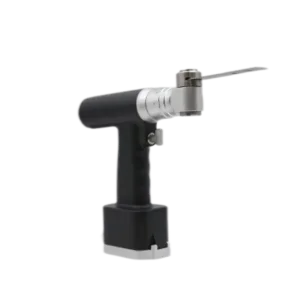

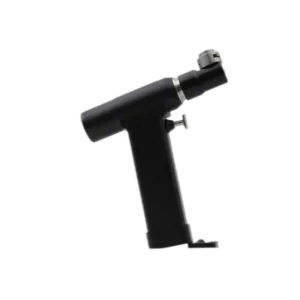
Navigating the intersection of high surgical case volumes, public healthcare budget allocation, and nearshoring dynamics across the Greater Mexico City (ZMVM) metropolitan zone.
Mexico City represents the densest concentration of surgical theaters in Central America. The market is bisected into massive public institutions—such as the Instituto Mexicano del Seguro Social (IMSS), ISSSTE, and CCINSHAE (National Institutes of Health including the Instituto Nacional de Rehabilitación - INR)—and premier private hospital networks like Centro Médico ABC (Observatorio and Santa Fe), Grupo Ángeles, and Médica Sur. Public procurement tenders require rigid cost-per-procedure justifications, making carbon motor handpieces the preferred solution for secondary trauma centers and regional clinics.
Situated at an elevation of 2,240 meters (7,350 feet) above sea level, Mexico City presents distinct atmospheric conditions for high-speed surgical electromechanical tools. The lower air density impacts forced-convection heat dissipation in electric micro-motors. Our carbon motor architectures utilize proprietary armature air-channeling and thermally insulated silicone sleeve barriers, keeping handpiece contact temperatures below the clinical threshold of 41°C during continuous acetabular reaming or long osteotomy resections without requiring external auxiliary cooling lines.
With Mexico's booming nearshoring ecosystem and modernized logistics nodes centered along the Vallejo industrial zone, Cuautitlán Izcalli, and the Felipe Ángeles International Airport (AIFA) cargo terminal, distribution of surgical equipment to CDMX surgical hubs has reached sub-48-hour agility. International device manufacturers operating through dedicated Chinese supply partnerships can fulfill OEM/ODM configurations and replenish critical replacement parts (carbon brushes, gears, chucks) with streamlined customs clearance through CDMX and Toluca hubs.
A strategic breakdown for hospital biomedical engineering directors, chief financial officers, and central purchasing bodies balancing clinical precision with long-term maintenance overhead.
In the Mexican public healthcare landscape (IMSS, ISSSTE, and IMSS-Bienestar), surgical power instrument procurement frequently encounters budgetary thresholds where brushless systems demand excessive initial capital expenditure. While brushless systems deliver maintenance-free stator longevity, high replacement costs for proprietary motor drivers and micro-controllers can cause handpieces to sit idle once warranty periods lapse. Conversely, medical-grade carbon-brush systems offer an optimal balance of robust starting torque, predictable mechanical wear, and simple, low-cost maintenance cycles that fit standard municipal hospital operating budgets.
| Evaluation Parameter | Carbon-Brush Motor Architecture | Brushless Drive Systems | CDMX Clinical Impact |
|---|---|---|---|
| Initial Capital Outlay (CapEx) | Low to Medium (Baseline: 1.0x) | High (2.2x - 3.5x baseline) | Enables 2x-3x higher unit deployment in public emergency rooms. |
| Starting Torque & Stall Force | Immediate full torque at 0 RPM (18–20 N·m) | Controlled via complex electronic sensor | Crucial for bicortical drilling and stubborn pin driving. |
| Routine Maintenance Overhead | Field-replaceable brush assemblies (< $15 USD) | Requires cleanroom driver replacement (> $350 USD) | Local CDMX biomedical workshops can perform on-site servicing. |
| Autoclave Longevity (Steam 134°C) | 200+ validated cycles (DIN EN 285) | 350+ validated cycles | Both systems fully comply with central sterile services (CEyE). |
| Sensitivity to Voltage Drops | High tolerance to line fluctuations | Requires regulated inverter charging docks | Superior reliability in older urban electrical infrastructures. |
Modern carbon motor systems feature modular quick-access brush caps sealed with fluoropolymer O-rings. In public trauma centers across Iztapalapa, Gustavo A. Madero, or Cuauhtémoc, maintenance technicians can inspect brush wear length and replace brush contact blocks in under five minutes using standardized field kits, ensuring handpiece sets remain operational between morning and afternoon surgical shifts.
In Mexico's Central de Equipos y Esterilización (CEyE), surgical sets undergo aggressive autoclaving regimens. Our carbon motor housings are CNC-milled from aviation-grade biocompatible aluminum alloys and treated with hard anodic oxidation (Type III). This creates a barrier against alkaline enzymatic detergents and steam condensate, preventing commutator pitting and corrosion during post-operative reprocessing.
Addressing bone necrosis prevention, vibration dampening, and advanced metallurgy across next-generation powered surgical instruments.
Osteocyte vitality degrades exponentially when bone tissue temperatures exceed 47°C for more than 30 seconds. Our carbon motor drills incorporate planetary gear reducers manufactured to AGMA Class 11 tolerances. This delivers steady rotational velocity (0–1,200 RPM) with smooth torque transfer, eliminating speed spikes and reducing bone surface friction during cortical drilling and sagittal blade oscillation.
Surgeon fatigue during multi-hour revision arthroplasty is directly correlated with vibrational harmonics. SNK handpieces feature double-shielded ceramic hybrid bearings and precision-balanced armatures. Rotational runout at the drill chuck tip is maintained below 0.025 mm, preventing wobbling when inserting K-wires or driving cannulated screws across fragile osteoporotic bone.
Traditional industrial carbon brushes generate carbon particulate that can compromise sterile fields if uncontained. Our medical-grade carbon motor assemblies utilize hermetically sealed brush chambers paired with hydrophobic, gas-permeable PTFE filter membranes. This design vents internal heat while trapping carbon micro-dust, keeping surgical suites clean and compliant with international standards.
Implementation of silver-impregnated graphite composite brushes reducing contact electrical resistance by 34%, lowering operating temperatures in high-elevation CDMX surgeries, and extending brush maintenance intervals beyond 250 operating hours.
Integration of non-volatile RFID chips into handpiece bodies to track cumulative autoclave sterilization cycles and operating hours, providing automated maintenance alerts for hospital biomedical teams via mobile NFC scanners.
Comprehensive take-back programs across the Mexican Republic for motor rotor reclamation, rare-earth magnet recycling, and environmentally responsible disposal of nickel-metal hydride and Li-ion power packs.
Navigating the regulatory pathways of the Comisión Federal para la Protección contra Riesgos Sanitarios (COFEPRIS) for medical devices in Class I and Class II classifications.
Deploying medical power tools into Mexico's national health system demands comprehensive regulatory compliance. We provide licensed distributors and commercial representatives in CDMX with complete registration packages formatted for prompt COFEPRIS evaluation:
Equipment downtime during surgery is unacceptable. We assist our local distribution partners in Mexico City with structured engineering and logistics support:
Explore our complete range of CE-certified, high-torque orthopedic instruments, cannulated bone drills, micro-oscillating saws, and surgical adapters.







Detailed answers regarding sterilization protocols, altitude performance in CDMX, COFEPRIS documentation, and routine field maintenance.
Connect directly with our medical engineering team to request complete factory catalogs, CAD drawings, COFEPRIS tender dossier samples, or to evaluate trial evaluation units for your hospital or distribution network.