Precision-machined power tools configured for standard autoclave sterilization, rapid brush replacement, and consistent torque delivery in trauma, reconstruction, and general orthopedic surgical disciplines.

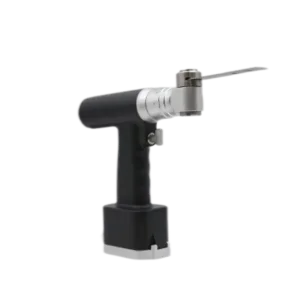


An exhaustive operational breakdown of carbon-brush motor technology adoption across Metropolitan Lima, Arequipa, Cusco, and Trujillo industrial and clinical networks.
The Peruvian electromechanical market exhibits distinct structural bifurcation. Across the capital region of Lima and Callao, healthcare infrastructure is modernized through institutional networks such as EsSalud (Seguro Social de Salud) and MINSA (Ministerio de Salud). Concurrently, regional hospitals in regions like Junín, Puno, and Piura contend with budgetary constraints and distributed servicing networks. Within this operational ecosystem, carbon-brush motors (motores con escobillas de carbón) continue to form the operational backbone of surgical osteotomy handpieces, rehabilitation drive units, and localized secondary processing equipment.
While brushless (BLDC) architectures dominate ultra-high-end surgical robotics, carbon-brush motors maintain a commanding presence across Peru's public hospital procurement. The primary commercial driver is Total Cost of Ownership (TCO). In standard trauma interventions—such as intramedullary nailing, external fixation, and pelvic reconstruction—hospitals require reliable handpieces that deliver high stall torque immediately upon trigger activation without requiring complex closed-loop sensor calibration.
Peru presents unique geographic operating challenges. Surgical facilities in high-altitude environments such as Cusco (3,400m), Juliaca (3,825m), and Cerro de Pasco (4,330m) experience thinner air densities, which fundamentally alters convective motor cooling and electrical arcing behaviors between the carbon brush and copper commutator bars. Generic carbon motors sourced from unverified intermediaries often suffer accelerated commutator degradation, excessive sparking, and thermal shutoffs under sustained torque loads.
Our OEM/ODM manufacturing protocols employ proprietary high-density silver-graphite and electrographite brush composites optimized specifically for varying atmospheric pressures. These specialized metallurgical blends maintain stable oxide boundary films across the commutator, minimizing microscopic sparking and maintaining thermal stability below critical thresholds (<41°C exterior housing temperature per ASTM F2180) to eliminate bone necrosis risks during prolonged surgical resection.
| Electromechanical Metric | Standard Commercial Carbon Motor | China Industry 4.0 SNK OEM Platform | Impact on Peru Clinical End-Users |
|---|---|---|---|
| Brush Composition | Standard Pitch-Bonded Carbon | High-Purity Electrographite & Silver Alloy | 300% longer life; stable at high-altitude hospitals |
| Commutator Precision | Manual lathe turned (runout >0.015mm) | Diamond-Tipped CNC Micro-turned (<0.003mm) | Negligible vibration; superior surgeon precision in osteotomies |
| Sealing Architecture | Single Nitrile O-ring | Fluoropolymer Triple-Barrier Dynamic Seals | Survives 200+ standard 134°C autoclave cycles |
| Starting Torque | 0.85 N·m instant | Up to 1.85 N·m direct drive | Instant penetration of dense cortical bone without stalling |
How automated precision manufacturing bridges the gap between cost efficiency and stringent international regulatory criteria for Latin American medical suppliers.
Fully automated 5-axis CNC machining centers turn armatures and commutator slots with surface roughness values below Ra 0.2, drastically reducing brush friction and electrical noise generation.
Motors built for clinical use in Latin America must endure harsh, frequent sterilization cycles. Our encapsulation shields wire windings against steam penetration and aggressive disinfectants.
We provide complete industrial design, laser markings, Spanish language documentation, and custom connector cabling for distributors bidding on Ministry of Health supply contracts.
Evaluating mechanical match, duty cycles, and maintenance dynamics in localized healthcare and small-scale manufacturing.
In high-throughput provincial emergency rooms—such as Hospital Regional Docente de Trujillo or Hospital Nacional Adolfo Guevara Velasco in Cusco—surgical teams face extensive daily caseloads of traffic injuries and orthopedic trauma. Instruments must handle continuous, back-to-back osteotomy procedures. Our high-torque carbon bone drills deliver 0–1200 RPM variable trigger response, empowering surgeons with fine tactile feedback during bicortical drilling while preventing catastrophic drill-bit binding.
Private clinical groups in Lima (San Borja, Miraflores, San Isidro) balancing cost and performance utilize carbon oscillating saws for total knee and total hip arthroplasty (TKA/THA). The predictable oscillatory sweep angle (4.5°–5.0°) and stable oscillation rates up to 14,000 cycles per minute generate clean, micro-fracture-free bone surfaces for rapid implant osseointegration.
The companion animal and equine surgical market across Peru has expanded rapidly. Veterinary practitioners require robust power tooling that does not incur the prohibitive multi-thousand-dollar acquisition costs of Western brushless platforms. Our carbon drills and saws furnish independent veterinary surgeons with institutional-grade surgical ergonomics and accessible replacement brush sets.
Precision-matched cannulated drills, adapters, sternum saws, and specialty surgical systems engineered for Latin American distribution partners.








Critical regulatory, engineering, and supply questions addressed for Peruvian biomedical directors, commercial distributors, and tender consortiums.
