
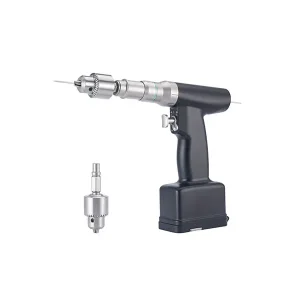
Berlin Trauma Hollow Bone Drill S1010/S2010
Cannulated intramedullary fixation system featuring high-efficiency brushless stator, quick-docking battery pack, and hollow shaft torque transmission.
ODM SNK Trauma Drill SpecsEngineered for high-throughput orthopedic trauma, pelvic reconstruction, and joint arthroplasty across Charité, Vivantes, and the Berlin-Brandenburg healthcare cluster.
Cannulated intramedullary fixation system featuring high-efficiency brushless stator, quick-docking battery pack, and hollow shaft torque transmission.
ODM SNK Trauma Drill Specs
Calibrated for precise bicortical drilling, K-wire guidance, and controlled osteosynthesis with zero motor cogging and thermal rise under 2°C.
SNK Medium-Speed Drill Data
High-torque slow-speed system dedicated to total hip arthroplasty (THA), preventing bone thermal necrosis by maintaining cutting temperatures <41°C.
OEM SNK Reaming Drill Profile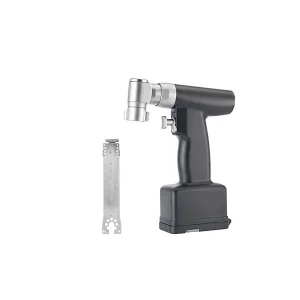
High-frequency bone resection tool featuring sealed hermetic BLDC motor, 14,000 cpm stability, and CE-MDR Class IIb certified surgical autoclave durability.
CE SNK Oscillating Saw SpecsThe Berlin metropolitan area represents Europe’s most dynamic testbed for surgical engineering, digital operating theatres, and stringent regulatory compliance.
Berlin hosts Europe’s largest university hospital system, Charité – Universitätsmedizin Berlin, alongside Vivantes Netzwerk für Gesundheit. These clinical institutions perform over 65,000 musculoskeletal and trauma procedures annually, demanding tier-one instrument reliability.
Surgical handpieces deployed here require uncompromising brushless power profiles, zero mechanical sparking in oxygen-enriched atmospheres, and seamless integration with robotic end-effectors.
The Berlin-Brandenburg HealthCapital initiative unites over 300 medical technology enterprises, 30 university institutes, and specialized cleanroom testing centres in technology parks such as WISTA Berlin-Adlershof and Berlin-Buch.
This ecosystem enforces strict micro-motor specifications: low acoustic emission (<62 dB), micro-vibration damping to prevent surgeon muscular fatigue, and absolute hermetic encapsulation against steam sterilization.
Germany’s national metrology institute, the Physikalisch-Technische Bundesanstalt (PTB) in Berlin-Charlottenburg, sets global baselines for medical electrical equipment compliance.
Brushless motors for German medical devices must comply with DIN EN 60601-1 (electrical safety), DIN EN 60601-1-2 (electromagnetic disturbance immunity), and DIN EN ISO 14971 (risk management for medical instrumentation).
In the Berlin procurement framework, hospitals and OEM medical system integrators have systematically transitioned away from legacy pneumatic lines and brushed DC tools. Centralized sterile services departments (AEMP / ZSVA) across German hospitals require instruments capable of enduring continuous 134°C alkaline steam washing and vacuum autoclaving protocols without insulation breakdown or torque degradation.
A rigorous engineering comparison illustrating why modern surgical robotics and handheld orthopedics rely exclusively on slotless, sensorless BLDC architectures.
| Evaluation Parameter | Pneumatic (Air Turbine) System | Traditional Brushed DC Motor | Medical-Grade Brushless DC (BLDC) Motor |
|---|---|---|---|
| Mechanical Commutation | None (Vane / compressed air driven) | Mechanical Carbon Brushes & Copper Commutator | Electronic Commutation (Inverter / Hall / FOC) |
| Autoclave Longevity (134°C Steam) | Prone to internal turbine blade warping | Carbon degrades; spring tension fails <50 cycles | Hermetically potted coils withstand 200–500+ cycles |
| Torque Density & Stall Behavior | Drops sharply as air pressure fluctuates | Moderate; commutator arcs under high-load stall | Continuous high torque (up to 20 N·m with planetary gearing) |
| Acoustic & Particulate Emissions | Exhaust air turbulence, aerosol contamination risks | Carbon dust shedding, high electrical spark RF noise | Zero particulate shedding, ultra-silent (<58 dB), zero sparks |
| Power-to-Weight Efficiency | Low overall operating efficiency (<35%) | 50% – 65% efficiency; high thermal dissipation | 85% – 92% efficiency; low operating temperature rise |
| Closed-Loop Robotic Feedback | Not feasible for digital navigation systems | Poor feedback due to brush wear and sparking | Full integration with surgical navigation & robotic arms |
The global surgical drive market is experiencing rapid consolidation around permanent-magnet synchronous and slotless brushless DC topologies. In high-speed neurosurgery and heavy trauma reconstructions, mechanical brush degradation poses significant infection control and particulate contamination liabilities. By eliminating friction-inducing mechanical contacts, modern surgical BLDC motors achieve speeds in excess of 15,000 RPM in drill formats and oscillation frequencies exceeding 14,000 CPM, while sustaining minimal core iron losses.
A detailed breakdown of materials science, rotor stabilization, and thermal barrier engineering ensuring zero failure in clinical operating theatres.
The vulnerability of electrical drives to steam sterilization stems from pressurized moisture penetrating coil windings and triggering inter-turn short circuits. Our medical brushless motor assemblies utilize vacuum pressure impregnation (VPI) with Class H biomedical-grade epoxy resins.
Stator lamination stacks are coated with chemical-vapor-deposited Parylene C, creating an impenetrable 15-micron dielectric moisture barrier that withstands repeated exposure to superheated steam at 134°C and 2.2 bar atmospheric pressure according to EN 285 standards.
Thermal demagnetization presents a critical risk when surgical handpieces enter steam autoclaves. Standard Neodymium (NdFeB) magnets permanently lose magnetic flux density above 80°C.
Our drive shafts integrate ultra-high-grade N45SH or N48UH sintered magnets alloyed with Dysprosium (Dy) and Terbium (Tb), raising intrinsic coercivity to withstand sustained temperatures up to 180°C. Rotors are banded with surgical titanium or medical-grade carbon fiber sleeves to counteract centrifugal separation during high-speed neurosurgical craniotomies.
Orthopedic bone cutting procedures risk thermal osteonecrosis if cortical bone temperatures exceed the critical threshold of 47°C for longer than one minute. In bone reaming and oscillatory resection, energy loss within an inferior motor transforms into thermal conduction straight down the drive shaft into the surgical burr or blade.
By optimizing winding copper fill factors and deploying precision low-friction ceramic hybrid ball bearings lubricated with high-temperature perfluoropolyether (PFPE) grease, our brushless handpieces restrict surface handpiece temperature rise to under 2°C, safeguarding cellular viability at the resection margins during joint arthroplasty.
How our surgical brushless power systems satisfy stringent EU Notified Body scrutiny for medical device distributors across the European Union.
While many legacy suppliers struggle with the sunsetting of the European Medical Device Directive (93/42/EEC MDD), our entire product portfolio holds comprehensive CE-MDR (EU 2017/745) technical documentation for Class I, Class IIa, and Class IIb active surgical instruments.
Every brushless handpiece, drill unit, and battery module is provisioned with Basic UDI-DI and individual serial tracking directly indexed into the European Database on Medical Devices (EUDAMED). German procurement officers verify lot-level component traceability effortlessly.
Manufactured under audited ISO 13485:2016 quality management systems and ISO 14644-1 Class 7 cleanrooms. Bioburden control, particulate monitoring, and cytotoxicity screening (ISO 10993-5) ensure complete biocompatibility of all patient-adjacent casing materials.
For medical distributors operating out of Berlin, Hamburg, Munich, or Frankfurt, partnering with an MDR-certified manufacturer eliminates regulatory friction during regional tenders. Complete Clinical Evaluation Reports (CER) compliant with MEDDEV 2.7/1 Rev. 4 and Post-Market Clinical Follow-up (PMCF) registries provide undeniable evidence of clinical efficacy across thousands of surgical interventions.
Specific surgical workflows where high-torque brushless power tools provide tangible surgical advantages to OR teams across Germany.
At regional trauma centers (Überregionales Traumazentrum) across Berlin, polytrauma patients requiring immediate intramedullary nailing of femur or tibia fractures demand immense drilling torque. Our brushless cannulated drills provide up to 20 N·m of constant reaming force without rotational stalling, clearing dense cortical bone with precision guide-wire tracking.
In high-volume elective arthroplasty units, oscillating saws and acetabular reamers must produce surgically crisp resection planes. The variable-speed trigger and closed-loop motor control eliminate handpiece judder, ensuring sub-millimeter precision for titanium implant seating and rapid bony ingrowth.
Neurosurgical suites at campus Virchow-Klinikum demand zero jerk or backlash upon cranial penetration. Our dual-attachment brushless cranial mill-drills feature instantaneous auto-stop electronic clutching the microsecond dura mater boundary resistance changes, dramatically reducing neurovascular injury risks.
For cardiac surgery and acute trauma thoracic access, the S2150 sternum saw delivers rapid, ultra-smooth cutting action. Its hermetically sealed brushless core operates reliably in fluid-heavy sterile fields, minimizing bone splintering and protecting posterior mediastinal vessels.
Anticipating next-generation surgical engineering requirements: smart telemetry, gallium nitride (GaN) motor drives, and autonomous robotic compatibility.
Transitioning motor drive inverters to Gallium Nitride (GaN) switching stages. GaN FETs switch at 5x the frequency of silicon MOSFETs with zero reverse recovery charge, shrinking electronic housing volume by 40% and virtually eliminating handpiece thermal dissipation.
Integrating sensorless Field-Oriented Control (FOC) with high-speed micro-torque sensing. Real-time bone density differentiation dynamically adjusts motor RPM and torque to prevent breakthrough plunge injuries in osteoporotic bone structures.
Designing plug-and-play surgical drive modules compatible with robotic orthopedic consoles (Mako, ROSA, Navio). Standardized API communication protocols allow robotic control units to command motor velocities and read back position with micro-radian precision.
A dependable OEM/ODM manufacturing partner bridging high-capacity Asian cleanroom production with agile European delivery schedules.
To eliminate clinical theatre downtime, our supply framework maintains bonded consignment buffers in Central Europe. Standard trauma tool sets, replacement batteries, handpiece chucks, and precision blades are staged for dispatch within 24 to 48 hours to any hospital or distributor warehouse in Germany, Austria, and Switzerland.
For European medtech brands seeking custom brushless configurations, we provide an accelerated 3-week prototyping-to-validation workflow. Our engineering team customizes motor torque constants (Kt), back-EMF profiles, housing ergonomics, autoclave gasket seals, and laser-engraved private labeling fully aligned with your CE technical dossier.
Explore the full spectrum of high-performance brushless instruments engineered to meet rigorous clinical specifications in Berlin and beyond.

High-frequency brushless motor bone cutter engineered for heavy joint osteotomy, femur neck resection, and trauma reconstruction.
ODM Reciprocating Saw Specs
Ultra-lightweight pencil-grip micro drill for craniomaxillofacial (CMF), podiatric, hand surgery, and dental reconstruction.
Micro Bone Drill Details
Fine sagittal resection tool calibrated for minimal kerf loss and bone-sparing osteotomies in orthopedic and reconstructive surgery.
Micro Oscillating Saw Specs
Dual-attachment brushless high-speed handpiece featuring automatic cranial de-clutching for neurotrauma and skull base access.
Cranial Mill System Data
High-frequency bone cutter with hermetic motor sealing and anatomically contoured blade guards for rapid sternotomy access.
S2150 Sternum Saw Data
Modular brushless platform docking drills, reamers, sagittal saws, and wire drivers onto a single ergonomic sterilizable drive unit.
Multifunctional Kit Specs
Multi-size collet attachment engineered for flawless insertion of Kirschner wires and Steinmann pins in trauma fixation.
K-Wire Adapter Details
Cannulated intramedullary drilling handpiece delivering high-speed rotary performance with rapid-charging battery packs.
Trauma Drill ConfigurationIn-depth technical answers addressing motor commutation, sterilization durability, and regulatory onboarding for the German healthcare market.