

Pre-configured surgical power tools tailored for high-volume trauma rooms, osteotomies, and joint reconstruction procedures across Milanese clinical centers.



How the Lombardy biomedical epicenter is reshaping procurement standards for orthopedic surgical instruments, sterile processing, and CE-MDR conformity.
Milan stands as the economic core of Italy’s healthcare infrastructure and represents one of Europe's dense clinical research ecosystems. Lombardy encompasses leading specialized research hospitals (IRCCS), such as the IRCCS Istituto Ortopedico Galeazzi-Sant'Ambrogio, Ospedale San Raffaele, and the ASST Grande Ospedale Metropolitano Niguarda. These institutions process tens of thousands of complex orthopedic, spinal, cardiothoracic, and trauma interventions annually, placing high operational demands on surgical power equipment.
The contemporary Milanese healthcare environment presents three distinct mechanical and commercial challenges:
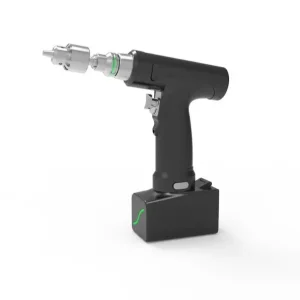
1. Thermal Osteonecrosis Prevention: High-density cortical bone resection during primary and revision total knee/hip arthroplasties (TKA/THA) presents a risk of thermal bone injury. When intraosseous cutting temperatures exceed 47°C, alkaline phosphatase denatures, impairing osteoblast activity and compromising cementless implant osseointegration. Our brushless surgical series uses proprietary stator wound architecture and precision planetary gearing to sustain cutting torque at steady speeds, keeping bone temperature rises under 2°C (tested per ASTM F2180).
2. Sterilization Rigor Under CSSD Workflows: Central Sterile Supply Departments (CSSD) in Milanese hospitals operate under rigorous pre-vacuum autoclave cycles (134°C at 2.1 bar, with holding periods extending to 18 minutes). Standard commercial motors frequently experience seal breakdown, winding corrosion, and bearing seizure under this thermal stress. Our CE-certified systems use medical-grade silicone O-rings, high-temp PEEK encapsulation, and stainless steel micro-bearings, maintaining drive transmission deviations below 0.03 mm even after 200 high-pressure cycles.
3. Budget Rationalization Under MDR Transition: The implementation of Regulation (EU) 2017/745 (MDR) has increased compliance costs across Europe, causing some legacy multinational manufacturers to reduce instrument variants or raise handpiece costs. We supply direct OEM/ODM and distributor-ready platforms under ISO 13485:2016, providing Lombardy and European healthcare providers with cost-efficient, high-precision surgical tools with complete Technical Documentation files.
Addressing the core mechanical, ergonomic, and regulatory demands of orthopedic surgeons and biomedical engineering directors.
Engineered to replace vulnerable carbon brush assemblies with Hall-sensor-driven electronic commutation, eliminating internal conductive particulate wear.
Designed for sustainable hospital budget lifecycles. Standardized modular drive units reduce total cost of ownership across departments.
Complete documentation packages engineered to satisfy notified bodies, hospital risk auditors, and European competent authorities.
The convergence of orthopedic power tools with digital surgery, autonomous haptic feedback, and cloud-linked traceability.
The modern operating theatre is transitioning from standalone manual instruments to interconnected digital workflows. In surgical centers in Milan, Rome, and Zurich, robotic joint arthroplasty platforms and optical navigation trackers require power tools capable of communicating kinematic and rotational parameters. Our R&D path focuses on embedding high-bandwidth CAN-bus communication channels and micro-transponders into the drive body, providing navigation tracking software with real-time rotational speed, drill feed resistance, and osseous boundary detection to prevent bicortical plunge.
Traditional surgical battery packs require complex transfer shields or aseptic handling kits because standard lithium-ion cells degrade under high temperatures. We are validating solid-state lithium-phosphate (LiFePO4) battery architectures designed to withstand complete exposure to high-temperature autoclave cycles alongside the handpiece. This advancement eliminates non-sterile battery handling in the operating room, simplifying drape management and lowering cross-contamination risks.
Supply chain reliability is critical for medical devices. To support healthcare providers across Milan and the broader European market, we integrate our Shanghai automated manufacturing base (annual volume exceeding 38,000 surgical sets across 16 lines) with European regional fulfillment channels. Our responsive logistics support guarantees dispatch within 24 hours for emergency surgical kits and within 48 hours for European distributor consignments.
Explore our full surgical range designed for arthroplasty, trauma, dental, cardiothoracic, and neurosurgical procedures.







Key information regarding certification, sterilization compatibility, custom OEM configurations, and clinical trial support.
All surgical power units and accessories are engineered according to the conformity assessment routes of Regulation (EU) 2017/745. Devices are categorized as Class IIa or Class IIb active surgical instruments. We maintain comprehensive Technical Files including Biocompatibility (ISO 10993), Cleaning/Sterilization Validation (ISO 17664), and Electrical Safety/EMC (IEC 60601-1 / IEC 60601-1-2), traceable through EUDAMED.
Brushless motors use magnetic rotor configurations and electronic Hall-effect commutators instead of mechanical carbon friction brushes. This design reduces internal friction, prevents handpiece heating during extended drilling or acetabular reaming, and eliminates conductive carbon dust inside sealed sterile housings, extending motor service life beyond 1,500 clinical hours.
Instruments undergo real-world cycle testing in ISO 17025 accredited labs using fractional vacuum steam sterilization at 134°C for 18 minutes per cycle. Evaluated parameters include radial runout, housing seal integrity under IPX9K conditions, and insulation resistance per IEC 60601-1. Our handpieces consistently complete over 200 high-pressure autoclave cycles without torque loss.
Yes. Our in-house engineering lab supports custom gearbox ratios, variable speed ranges (500 to 15,000 RPM), and calibrated torque limits (up to 20 N·m for acetabular reaming). OEM partners in Milan, Germany, and across the EU can specify handpiece ergonomics, laser-etched branding, chuck configurations, and localized packaging within standard 3-week prototype lead times.
Connect with our technical engineering team in Milan to request full Technical Documentation, custom OEM/ODM specifications, or sample units for clinical evaluation.