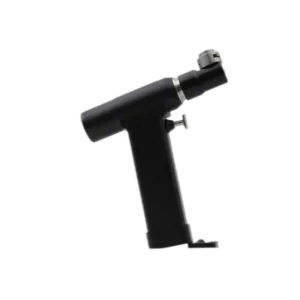
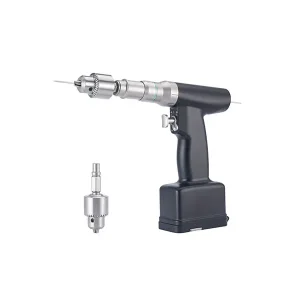
Engineered for high-volume emergency trauma wards in Addis Ababa, Hawassa, and regional referral medical hubs requiring robust sterilization cycles and surgical torque stability.
Strategic analysis of trauma surgery dynamics, public-private sector evolution, and equipment procurement protocols within the Federal Democratic Republic of Ethiopia.
Ethiopia's rapid urban growth and key transport arteries (e.g., Addis Ababa-Adama Expressway, Modjo-Hawassa, and Djibouti corridors) have precipitated an acute rise in severe orthopedic trauma and compound fractures. Tertiary facilities such as Tikur Anbessa (Black Lion) Specialized Hospital and St. Paul's Hospital Millennium Medical College handle thousands of complex fracture fixations monthly.
Surgical suites require heavy-duty cannulated drills and oscillating sagittal saws capable of non-stop operation across back-to-back open reduction internal fixation (ORIF) and intramedullary interlocking nailing operations.
Medical device importation into Ethiopia is strictly governed by the Ethiopian Food and Drug Authority (EFDA). Equipment must carry unambiguous proof of quality, clinical efficacy, and international conformity. SNK manufactures its devices in full alignment with the EU Medical Device Regulation (CE-MDR 2017/745) Class IIa/IIb requirements, drastically shortening the EFDA registration pathway.
Furthermore, the Ethiopian Pharmaceuticals Supply Service (EPSS) prioritizes long-life, modular surgical power systems with universal attachments that minimize national spare-part dependency and lower public inventory expenditures.
Ethiopian biomedical engineering departments face unique operational bottlenecks: sudden municipal grid voltage fluctuations and variable steam quality during central sterile services department (CSSD) autoclave reprocessing. SNK addresses these local pain points with dual-redundancy intelligent microprocessor-controlled chargers compatible with wide input voltages (100–240V ±15%), alongside high-density sealed brushless DC (BLDC) motors that withstand high-humidity autoclave chambers (134°C at 2.2 bar) for over 200 consecutive cycles without motor seal breakdown or bearing runout degradation.
A multi-phase transition plan moving clinical institutions from legacy pneumatic instruments to intelligent brushless surgical platforms.
Replacing unreliable compressed air pipelines and worn carbon-brush tools with hermetically sealed BLDC handpieces. This eliminates carbon dust shedding in sterile fields and yields a 35% reduction in handpiece surface temperatures during lengthy arthroplasty procedures.
Integrating onboard digital strain sensing to ensure drilling through dense cortical bone instantly shifts torque output without blade bogging. Prevents bone thermal osteonecrosis by automatically constraining drill rotational heat generation beneath the critical 41°C boundary.
Aligning future tool iterations with 12 open-source optical surgical navigation tracking arrays. Enables Ethiopian teaching hospitals to deploy robotic-assisted joint reconstruction and minimally invasive spine surgeries (MIS-TLIF) with ultra-thin saw profiles.
Engineered clinical packages tailored to the financial, logistical, and technical parameters of East African healthcare providers.
Standardized multi-functional surgical kits featuring interchangeable chucks (AO, Jacobs, K-wire, Hudson, and sagittal saw heads). Allows regional hospitals in Dire Dawa, Bahir Dar, and Mekelle to operate from a unified spare-parts inventory, drastically lowering lifecycle sustainment costs.
High-end modular sets designed for premier Addis Ababa healthcare providers (e.g., Silk Road General Hospital, Nordic Medical Centre, Korean Hospital). Delivers ultra-quiet whisper drives (<65 dBA), exceptional handpiece balance, and ergonomic grips favored by European and American-trained surgical faculty.
Ultra-durable, cost-effective carbon motor surgical power series with simplified maintenance protocols. Designed for high resilience in rural environments with constrained CSSD technical resources, ensuring zero operational downtime even under demanding field conditions.
Combining automated Industry 4.0 Swiss CNC production lines with a dedicated air-cargo corridor between Shanghai/Guangzhou and Addis Ababa.
Operating across 16 automated flexible production lines, SNK deploys multi-axis robotic machining centers capable of maintaining microscopic tolerances on cannulated shafts and gear assemblies. Every drill handpiece undergoes 100% DIN 13972 bone-cutting precision testing and infrared thermal imaging to guarantee adverse clinical events stay beneath 0.03 ppm.
Leveraging direct freighter flights via Ethiopian Airlines Cargo from major Chinese transit hubs directly to Bole International Airport (ADD), emergency surgical replacement components and whole-set procurement orders are delivered within 48 to 72 hours. We maintain over 200 ready-to-ship complete orthopedic sets in bonded inventory to eliminate hospital stockouts.
We supply international distributors and Ethiopian tender agents with turn-key regulatory packages: CE Declaration of Conformity under EU MDR 2017/745, ISO 13485:2016 quality audits, MDSAP multi-country certs, Biocompatibility validation (ISO 10993), electrical safety testing (IEC 60601-1), and authentic Certificates of Free Sale (CFS) legalized for Ethiopian embassy verification.
Complete surgical tool configurations covering arthroplasty, neurosurgery, cardiothoracic sternotomy, and multi-disciplinary orthopedic reconstructive interventions.
Key technical specifications required by institutional evaluators at the Ministry of Health, EFDA inspectors, and private consortiums.
In-depth responses covering regulatory registration, shipping, sterilization protocols, and long-term after-sales maintenance in East Africa.
Whether you are preparing a regional tender bid with the Ethiopian Pharmaceuticals Supply Service (EPSS), outfitting a private clinic in Addis Ababa, or seeking a resilient OEM manufacturing partner in China, SNK delivers validated clinical precision directly to your operating theatres.