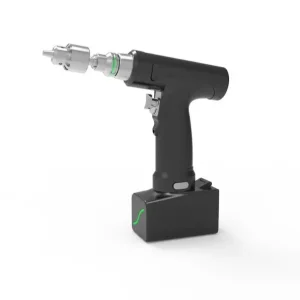
Engineered for seamless compatibility with multi-functional brushless handpieces. These CE-MDR certified attachments provide surgical teams across Aichi Prefecture with reliable intraoperative torque transfer, whisper-quiet micro-milling, and thermal equilibrium during high-caseload arthroplasty and neurosurgery.




The Chubu economic heartland combines world-leading manufacturing rigor with intense clinical pressures across tertiary academic centers. Discover why replacement precision parts factories must elevate beyond generic production to serve Nagoya's surgical standard.
Nagoya and Aichi Prefecture represent Japan's foremost aerospace and automotive engineering territory. This background creates an exceptionally sophisticated procurement environment where biomedical engineers demand sub-micron tolerances, zero backlash in bevel gears, and failure rates below 0.03 ppm on surgical handpiece assemblies.
Premier medical facilities including Nagoya University Hospital, Nagoya City University Hospital, Fujita Health University, and Aichi Medical University perform thousands of complex joint reconstructions and trauma interventions annually. Continuous surgical schedules require replacement adapters to endure rigorous sterilization cycles without losing chuck concentricity.
Japanese healthcare distributors require suppliers with full MDR (EU) 2017/745 Class IIa/IIb certification, providing an accredited scientific baseline for Japan's Pharmaceuticals and Medical Devices Agency (PMDA) third-party reviews. Full traceability via EUDAMED and complete technical dossiers expedite institutional adoption.
Across North America, the European Union, and East Asia, hospital procurement directors are re-evaluating single-vendor captive ecosystems. High OEM replacement markups and obsolete component schedules have catalyzed demand for certified, direct-to-manufacturer replacement parts factories.
Hospitals routinely retire fully operational brushless handpieces simply because a single drive spindle, internal bearing, or gear-locking collar has worn out, and the original manufacturer discontinued replacement parts or imposed exorbitant lead times. In high-cost healthcare economies like Japan and Germany, this wasteful replacement cycle strains capital expenditure budgets.
Furthermore, third-party uncertified replacement adapters often exhibit runout deviations above 0.08 mm, resulting in accelerated bone necrosis, excessive handpiece vibration, and premature motor stator burnout.
We deploy automated Swiss CNC five-axis machining centers and vacuum-heat-treatment metallurgy to produce aftermarket and replacement assemblies that match or exceed original specifications at a fraction of legacy capital costs.
| Audit Parameter | Legacy OEM Brands | SNK Precision Replacement Factory |
|---|---|---|
| TCO (Total Cost of Ownership) | 300% – 500% premium markups | 45% – 65% cost optimization |
| CE-MDR Compliance | Certified (Proprietary Lock) | CE-MDR (EU) 2017/745 Open Standard |
| Autoclave Fatigue Life | Typically 100 – 120 cycles | > 200 cycles @ 134°C / 0.22 MPa |
| Spindle Runout Tolerance | < 0.04 mm | ≤ 0.025 mm certified accuracy |
| Supply Lead Time | 6 – 12 weeks backorders | 24h – 48h emergency dispatch |
How advanced alloy microstructures, diamond-like carbon (DLC) surface treatments, and digital navigation interoperability define next-generation surgical drive systems.
Deploying PVD-deposited Titanium Carbonitride (TiCN) and amorphous DLC layers on high-friction bevel pinions and quick-lock chuck jaws. This reduces friction coefficients to μ < 0.12, virtually eliminating metal debris shedding inside patient incision cavities during prolonged resection procedures.
Utilizing vacuum-melted Custom 455 stainless steel with cryogenic stress-relieving cycles. Even under continuous 14,000 osc/min reciprocating saw loads, attachment casing temperatures remain well beneath the 43°C human tissue thermal tolerance threshold.
Adapting replacement drive shafts to harmonize with 12 open-protocol surgical navigation trackers and robotic arthroplasty end-effectors used in Nagoya university clinics. Ensuring precise spatial fiducial alignment within ±0.15 mm under dynamic tracking.
Developing fully hermetic, contact-free magnetic couplers that isolate the brushless drive motor from wet steam during high-pressure autoclave evacuation, quadrupling the working lifespan of internal sensor arrays.
Incorporating internal micro-porous vibration-absorbing internal structures inside sagittal saw blades. This attenuates surgeon hand-arm micro-vibration acceleration by up to 34%, drastically mitigating fine motor fatigue in marathon reconstructive operations.
Laser micro-etching GS1-compliant DataMatrix barcodes on all adapters and blades down to 2 mm profile sizes, allowing automated CSSD (Central Sterile Services Department) tracking in Japanese hospital networks.
Ensuring complete regulatory conformity, hospital sterilization compatibility, and risk management documentation under international medical standards.
Every replacement component is manufactured within ISO 14644-1 Class 7 cleanroom facilities under MDSAP-audited quality management systems. Dimensional consistency is verified via automated coordinate measuring machines (CMM) with repeatability within 1.5 micrometers.
We supply distributor partners in Nagoya with comprehensive Technical Files, Clinical Evaluation Reports (CER under MEDDEV 2.7/1 Rev 4), risk management files per ISO 14971:2019, and Declarations of Conformity ready for instant institutional committee inspection.
With an inventory buffer of over 200 ready-to-dispatch replacement tool sets and adapters, our regional supply hub fulfills emergency institutional replenishment to Chubu Centrair International Airport within 24 to 48 hours, virtually eliminating surgical schedule cancellations.
Explore our certified replacement adapters, multi-size wire drivers, sternotomy attachments, sagittal saw blades, and complete cannulated drill units built for high-demand trauma centers.







Authoritative technical answers addressing CE-MDR conformity, PMDA harmonization, metallurgy standards, and field maintenance protocols for medical engineering directors.
Our replacement adapters and saw attachments are classified as Class IIa and IIb medical devices under MDR Annex VIII. Every unit undergoes rigorous biocompatibility testing according to ISO 10993, risk analysis per ISO 14971:2019, and full technical documentation reviewed by accredited Notified Bodies. Each part bears full EUDAMED traceability and GS1 UDI serialization for complete lifecycle tracking.
Yes. Our quick-coupling mechanisms are reverse-engineered and precision-milled to interface with industry-standard drive shafts (such as AO quick-connect, Hudson, Zimmer, and Stryker-style multi-pin layouts). Radial runout is strictly maintained under 0.025 mm, protecting existing handpiece gearheads from uneven torque strain and premature brush wear.
We provide Japanese distributors and biomedical departments with full raw material mill test certificates (DIN EN 10204 3.1), DIN 13972 bone drill precision reports, ASTM F2180 thermal rise data, 200-cycle autoclave fatigue certifications, and ISO 13485:2016 audited quality records that streamline domestic regulatory clearance under PMDA Article 23-2-23.
During high-frequency bone cutting, bone tissue temperatures exceeding 47°C cause permanent osteocyte necrosis. SNK saw blades utilize laser-cut rake angles with variable pitch tooth geometry that optimizes chip evacuation. Our hip reamer adapters integrate fluid micro-venting and hardened low-friction bearings, maintaining reaming interfaces below 41°C in accordance with ASTM F2180 thermal metrics.
For standard replacement adapters, saw blades, and wire collets, we maintain continuous inventory ready for dispatch within 24 hours. Air cargo shipments to Chubu Centrair International Airport (NGO) typically clear customs and arrive at hospital Central Sterile Supply Departments (CSSD) within 2 to 4 business days, supported by complete bilingual packing manifests.
Yes. We support custom laser-etched branding, localized Japanese packaging, customized chuck gripping dimensions, customized torque ratings (500 to 15,000 rpm), and specialized sterilization cassette designs. Turnaround for custom OEM/ODM validation batches is approximately 3 weeks from approved technical drawings.
