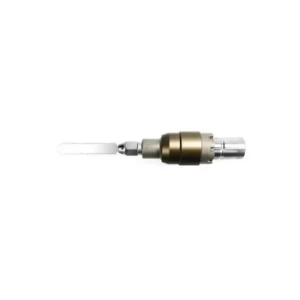
Precision-machined medical drill and cranial reaming components calibrated for heavy surgical caseloads, verified under European CE Directive and MDR benchmarks.


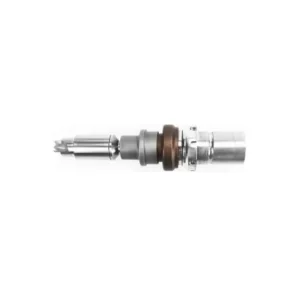

Navigating dual-sector procurement constraints, persistent trauma backlogs, currency volatility, and SAHPRA regulatory frameworks with certified alternative parts.
South Africa’s medical landscape is characterized by a stark division between state facilities (such as Chris Hani Baragwanath Academic Hospital and Tygerberg Hospital) and private surgical organizations like Netcare, Life Healthcare, and Mediclinic. State institutions face budgetary austerity under proposed National Health Insurance (NHI) frameworks, where replacement handpieces from traditional Western OEMs carry unfeasible capital expenditure premiums.
By procuring direct-from-manufacturer CE-certified replacement parts, biomedical engineering units in Gauteng, Western Cape, and KwaZulu-Natal preserve their capital equipment fleets while cutting maintenance costs by over 45%.
The South African Health Products Regulatory Authority (SAHPRA) mandates stringent conformity standards under the Medicines and Related Substances Act (Act 101 of 1965) for Class B and C medical devices. While South Africa does not operate an independent European-style notified body mechanism, it strongly relies on the European Union CE marking framework and ISO 13485:2016 certification.
Our surgical drill adapters, chuck assemblies, and saw blades are fully manufactured within an ISO 13485 certified quality management system and hold CE-MDR conformity files, simplifying import documentation and hospital procurement board approvals.
South African orthopedic surgery departments operate under exceptional mechanical stress. High rates of road traffic accidents (RTAs) and penetrating urban trauma load provincial orthopedic theatres around the clock. Surgical power tools endure rapid consecutive operating lists, accompanied by frequent rapid-cycle autoclave steam sterilization.
Coupled with intermittent national grid fluctuations (load shedding) affecting HVAC and autoclave cycle stabilization, replacement parts must possess aerospace-grade stainless steel metallurgy (surgical-grade 17-4PH and 316L) to resist pitting, micro-cracking, and torque slippage during continuous trauma surgery.
From carbon-brush wear obsolescence to brushless magnetic coupling and high-temperature tribological sealing: what defines an enterprise-tier replacement component?
Sub-par replacement adapters frequently suffer from shaft eccentricity and run-out discrepancies exceeding 0.08 mm. In high-speed orthopedic bone drilling (1,200 to 1,600 RPM) or cranial milling (30,000+ RPM), this run-out generates high-frequency mechanical shuddering, rapidly fatiguing surgeon dexterity and inducing micro-fractures in osteoporotic bone tissue.
Our precision manufacturing protocols employ German 5-axis CNC machining centers and Japanese grinding rigs, guaranteeing transmission concentricity within ±0.015 mm. In oscillating saw blade interfaces and cannulated bone drill couplings, this eliminates drive shaft backlash, prolonging gear train lifespan and stabilizing intraoperative osteotomy kerfs.
According to ASTM F2180 and clinical literature, thermal osteonecrosis occurs when bone temperature exceeds 47°C for more than 30 seconds during drilling or reaming. Worn internal bearing sets and misaligned acetabular reaming adapters exacerbate friction, conducting scorching temperatures down the reamer arbor directly to the acetabular bed during total hip arthroplasty (THA).
SNK engineering incorporates dual ceramic-hybrid miniature bearings and low-viscosity, medical-grade fluorinated perfluoropolyether (PFPE) synthetic lubricants. This architecture ensures operating temperatures remain consistently below 41°C, eliminating thermal injury risks and ensuring compliance with stringent sterile processing protocols.
How advanced precision manufacturing in Shanghai bridges logistics delays, hedges currency volatility, and guarantees continuous surgical parts availability.
Operating 16 automated production lines within an ISO 14644-1 Class 7 cleanroom environment, our Shanghai facility merges rapid tooling with intelligent robotic deburring. This flexibility empowers distributors to commission custom adapter shanks (including Hudson, Stryker, AO Synthes, and Hall-style quick-couplings) with production cycles of under 3 weeks.
Recognizing maritime shipping friction along the Indian Ocean trade route, Snaikang maintains standing buffer inventories of over 200 universal handpiece adapters and 50,000 surgical saw blades. Emergency surgical kit replenishments ship via direct air cargo to O.R. Tambo International (JNB) or Cape Town International (CPT) within 24 to 48 hours.
Every single adapter, saw blade, and replacement chuck is laser-engraved with an immutable DataMatrix 2D barcode tied to EUDAMED and internal MES traceability databases. From raw steel metallurgical melt certificates to final Coordinate Measuring Machine (CMM) reports, distributors receive complete auditing packets with every shipment.
Configured for demanding orthopedic trauma, elective joint replacements, and emergency neurological cranial trephination in provincial and metropolitan centers.
In regional trauma centers throughout Gauteng, severe open tibial shaft fractures and pelvic ring disruptions require immediate intramedullary nailing and external fixation. Surgeons rely on cannulated bone drill adapters and wide-range Jacobs chucks to drive K-wires and ream cortical bone. SNK replacement chucks feature hardened tungsten carbide jaws that prevent bit slippage even when driving large self-tapping Schanz screws into sclerotic cortical margins.
Elective joint replacement centers in Sandton, Umhlanga, and Cape Town require exacting stability. Our acetabular reaming drill attachments deliver a gear reduction ratio of 4:1, translating high motor RPM into consistent 300 RPM high-torque rotary force. This ensures spherical reaming without chattering or egg-shaping the acetabulum, critical for uncemented press-fit cup fixation in active South African patients.
Acute extradural hematomas and traumatic brain injuries demand swift cranial access. The SNK cranial drill adapter interfaces with standard disposable and reusable Hudson-end cranial perforators. Featuring a rapid automatic declutching mechanism upon bone plate penetration, it protects the underlying dura mater from laceration in emergency burr-hole procedures.
Coronary artery bypass grafting (CABG) and valve replacements require clean, rapid longitudinal sternotomies. Our sternum saw adapters integrate dual blade guards that deflect pericardial structures while maintaining cutting velocities of up to 15,000 strokes per minute, minimizing bone splintering and supporting optimal post-operative wire cerclage closure.
Evaluating the true financial lifecycle of orthopedic power tool replacement components versus proprietary OEM vendor lock-in models.
Multinational medical equipment conglomerates frequently deploy the "razor-and-blade" monetization model: discounting initial handpiece units while imposing 400% to 600% price markups on consumable saw blades, Jacobs chuck keys, and replacement gear adapters. For South African health clusters negotiating ZAR/USD currency devaluations, direct factory sourcing restores margin sovereignty without compromising patient safety.
Hospital theatre fleets are rarely homogeneous. A single central sterile services department (CSSD) often handles handpieces spanning multiple generations. SNK engineers adapters to open mechanical protocols, allowing universal cross-coupling between brushless handpieces, AO-type quick couplers, Zimmer-type fittings, and Hudson reamers, cutting capital inventory fragmentation in half.
When an adapter fails during autoclaving due to bearing seizure or seal breakdown, an entire surgical tray is pulled from service. By implementing modular replacement adapter sets with verified 200+ autoclave cycle tolerances, biomedical engineering teams eliminate surgical kit delays, raising operating theatre utilization rates across high-demand surgical lists.
Detailed answers regarding CE-MDR conformity, SAHPRA import clearing, mechanical interchangeability, and autoclave maintenance protocols.
Yes. In South Africa, medical device commercialization is regulated by SAHPRA under the Medicines and Related Substances Act. SAHPRA utilizes recognized regulatory reliance pathways accepting European Union CE certification under Directive 93/42/EEC (MDD) and Regulation (EU) 2017/745 (MDR), alongside ISO 13485:2016 quality management system compliance. Our factory provides full Declaration of Conformity files, ISO certificates, and technical dossiers ready for distributor device listing and provincial tender submissions.
SNK designs and manufactures precision replacement adapters built to standardized industrial and medical quick-coupling interface specifications, including AO small and large quick-connect, Hudson, modified Trinkle, Zimmer, and Hall configurations. Our CNC engineering tolerances remain within ±0.01 mm of standard specifications, ensuring smooth push-and-click locking engagement and zero mechanical backlash on compatible systems.
All SNK metal replacement parts, including drill chucks, reaming adapters, saw attachments, and saw blades, are validated to endure repeated gravity displacement and pre-vacuum autoclave steam sterilization protocols in accordance with ISO 17665-1. Standard cycle benchmarks are 134°C (273°F) for 4 to 18 minutes at 2.2 bar pressure. Internal fluorinated silicone seals and ceramic-bearing sets are engineered to resist degradation across over 200 consecutive sterilization cycles.
For standard in-stock inventory (including universal drill adapters, oscillating saw heads, and K-wire attachments), dispatch occurs within 24 to 48 hours of order confirmation. Via express air courier (DHL/FedEx/Air Cargo) directly to O.R. Tambo International Airport (JNB) or Cape Town International Airport (CPT), customs arrival typically takes 4 to 7 business days. For containerized sea freight to Durban Port or Cape Town, transit times range between 24 and 30 days.
Yes. As an authentic manufacturer operating 16 automated CNC lines, SNK provides complete OEM and ODM engineering services. We support custom laser marking of your brand name and catalogue numbering, modified gear-reduction ratios, bespoke quick-coupling geometries, customized sterile packaging, and localized Instructions for Use (IFU) documentation. Standard OEM custom prototyping is generally accomplished within 3 weeks.
Our orthopedic saw blades are precision stamped and ground from imported high-hardness surgical stainless steel. The tooth geometry is optimized with three-dimensional multi-facet sharpening to maximize bone resection clearance while minimizing friction. Comparative thermographic testing against major OEM brands confirms that bone interface temperatures remain well under 42°C when irrigated properly, with zero deviation in cutting kerf after 10 continuous osteotomies.
Direct factory pricing on CE-certified surgical saw adapters, torque drill heads, oscillating systems, and precision blades for hospital tenders.