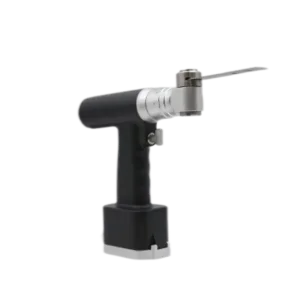
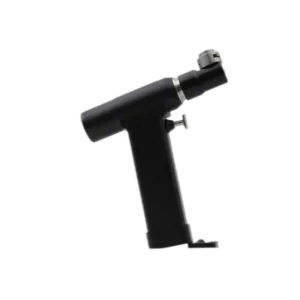
High-Quality Carbon Motor Supplier & Suppliers in Hungary
Delivering clinical-grade carbon brush surgical bone drills, oscillating saws, and precision motor drives tailored for Hungarian healthcare institutions, CEE medical equipment integrators, and global hospital tenders.
Engineered for consistent stall torque, reliable start-stop responsiveness, and high thermodynamic tolerance across repeated Central European autoclave regimens.
Trauma Surgery • Hungary
ODM Carbon Brush Bone Drill ND-1501(1) – High-Precision 0-1200 RPM
Hungarian Commercial & Industrial Landscape for Carbon Motor Systems
Hungary occupies a distinctive geostrategic position within the Central and Eastern European (CEE) medical technology manufacturing and procurement network. Centered around Budapest, Debrecen, and Szeged, the country hosts prestigious medical teaching universities—such as Semmelweis University and the University of Debrecen—which operate high-throughput traumatology and orthopedic surgical clinics. Concurrently, Hungary serves as an essential manufacturing corridor for precision engineering, automotive actuators, and electromechanical medical assemblies.
In surgical instrumentation, the carbon-brush motor remains a resilient, economically indispensable workhorse across Hungarian public hospitals managed by the National Directorate-General for Hospitals (OKFŐ) and financed via the National Health Insurance Fund (NEAK). While brushless topologies have penetrated ultra-high-end surgical theaters, high-performance carbon-brush motorized power systems continue to dominate general trauma, osteotomy interventions, and secondary regional clinical tenders due to their balanced acquisition costs, mechanical simplicity, and exceptional instantaneous starting torque.
Procurement Insight for Hungarian Tenders: Public healthcare facilities operating within county hospitals (pl. Megyei Kórházak) demand power tools that withstand erratic autoclave turnover without requiring proprietary electronic firmware recalibration during carbon brush refurbishment.
Furthermore, Hungary's growing animal healthcare and veterinary surgery markets—supporting advanced orthopedic interventions such as Tibial Plateau Leveling Osteotomy (TPLO) across Central Europe—rely heavily on robust carbon-actuated motor drills and oscillating saws that offer reliable mechanical torque without prohibitive capital expenditures.
Supply Chain Resiliency & Sourcing
Addressing Hungarian Medical Distributor Sourcing Challenges
Local Hungarian medical distributors (orvosbiológiai beszállítók) face persistent hurdles in sourcing surgical-grade carbon motor assemblies. International OEMs often impose steep minimum order quantities (MOQs), protracted lead times exceeding 16 weeks, and restrictive distributor territory lock-outs. Conversely, generic industrial brush motor suppliers often fail to satisfy medical bio-burden requirements, lack hermetic liquid ingress protection (IPX7/IPX8), and degrade prematurely when subjected to repeated steam sterilization under 134°C vacuum autoclave conditions.
As a specialized manufacturer dedicated exclusively to surgical bone actuation since 2009, we bridge this operational divide. By delivering medical-grade carbon motor power instruments certified under ISO 13485:2016 and architected to comply fully with European Union Medical Device Regulation (EU MDR 2017/745), we provide Hungarian partners with dependable, factory-direct OEM/ODM channel agility.
Our centralized European logistics framework ensures that critical motor subassemblies, replacement carbon brush cassettes, and interchangeable surgical chucks reach Budapest within 48 to 72 hours, insulating Hungarian distributors against hospital theater downtime and tender fulfillment penalties.
Actuation Physics & Metallurgy
Engineering Fundamentals of Medical-Grade Carbon Motors in Surgical Orthopedics
A rigorous examination into commutator physics, contact resistance, thermal dispersion, and autoclaving durability under harsh clinical operating room conditions.
Silver-Graphite Composite Commutation
Unlike standard industrial carbon brushes made of dense charcoal or low-purity graphite, our medical carbon motors employ a precision sintered silver-graphite matrix. This decreases interfacial contact resistance by up to 38%, mitigating frictional voltage drops and preventing commutator glazing during intermittent heavy cortical bone drilling.
Thermal Limiting & Necrosis Prevention
Bone osteocytes undergo permanent thermal necrosis when local temperatures exceed 47°C for more than 10 seconds. Our carbon motor housings incorporate aeronautical-grade 6061-T6 aluminum cooling ribs, micro-ducted internal convective pathways, and low-friction PEEK rotor bushings to keep outer handpiece surface temperatures strictly under 41°C.
Autoclave Hermetic Encapsulation
Repeated autoclave cycles (134°C at 2.2 bar steam pressure) degrade motor insulation if humidity breaches the armature. Our motor housings utilize high-performance fluororubber double O-ring barriers and epoxy-potted stator windings, certified to withstand over 200 consecutive sterilization protocols without stator breakdown.
Performance Parameter
SNK Medical Carbon-Brush Series
Conventional Industrial Carbon Motor
High-End Brushless Coreless System
Initial Capital Outlay (CapEx)
Balanced / Highly Cost-Effective
Low (Not Medical Certified)
Premium (300% - 450% higher)
Instantaneous Stall Torque
High (≥ 4.5 N·m instant peak)
Moderate (Unregulated curve)
Superior Electronic Vector Control
Reprocessing Autoclave Life
200+ Cycles (134°C validated)
Fails under steam (≤ 10 cycles)
500+ Cycles with hermetic rotor
Maintenance & Brush Servicing
Replaceable cassette (< 3 mins)
Non-modular / Soldered
Maintenance-free / Driver reliant
Clinical Target in Hungary
Trauma Centers, Regional Clinics, Vet
Non-surgical applications only
Tertiary Academic Neurosurgery / TKA
Compliance, Registration & Hospital Integration
Localized Support & Regulatory Compliance for Hungary (OGYÉI & CE-MDR)
Streamlined technical documentation dossiers designed to satisfy Hungarian National Institute of Pharmacy and Nutrition requirements and public tender stipulations.
OGYÉI and EUDAMED Regulatory Documentation
Distributing medical power tools in Hungary requires uncompromised conformity with the European Medical Device Regulation (EU MDR 2017/745). In accordance with guidelines established by the National Institute of Pharmacy and Nutrition (Országos Gyógyszerészeti és Élelmezés-egészségügyi Intézet – OGYÉI), all invasive surgical power instruments must feature validated technical documentation dossiers.
We provide Hungarian authorized representatives (Gyógyászati Segédeszköz Forgalmazók) and distributors with turnkey access to:
Full Class IIa / IIb MDR Technical Files & Declarations of Conformity.
Detailed Clinical Evaluation Reports (CER) compliant with MEDDEV 2.7/1 Rev 4 and MDR Annex XIV.
Direct EUDAMED registration codes and Basic UDI-DI identification for immediate traceability across Hungarian hospital inventory databases.
Sterilization validation dossiers conforming to EN ISO 17665-1 (Moist Heat Sterilization) and EN ISO 11135 (Ethylene Oxide).
Tender Support & Life-Cycle Hospital Maintenance
Winning bids within Hungarian Közbeszerzési Hatóság (Public Procurement Authority) tenders demands transparent Life-Cycle Cost (LCC) calculations. Many European hospital groups find themselves stranded by legacy European manufacturers who charge upwards of 60% of original device cost for motor unit repairs.
Our carbon motor platforms drastically reduce Total Cost of Ownership (TCO) through modular maintenance architectures:
Quick-Change Carbon Assemblies: In-house biomedical hospital engineers (orvostechnikusok) can replace carbon brush blocks without breaching the core rotor chamber in less than three minutes.
Interchangeable Handpiece Couplers: A singular carbon motor core connects seamlessly with bone reamers, sagittal saw adaptors, wire/pin drivers, and AO chuck attachments.
Multi-Lingual Instructions for Use (IFU): Complete documentation and cleaning instructions translated directly into Hungarian (Magyar nyelvű használati útmutató).
Equipping a Hungarian Surgical Facility or Preparing an EU Tender?
Connect directly with our biomedical engineering desk for MDR audit files, localized pricing schedules, and evaluation sample units.
Global Enterprise Sourcing Criteria for Carbon Motor Surgical Systems
How multinational brand managers, orthopedic OEM developers, and tier-1 procurement executives qualify medical actuator manufacturers.
OEM / ODM Customization Agility
Global procurement requires rapid adaptation to custom speed curves, specialized gear ratios (e.g., high-torque 300 RPM for acetabular reaming vs. 15,000 OPM for fine sagittal osteotomy), private branding laser-etching, and bespoke medical casing geometries delivered within 3-4 week sprints.
DIN 13972 Runout Verification
Rotary concentricity is non-negotiable. Enterprise buyers require dynamic drill chuck runout deviation of less than 0.05 mm measured according to DIN 13972 standards. This mitigates microscopic bone micro-fracturing and drill bit slippage during delicate traumatology fixation.
Defect Rate Below 0.03 PPM
Through closed-loop robotic CNC machining centers, automated coil winding, and multi-stage dynamometer verification, our production line maintains an adverse clinical event defect benchmark under 0.03 PPM across more than 38,000 surgical power sets manufactured annually.
Strategic Innovation 2026-2030
Technology Roadmap: The Future of Medical Carbon Actuation Systems
Bridging traditional electromechanical dependability with contemporary smart sensing, real-time diagnostic telemetry, and sustainable material loops.
Self-Monitoring Predictive Brush Wear Diagnostics
One primary clinical drawback historically associated with carbon-brush surgical handpieces was the unpredictable end-of-life status of the carbon block during protracted surgical procedures. Our upcoming 2026 Generation-IV carbon motors integrate microscopic embedded Hall-effect continuity probes inside the graphite block.
When brush degradation approaches 85% of total allowable mechanical travel, a discrete optical LED indicator on the handpiece collar alerts theater technicians during preoperative setup. This eliminates intraoperative power drops without adding bulky digital microcontrollers inside the sterilizable zone.
Bio-Compatible Nanocomposite Brush Formulation
Traditional industrial brush dust generation represents a catastrophic contamination risk if breached inside sterile operating fields. SNK's next-generation medical carbon brushes utilize polymer-matrix carbon nanotubes (CNTs) bonded with medical paraffin lubricants.
Micro-wear particles are reduced by 72% relative to conventional graphite, and any trace particulates remain fully inert, non-pyrogenic, and captured completely within a self-sealing internal labyrinthine filter chamber rated to ISO 14644-1 Class 7 cleanroom cleanliness standards.
Procurement & Clinical Inquiries
Frequently Asked Questions on Carbon Motor Orthopedic Systems in Hungary
Detailed insights addressed directly to orthopedic department heads, biomedical procurement officers, and medical device distributors.
Why do Hungarian hospitals continue to select carbon-brush motors over brushless models?
While brushless surgical systems offer higher continuous speeds and electronic vector controls, carbon motor tools provide significant strategic advantages for secondary and tertiary regional hospitals in Hungary. Carbon motors deliver higher instantaneous starting torque under heavy mechanical resistance (such as thick femoral cortical bone drilling), possess a significantly simpler analog drive architecture that does not suffer from electronic sensor failure during harsh steam autoclaving, and boast an acquisition and maintenance cost 40% to 60% lower than brushless equivalents. For high-volume traumatology wards where tools undergo frequent rotation, carbon motors represent the most cost-effective and dependable workhorse.
What specific certifications accompany your shipments into Hungary and the EU?
Every device shipped to Hungary is fully certified under the EU Medical Device Regulation CE-MDR (EU) 2017/745 for Class IIa/IIb surgical active instruments. Manufacturing facilities strictly operate under audited ISO 13485:2016 quality management systems. Furthermore, our regulatory package includes the Declaration of Conformity (DoC), technical files registered in the EUDAMED database, Full Quality Assurance System certificates issued by recognized European Notified Bodies, and bilingual Hungarian/English Instructions for Use (IFU).
How does repeated steam autoclaving affect carbon brush performance?
Standard industrial carbon brush motors fail rapidly when subjected to steam autoclaving due to moisture condensation swelling the graphite binders and corroding commutator segments. SNK surgical carbon motors resolve this through proprietary metallurgical formulations: our brushes utilize high-purity silver-graphite composites treated with water-repellent silane coatings, enclosed in IPX8 hermetic housings. Under standardized European hospital autoclave protocols (134°C at 2.2 bar for 18 minutes), our handpieces are verified to exceed 200 cycles before requiring standard brush cassette replacement.
Can our biomedical engineering department service and replace the carbon brushes locally?
Yes. One of the core design tenets of our ND-1501 and NS-1511 series is modular field-serviceability. Rather than requiring factory returns to replace worn brushes, our handpieces feature an external threaded maintenance port. Hospital clinical engineering staff (orvostechnikai osztály) can replace the carbon brush pair using a standard surgical flat-head tool in less than three minutes, drastically reducing downtime and eliminating expensive overseas servicing freight costs.
What is the typical delivery timeframe for orders dispatched to Budapest and regional Hungarian hubs?
For standard inventory configurations and replacement consumable kits (including carbon brush blocks, saw blades, and drill chuck adapters), orders are processed and dispatched within 24 to 48 hours via express air logistics, arriving at Budapest Liszt Ferenc International Airport (BUD) or distributor warehouses within 3 to 5 business days. For customized OEM/ODM batch manufacturing orders with localized laser-etched branding and customized Hungarian packaging, turnaround times average 3 to 4 weeks.
Comprehensive Instrument Portfolio
Specialized Cannulated Drills, Micro Systems & Adapters
Explore our complete spectrum of orthopedic power solutions designed for human traumatology, joint arthroplasty, neurosurgery, and specialized veterinary procedures.
Cannulated Trauma • High Torque
ODM Carbon Canulate Drill ND-2011(1) – Integrated Carbon Brush System