Engineered to satisfy demanding Keihanshin hospital standards, veterinary surgery requirements, and cleanroom biomedical osteotomy operations.




A rigorous examination of Kansai's biomedical supply chain, high-spec collagen substrate demands, and micro-precision medical instruments.
The Osaka Prefecture medical ecosystem—anchored by Nakanoshima Qross (Center for International Medical Innovation) and Saito Life Science Park in northern Osaka—places stringent criteria on surgical hide derivatives, biocompatible collagen membranes, and implantable-grade animal tissue matrix processing. Concurrently, surgical tools interfacing with dermal, fascial, and periosteal layers must deliver zero thermal necrosis.
Globally, hide processing for surgical collagen membranes and powered bone cutting systems is experiencing unprecedented integration. With global pet humanization spurring advanced veterinary osteotomy procedures (such as TPLO) and human arthroplasty rising at 6.8% CAGR worldwide, orthopedic hardware must provide dual-compatibility across biological hide reaming, periosteal detachment, and sub-millimeter bone alignment.
The transition toward sensor-embedded surgical handpieces and tactile feedback drives modern surgical machinery in Kansai. Manufacturers serving Osaka must demonstrate real-time torque feedback, allowing automated micro-oscillators to prevent thermal denaturation of delicate dermis and periosteum during prolonged reconstructive interventions.
How cutting-edge hide separation, robotic integration, and sterile power tools solve high-density clinical challenges in Western Japan.
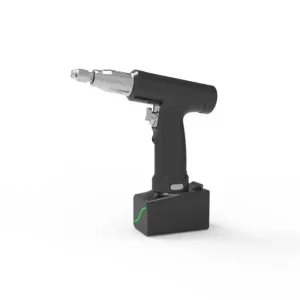
Across regional veterinary centers in Osaka City, Sakai, and Toyonaka, canine cruciate ligament repair is a dominant orthopedic procedure. The SNK TPLO Saw Adapter enables rapid, concentric radial osteotomies that protect adjacent hide, fascial tissues, and neurovascular bundles. Its brushless core eliminates carbon brush dust, ensuring zero airborne contaminants enter ultra-clean surgical fields.
In high-caseload emergency centers across the Kansai MedTech corridor, speed and heat control are non-negotiable. When elevating thick periosteal tissue or operating near compromised dermal flaps, the SNK Micro Oscillating Saw prevents overheating (<2°C rise validated by ASTM F2180), minimizing postoperative hide sloughing and accelerating revascularization in fracture repair.
Osaka healthcare systems operate under lean inventory protocols. SNK’s modular handpiece architecture allows hospital central sterile supply departments (CSSD) to autoclave handpieces through 200 standard high-temperature cycles without losing concentricity, reducing instrument fleet inventory overhead by 35% compared to monolithic systems.
Pioneering smart tactile sensors, bio-friendly alloys, and energy-dense surgical actuation systems.
Integration of Hall-effect micro-sensors within surgical handpieces to instantly differentiate between soft dermal/hide layers, cartilage, and cortical bone. Upon piercing through the cortical plate, torque automatically throttles within 4 milliseconds to prevent iatrogenic laceration of soft anatomical structures.
Transitioning from standard surgical-grade stainless steel to 3D-printed lattice titanium handpiece enclosures. This reduces handpiece mass by 28%, significantly lowering surgical fatigue during complex reconstructive flap reconstructions while providing internal damping against resonant vibration.
Implementing low-latency BLE (Bluetooth Low Energy) telemetry connecting handpieces directly to hospital navigation consoles. Provides OR directors and CSSD managers with real-time sterilization cycle counts, motor thermal profiles, and preventive maintenance alerts prior to mechanical degradation.
Engineered under ISO 13485:2016 for uncompromising clinical reliability, high torsional tolerance, and seamless OEM/ODM integration.





In-depth responses regarding regulatory registration, technical tolerances, cleaning parameters, and OEM/ODM private labeling.
All SNK instruments are manufactured within cleanroom environments certified to ISO 13485:2016 and MDSAP standards. Our engineering design dossiers conform to EU Regulation 2017/745 (CE-MDR) across Class I, IIa, and IIb classifications. For distributors registering medical instruments with the PMDA in Japan or tender authorities in Osaka, we provide comprehensive technical files, biocompatibility test results (ISO 10993), electrical safety data (IEC 60601-1), and risk assessments (ISO 14971).
Our brushless motors feature optimized sinusoidal current control that sustains micro-fine rotational concentricity with lateral runout of less than 0.03 mm. In oscillating saws and cannulated drills, thermal transfer is controlled through self-cooling airflow conduits and high-efficiency electromagnetic stator windings. Temperature rise under continuous surgical reaming remains strictly under 2°C (tested per ASTM F2180), safeguarding osteogenic and periosteal vitality.
Yes. Every handpiece casing and quick-coupling adapter is fabricated from medical-grade 316L stainless steel and high-performance polyether ether ketone (PEEK). Our seals are rated to survive 200+ high-pressure steam autoclave cycles (134°C at 2.2 bar) as well as ethylene oxide (EO) and low-temperature hydrogen peroxide plasma sterilization regimens, ensuring long service life in high-turnaround surgical wards.
SNK maintains an agile, flexible production infrastructure across 16 automated manufacturing lines. OEM/ODM modifications—including custom drive shaft geometry, gear ratio modifications (500 to 15,000 RPM), ergonomic weight redistribution, custom anodized finishes, and personalized laser-marked brand logos—typically conclude prototyping within 3 weeks. Full batch orders can be dispatched via Shanghai air hubs to Kansai International Airport (KIX) within days of release.
