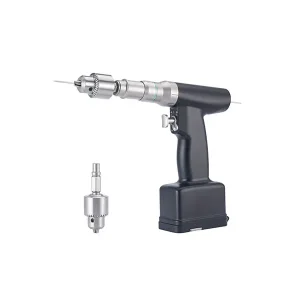
ODM SNK K-Wire Adapter - Multi-Size Gripping Attachment for Brushless Orthopedic Drill | Kenya Clinical Solutions
- Pin range: 0.8 mm – 3.2 mm continuous lock
- Radial run-out tolerance ≤ 0.02 mm
- Compatible with high-cycle steam autoclaves
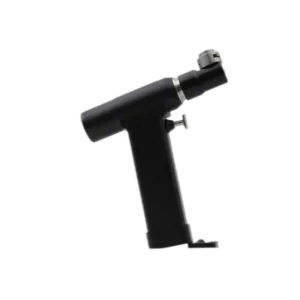
Engineered for high-throughput orthopedic departments, sub-county surgical units, and emergency trauma hubs across Nairobi, Mombasa, and Kisumu.
The Republic of Kenya represents the economic and technological locomotive of East Africa. Under the banner of Kenya Vision 2030 and the aggressive expansion of the Social Health Authority (SHA) replacing the NHIF framework, the Kenyan healthcare delivery model is experiencing structural transformation. Level 4 (Sub-County), Level 5 (County Referral), and Level 6 (National Referral Hospitals such as Kenyatta National Hospital and Moi Teaching & Referral Hospital) are scaling up procedural capabilities.
However, clinical directors and theatre managers face pronounced operational bottlenecks. Kenya's major transport arteries—including the Northern Corridor (A104) and coastal transport arteries—generate a substantial orthopedic trauma load primarily composed of polytrauma, comminuted diaphyseal fractures, and complex periarticular bone trauma from motorbikes (Boda Boda) and commercial vehicles.
Historically, secondary surgical units relied on aging pneumatic systems or manual hand drills, resulting in excessive operative duration, iatrogenic thermal necrosis, and prolonged post-operative rehabilitation. As an international manufacturing powerhouse, our precision power systems are specifically optimized to meet the exacting conditions of Kenyan operating rooms: fluctuating mains electricity, heavy sterilization rotations, and the urgent need for cost-efficient multi-functional systems.
Evaluating surgical power tools beyond initial purchase price: addressing clinical downtime, maintenance overhead, and multi-disciplinary modularity.
Low-tier, non-certified surgical tools frequently suffer rotor stator failure after 30 to 50 autoclave cycles, resulting in steep replacement and downtime costs. Our brushless technology guarantees over 200 high-temperature sterilization cycles without mechanical torque degradation, cutting five-year Total Cost of Ownership by up to 43%.
Rather than purchasing separate, isolated consoles for trauma, spine, and cardiothoracic surgeries, our quick-coupling universal motor base accepts modular quick-connect attachments (K-Wire adapters, cannulated chucks, acetabular reamers, sternum saw guards), significantly reducing instrument tray clutter and central sterile services processing times.
Global procurement teams prioritize vendors with redundant manufacturing facilities, complete Material Test Reports (MTRs), and MDR Class IIa/IIb certifications. Our closed-loop facility produces over 38,000 surgical power units annually, guaranteeing uninterrupted pipeline supply for East African hospital distributors.
| Evaluation Parameter | Legacy / Conventional Surgical Drills | SNK Brushless Precision Generation | Clinical Impact in Kenya Hospitals |
|---|---|---|---|
| Motor Architecture | Mechanical Carbon Brush Commutation | Brushless Electronic Commutation (BLDC) | Zero brush particulate contamination; superior sterile containment |
| Thermal Generation at Bone Bed | Excessive heat (>47°C after 40 seconds) | Controlled thermal profile (<41°C conforming to ASTM F2180) | Prevents osteocyte necrosis, accelerating bone union and screw fixation |
| Autoclave Resistance | Seal degradation within 50-70 cycles | Potted Hermetic Enclosure (200+ Steam Cycles at 134°C) | Withstands demanding steam reprocessing in high-volume referral centers |
| Torque Stability under Axial Load | Torque drops up to 25% under dense cortical resistance | Closed-loop PWM dynamic torque maintenance (±1.5% variance) | Prevents drill bit seizure during dense femoral reaming and osteotomy |
| Average Five-Year TCO | High (frequent handpiece replacement & repair downtime) | Minimized (modular adapters & replaceable drive core) | Predictable budgeting under county ministry and institutional tenders |
Addressing surgical complications through engineered mechanical design, thermal mitigation, and streamlined perioperative workflows.
Thermal osteonecrosis occurs when bone temperature exceeds the critical 47°C threshold for more than one minute, resulting in immediate osteocyte apoptosis and high incidence of postoperative screw loosening.
Our cannulated and solid drill systems integrate calibrated rotational speed curves (up to 1,600 rpm) matched with continuous torque output. Surgeons can advance drill flutes efficiently through dense cortical bone without applying excessive axial thrust, ensuring bone temperatures remain safe and preserving micro-vascular architecture for rapid callus formation.
In total knee arthroplasty (TKA), total hip arthroplasty (THA), and corrective osteotomies, saw blade deflection causes non-planar bone cuts, leading to prosthesis misalignment and premature implant wear.
Our oscillating saw handpieces incorporate precision four-bearing drive shafts and dynamic balance counterweights. Operating at an optimized 12,500 oscillations per minute with a narrow 4.5° or 5.0° swing arc, transmission vibration error is maintained under 0.03 mm. This provides surgeons with tactile stability and perfectly flat bone beds for cement or press-fit seating.
High patient loads in busy regional referral hospitals often mandate rapid turnaround between consecutive orthopedic surgeries. Equipment must withstand relentless decontamination cycles.
Our devices feature medical-grade anodized aluminum alloy housings combined with PEEK (Polyether ether ketone) high-temperature insulation barriers. Compatible with 134°C vacuum steam autoclaving, ethylene oxide (EO), and hydrogen peroxide low-temperature plasma sterilization, the system ensures seamless instrument processing without sacrificing handpiece lifespan.
Bridging pure mechanical surgical devices with digital, navigation-assisted smart power ecosystems.
Modern brushless motors are migrating toward embedded micro-controller sensor units (FOC - Field Oriented Control). Future iterations supplied to international partners integrate intelligent bone density sensing algorithms. By monitoring current draw spikes in real-time, the drill automatically identifies the breakthrough transition from hard cortical bone to soft trabecular or cancellous marrow, preventing plunging and mitigating neurovascular bundle lacerations.
As computer-assisted orthopedic surgery (CAOS) and surgical robotics gain traction in sub-Saharan teaching hospitals, our engineering platform utilizes open API tracking arrays. Handpieces feature calibrated optical tracker pin mounts and low-latency digital triggers that interface with leading surgical navigation optical systems.
Battery autonomy remains paramount in decentralized clinics. Our research laboratory is integrating nickel-manganese-cobalt (NMC) cells with specialized solid-state thermal isolation barriers. This increases power density by 35% while extending cycle endurance to over 800 full charge-discharge cycles without memory effect degradation, certified under UN38.3 transport safety protocols.
Surgeon fatigue during 4- to 6-hour complex reconstructive procedures directly correlates with tremor and operational inaccuracy. We are transitioning handpiece structural components toward titanium-magnesium aerospace alloys, shifting the center of gravity closer to the surgeon's palm and reducing total tool weight by 18%.
Ensuring frictionless importation, rigorous verification, and dependable ongoing technical support across East Africa.
Under Kenya's regulatory statutes, medical devices entering public and private healthcare facilities must comply with the Pharmacy and Poisons Board (PPB) medical device classification. Our complete documentation suite—including CE Declaration of Conformity under EU MDR 2017/745, ISO 13485:2016 quality management audits, and comprehensive biocompatibility testing (ISO 10993)—enables our regional distributors to swiftly obtain PPB product registration certificates.
To clear customs at the Port of Mombasa or Jomo Kenyatta International Airport (JKIA) without demurrage, shipments require a Certificate of Conformity (CoC) under the Kenya Bureau of Standards (KEBS) Pre-Export Verification of Conformity (PVoC) program. We partner directly with accredited inspection agencies (SGS, Intertek, Bureau Veritas) to conduct routine factory pre-shipment inspections, electromagnetic compatibility (EMC) testing, and physical packaging audits.
Medical equipment reliability depends heavily on the competency of hospital biomedical engineering teams. We supply bilingual technical service manuals, explode-view schematics, direct seal replacement kits, and digital training modules. Our East Africa distributor partners maintain localized inventories of routine consumable spares (gears, bearings, replacement chucks, and battery packs) in Nairobi to minimize theatre downtime.
Addressing essential technical, commercial, and operational queries from hospital procurement committees and medical device distributors.
Engineered for arthroplasty, maxillofacial reconstruction, cardiothoracic access, and trauma surgery across the East African healthcare network.