Optimized for high-volume orthopedic suites across Massachusetts General Hospital, Brigham and Women's, and regional ambulatory surgery centers requiring relentless torque stability and zero intraoperative thermal drift.


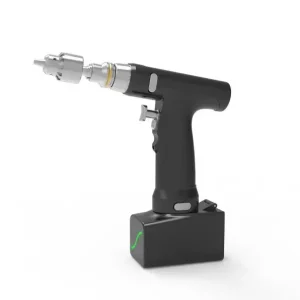

The Greater Boston metropolitan corridor—anchored by Cambridge research clusters, the Longwood Medical Area, and the Route 128 industrial belt—represents the world's most demanding proving ground for Class II and Class IIb orthopedic power instruments. Renowned academic teaching institutions like Massachusetts General Hospital (MGH), Brigham and Women's Hospital, Boston Medical Center, and specialized institutions such as Boston Children's Hospital enforce micro-tolerance criteria far beyond baseline commercial standards.
Concurrently, Boston's surge in medical robotics innovation has transformed how surgical end-effectors are qualified. Next-generation computer-assisted orthopedic surgery (CAOS), robot-assisted total knee arthroplasty (TKA), and minimally invasive spinal interventions require bone drills and sagittal saws engineered with negligible rotational runout, hermetic dynamic sealing, and real-time electronic drive synchronization.
Our ultra-high-end ODM power tools undergo rigorous DIN 13972 dynamic runout validations, achieving radial runout deviations under 0.02 mm to prevent cortical micro-fracturing and K-wire directional deviation in dense bone reaming.
We support Boston-based medical instrument brand owners, specialized surgical device startups, and tier-1 hospital procurement consortiums with agile ODM engineering, providing tailored speed ramps, custom motor housings, and custom drive protocols compatible with leading surgical navigation suites.
Boston operating suites demand power handpieces capable of undergoing back-to-back 134°C steam autoclaving and cold plasma sterilization cycles without internal stator degradation or degradation of medical-grade silicone seals.
Enterprise healthcare systems, multi-hospital groups, and international orthopedic brands have shifted procurement protocols toward verified technical dossiers, multi-jurisdiction compliance, and dual-sourcing reliability.
Traditional surgical handpieces suffer motor burnout due to moisture ingress during high-pressure steam decontamination. Our proprietary fluorosilicone labyrinth seals and laser-welded stainless enclosures maintain IPX8/IPX9K hermetic ratings through 200 consecutive vacuum autoclave exposures.
By eliminating high-wear carbon brushes and switching to sensorless or Hall-sensor brushless DC (BLDC) motors, maintenance intervals are extended by over 300%. Sourcing executives achieve up to 45% lifecycle savings compared to legacy Western European brand maintenance contracts.
Full Technical Dossier availability, encompassing ISO 10993 cytotoxicity, ASTM F2180 heat elevation, and IEC 60601-1-2 EMC testing reports, allowing Boston and US distributors to file accelerated 510(k) equivalence notifications or CE-MDR Class IIa/b submissions.
| Evaluation Parameter | SNK Ultra High End Architecture | Standard Market Brushed Drills | Clinical Advantage (Boston OR Units) |
|---|---|---|---|
| Drive Motor Topology | Brushless Electronic Commutation (BLDC) | Mechanical Carbon-Brushed Motor | Zero particulate shedding; quiet acoustic footprint (<65 dB). |
| Torque Ripple Deviation | < ±1.5% across entire dynamic load range | ±5.0% to ±8.5% under high cortical resistance | Prevents blade binding, kickback, and bone splintering in hard cortical reaming. |
| Thermal Rise at Bone Interface | < 2.1°C after continuous 90s resection | > 8.5°C requiring constant saline flush | Strict protection against osteonecrosis (cell death above 47°C). |
| Sterilization Survivability | Validated 200+ cycles (134°C / 2.2 bar) | Seal degradation visible at 50–70 cycles | Dramatic reduction in repair turnaround and hospital spares inventory. |
The convergence of computerized surgical navigation, robotic arm positioning, and smart operative telemetry requires surgical power instruments to evolve from purely mechanical cutters into active cyber-physical components. Our Shanghai R&D center works directly with medical engineering consortiums to build the next generation of intelligent bone resection instruments.
By incorporating micro-CAN communication, closed-loop torque sensing, and contactless digital throttling, our handpieces anticipate bone density changes in real time. As soon as the drill breaches cortical bone and enters cancellous marrow or soft tissue, rotational inertia is neutralized within 8 milliseconds, providing an inherent safety envelope during percutaneous screw fixation.
Direct mechanical and electrical interfacing for robotic arm tool-changers, featuring zero-backlash keyways and high-density circular multipin gold-plated connections capable of sub-millimeter repeatable docking.
Dynamic counter-mass oscillation balancing inside reciprocating and sagittal saw assemblies, reducing surgeon hand-arm vibration syndrome (HAVS) exposure by 62% during extensive multi-level spinal fusions.
How we bridge tier-1 precision manufacturing scale with immediate US East Coast technical compliance, warranty support, and supply line resilience.
Every handpiece, battery module, and cutting adapter is fabricated within our cleanroom facility operating under MDSAP and ISO 13485:2016 management standards. Complete Device Master Records (DMR) and Device History Records (DHR) are archived for 10 years.
We partner with local Massachusetts medical device distributors and logistics hubs to establish emergency backup handpiece banks. Spare assemblies, replacement adapters, and autoclave sterilization cases can be deployed on a 24-hour JIT delivery turnaround.
Direct peer-to-peer engineering collaboration. Boston product managers interface directly with our mechanical drive architects, electronics engineers, and tooling specialists via secure CAD pipelines, shortening custom prototype delivery to 3 weeks.
Detailed answers concerning electrical safety, sterilization validation, torque control, and regulatory equivalence.
Preserving surgical integrity across joint replacement, thoracic sternotomy, trauma repair, and veterinary surgical applications throughout the New England medical corridor.
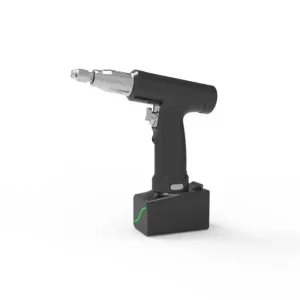
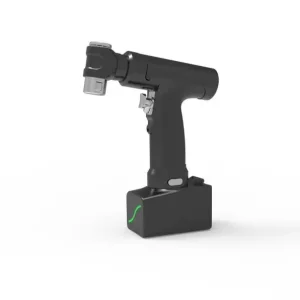
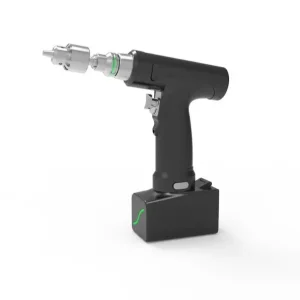





Accelerate your clinical qualification, OEM private labeling, and regional distributor growth across Boston and North American healthcare sectors. Request CAD models, testing dossiers, and sample evaluation kits today.
