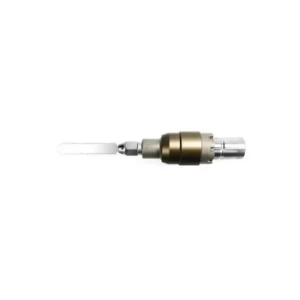
Engineered for seamless compatibility with multi-functional brushless drive handpieces, reducing theatre downtime during emergency trauma fixations and reconstructive arthroplasty across Bangladeshi hospital systems.


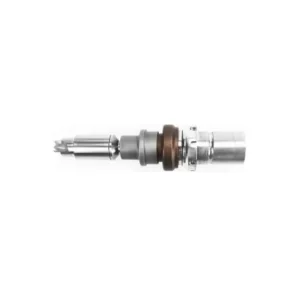

A macroeconomic and biomedical engineering evaluation of trauma burden, import-dependent healthcare logistics, and the strategic shift toward precision aftermarket components.
The healthcare infrastructure of Bangladesh is undergoing historic transformation. Driven by rapid industrialization, highway expansion, and infrastructural development under initiatives like the Dhaka-Chittagong economic corridor, the national burden of road traffic accidents (RTAs) and occupational orthopedic injuries has escalated significantly. Premier national institutions—most notably the National Institute of Traumatology and Rehabilitation (NITOR, commonly known as Pongu Hospital), Dhaka Medical College Hospital (DMCH), and Bangabandhu Sheikh Mujib Medical University (BSMMU)—operate at unprecedented operational intensity.
In high-density orthopedic operating theaters across Bangladesh, surgical power systems are deployed continuously across 12 to 18-hour surgical blocks. Under such brutal usage conditions, the critical point of mechanical failure rarely resides in the brushless motor chassis itself; rather, it manifests within the transmission interfaces: quick-connect ball-detent couplers, planetary gear reductions, cannulation lumen seals, and saw drive eccentric yokes.
Historically, Bangladeshi hospitals were forced to rely on expensive Western tier-one original equipment manufacturers (OEMs). When an oscillating saw adapter or cranial reamer failed, importing OEM replacements meant 14 to 20 weeks of customs clearance through Chittagong Port or Hazrat Shahjalal International Airport, coupled with exorbitant distributor markups that drained institutional foreign currency reserves.
Recent volatility in foreign exchange allocations and stringent import letter of credit (L/C) guidelines administered by Bangladesh Bank have created critical operational bottlenecks for medical device importers. Purchasing complete surgical handpiece systems every time a chuck jams or a bearing experiences saline corrosion is financially unsustainable for both state-funded tertiary hospitals and premier private facilities like Square Hospitals, Evercare Hospital Dhaka, and United Hospital.
As a leading Chinese surgical instrument factory and replacement parts manufacturer, we provide a targeted solution: direct factory interoperability. By providing certified medical-grade surgical replacement parts, precision-machined adapters, and replacement saw blades that match ISO 6475 mechanical fastening and ISO 13485 quality standards, we enable local biomedical engineering departments to restore functioning trauma suites within days at a fraction of capital expenditure.
Our localized supply chain model bypasses excessive multi-tier distributor inflation, offering Bangladeshi healthcare entities direct B2B pricing, complete technical dossiers for Directorate General of Drug Administration (DGDA) compliance, and custom batch delivery.
Addressing the specific operational and surgical demands encountered in metropolitan surgical institutes and divisional medical college hospitals.
Long bone open fracture stabilization via Intramedullary (IM) Nailing and external fixators demands relentless cannulated drill and K-wire driving reliability. Our K-wire adapters feature heat-treated 440C stainless gripping collets that resist groove galling during continuous percutaneous pinning in high-throughput casualty shifts.
Specialty private hospitals such as Evercare Hospital Dhaka, Apollo Imperial Hospital (Chittagong), and Labaid Specialized Hospital perform complex primary and revision Total Hip (THA) and Knee (TKA) Arthroplasties. Precision acetabular reaming adapters maintain steady 300 RPM high-torque output without thermal necrosis risk.
Institutes like the National Institute of Neurosciences & Hospital (NINS) require millimeter-precision cranial peroration and osteoplastic flap fashioning. Our high-speed cranial mill and perforator drill adapters feature integrated automatic clutch release mechanisms preventing dural tearing.
Why leading Bangladeshi distributors, biomedical engineering contractors, and hospital procurement consortia are replacing multi-tiered OEM intermediaries with our ISO 13485 Shanghai facility.
Every surgical replacement adapter and blade we manufacture emerges from a fully integrated, state-of-the-art precision machining facility based in Shanghai, China. Utilizing multi-axis Swiss CNC turning-milling centers (Citizen and Star) alongside robotic wire electrical discharge machining (WEDM), we achieve component tolerances down to ±0.005mm.
Surgical instruments endure aggressive mechanical shear forces and harsh chemical exposure. We engineer our adapters exclusively from vacuum-hardened medical-grade martensitic and precipitation-hardening stainless steels, including Custom 455, 17-4PH, and surgical AISI 420. Drive gears undergo cryogenic treating and diamond-like carbon (DLC) surface treatment to eliminate transmission wear, reducing frictional heat build-up during extended bone resections.
Unlike Western suppliers that outsource component machining across fragmented global suppliers, our vertically integrated plant houses heat treatment, precision grinding, micro-laser welding, passivation, cleanroom assembly (ISO 14644-1 Class 7), and autoclave longevity testing under one single quality roof.
| Performance Dimension | Traditional Western OEM | SNK Precision Direct Factory |
|---|---|---|
| Procurement Lead Time | 12 – 20 Weeks (Import L/C delay) | 3 – 7 Days Air Express to Dhaka |
| Direct Replacement Cost | High (Exorbitant Distributor Margins) | Direct Factory Pricing (60-70% lower) |
| Autoclave Durability | 100 – 120 Steam Cycles | 200+ Cycles (134°C Vacuum Steam) |
| DGDA Technical Dossier Support | Rigid / Bureaucratic Delays | Full CE-MDR, ISO 13485 Dossier Included |
| Interface Versatility | Proprietary Locked Architecture | Interoperable Multi-Brand System Adapter |
How the international medical device landscape transitioned from proprietary closed ecosystems to open, high-precision ISO 13485 surgical component manufacturing.
For more than three decades, the global orthopedic surgical power tool market has been dominated by a handful of multinational conglomerates. Their business model heavily relies on proprietary "razor-and-blade" mechanics: locking hospitals into expensive handpiece handshakes, then charging exorbitant markups for proprietary replacement chucks, saw blades, and adapter couplings.
Furthermore, legacy OEMs frequently declare entire tool generations "end-of-life" within five to seven years, discontinuing adapter production to compel hospital systems into multimillion-dollar system overhauls. For developing healthcare economies such as Bangladesh, India, and Southeast Asia, this planned obsolescence severely undermines public healthcare affordability and surgical instrument availability.
Today, modern clinical engineering adheres to global standardization frameworks. Mechanical transmission couplings are defined by precision metallurgical standards, rotational concentricity parameters, and hermetic sealing protocols rather than exclusive brand trademarks. As an ISO 13485:2016 and CE-MDR compliant manufacturer, SNK has spearheaded this democratization.
Our replacement parts and surgical tool adapters are deployed in over 80 countries, providing surgeons with identical tactile ergonomics, superior dynamic torque retention, and zero-compromise biocompatibility. By breaking the OEM monopoly, hospitals in Bangladesh achieve institutional autonomy, protecting their operating suites from component shortages while elevating surgical safety standards.
Our continuous research and development pipeline for surgical drill handpieces, intelligent micro-motor interfaces, and antimicrobial surface technologies.
Integration of vacuum sub-zero cryogenic quenching for all adapter gears, yielding a 35% increase in fatigue threshold under continuous high-frequency bone resection.
Nano-ceramic thermal barrier layers applied to saw blade attachment shafts, mitigating bone marrow thermal necrosis during extended cortical reaming procedures.
Next-gen dynamic dual-lip labyrinth seals preventing autoclave steam condensation from reaching internal bearings, achieving 300+ sterilizer cycle survival.
Adapters engineered with universal optical tracking array mounts, integrating directly with Stryker, Medtronic, and Brainlab computer-assisted orthopedic systems.
A rigorous regulatory and logistics infrastructure engineered specifically for seamless hospital procurement and tender clearance across Bangladesh.
We supply Bangladeshi distributors and medical procurement directors with comprehensive regulatory dossiers required by the Directorate General of Drug Administration (DGDA). Documentation includes ISO 13485:2016 quality certificates, CE-MDR Declaration of Conformity under EU 2017/745, MDSAP compliance reports, and DIN 13972 bone drill mechanical validation test data.
The monsoon climate of Bangladesh introduces intense relative humidity during shipping and storage at port transit facilities. All SNK replacement parts undergo multi-stage ultrasonic cleaning, nitric acid passivation, and are vacuum-sealed with military-grade vapor corrosion inhibitor (VCI) pouches within aluminum alloy medical transport cases to ensure zero rust upon arrival.
We provide remote video maintenance training and complete breakdown repair schematics to hospital biomedical engineering technicians in Dhaka, Sylhet, Rajshahi, and Chittagong. Our modular overhaul kits include specialized disassembly wrenches, O-ring seal replacements, and food-grade medical synthetic lubricants to maintain peak handpiece uptime.
Essential guidance covering compatibility, shipping timelines, customs clearance, autoclave sterilization, and L/C payment procedures.
Comprehensive orthopedic power systems and certified surgical replacements configured to support trauma, cardiothoracic, and spinal surgery in tertiary medical theaters.