Enterprise-grade surgical power handpieces calibrated specifically for trauma, reconstructive orthopedics, and complex osteotomy protocols across modern operating theaters in Istanbul.



A comprehensive analysis of Turkey's premier biomedical cluster: uniting Western European regulatory harmonization with resilient transcontinental supply networks.
Istanbul sits decisively at the intersection of European, Middle Eastern, and North African (EMENA) medical device distribution corridors. With advanced manufacturing districts in Tuzla, Başakşehir, and Dudullu, suppliers in Istanbul leverage rapid multimodal logistical channels. Turkish manufacturers provide European healthcare authorities with rapid freight corridors while bypassing the supply vulnerability of east-Asian choke points, reducing mean transit durations from weeks to hours.
Due to the Customs Union agreement between Turkey and the European Union, leading biomedical manufacturers operate directly under the EU Medical Device Regulation (EU-MDR 2017/745) and ISO 13485:2016. High-end orthopedic tool builders in Istanbul undergo rigorous oversight by European Notified Bodies, ensuring that biocompatibility profiles, risk management dossiers, and post-market clinical follow-ups (PMCF) fully mirror top-tier standards globally.
Institutional hospital chains, surgical centers, and regional distributors are reshaping how tier-one orthopedic powered tools are audited, purchased, and integrated.
Modern clinical data highlights that bone tissue exposed to cutting temperatures surpassing 47°C incurs irreversible osteocyte death and prolonged healing intervals. High-tier engineering focuses on high-frequency oscillating and reciprocating saw geometries that purge micro-debris and maintain contact temperatures below 41°C, meeting ASTM F2180 specifications.
Long orthopedic reconstructive interventions require surgical tools that minimize vibrational hand-arm fatigue. Through precision-balanced DC brushless drives, internal acoustic baffling, and aerospace-grade casing materials, ultra-high-end handpieces drop physical recoil forces by up to 34% compared to legacy pneumatic variants.
Multi-departmental procurement strategies favor single modular power units capable of driving trauma drills, cranial mills, acetabular reamers, and oscillating saws through rapid-lock quick-connect adapters. This unified ecosystem reduces sterilization footprint requirements and optimizes capital allocation by over 40%.
The progression of surgical power tool engineering from electromechanical reliability to sensor-fused smart operative systems.
Eliminating hall-effect sensors to achieve full encapsulation, enabling unlimited steam autoclave cycles without electronic deterioration.
Microsecond torque feedback algorithms detecting the transition from cortical to cancellous bone to prevent plunge complications.
Integrating standardized digital bus protocols for robotic joint reconstruction arms and 3D navigation tracking integration.
Sub-GHz wireless cycle counting logging vibration shifts and internal heat histories to schedule preventive refurbishment ahead of intraoperative failure.
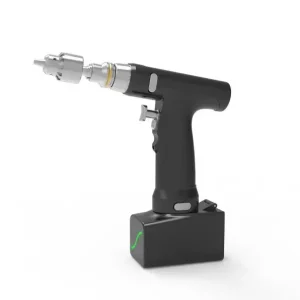
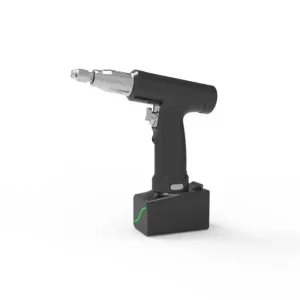
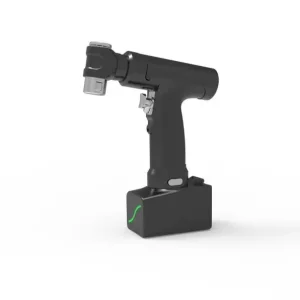
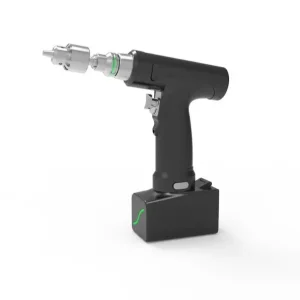
Complete surgical tool arrays engineered for osteotomy, arthroplasty resection, cranial trephination, and emergency trauma fixation.


Direct answers concerning mechanical specifications, regulatory clearance dossiers, sterilization cycles, and distributor workflows.
Brushless DC (BLDC) motors operate via electronic commutation rather than mechanical carbon brushes. This completely eliminates carbon dust debris, reduces intraoperative mechanical friction, prevents high heat buildup, and sustains consistent high torque under intense loads. Furthermore, without brushes to wear down or spark, BLDC systems survive hundreds of high-pressure saturated steam autoclave cycles without performance loss.
All systems are backed by CE-MDR (EU) 2017/745 Class IIa/IIb declarations of conformity, ISO 13485:2016 audited quality certifications, EUDAMED traceability identifiers, and complete technical dossiers including bio-compatibility, electrical safety (IEC 60601-1), electromagnetic compatibility (IEC 60601-1-2), and mechanical stress fatigue documentation.
Yes. Our high-end tool shafts and quick-connect chuck adapters maintain tight concentricity (transmission runout under 0.03 mm) and are designed to mount active and passive optical tracking arrays, ensuring seamless compatibility with dominant optical surgical navigation platforms.
Direct regional warehousing enables emergency dispatch within 24 to 48 hours for standard modular units and saw handpieces across Turkish healthcare clusters. Custom OEM configurations, including specific torque mappings, custom shaft locks, and customized laser etchings, generally complete manufacturing and cleanroom sterilization validation in three to four weeks.
