Precision-matched to high-speed hollow diamond-tipped trephines, cannulated osteotomes, and bone biopsy heads. Featuring electronically commutated brushless motors and rapid-locking adapters.



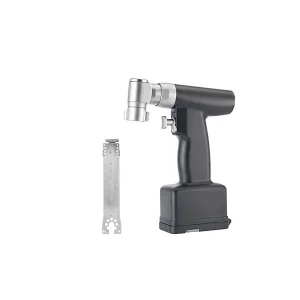




An authoritative analysis of diamond grit matrix formulation, concentric annular wall physics, internal hydraulic irrigation pathways, and the reduction of cellular thermal necrosis in clinical core harvest procedures.
Hollow diamond tipped coring bits (frequently classified in clinical practice as cannulated diamond trephines, core harvest bone burs, or circular osteochondral saws) represent a critical convergence of precision micro-machining and advanced metallurgical sintering. Unlike solid twist drills that pulverize cellular structures across an entire frontal projection plane, hollow coring bits operate strictly along a thin annular boundary (typically wall thicknesses ranging from 0.35 mm to 0.75 mm). This design reduces cutting friction and bone volume displacement by more than 78%, yielding an intact, biologically viable autologous bone cylinder suitable for structural grafting or histological diagnosis.
The retention of synthetic diamond monocrystals onto the medical-grade austenitic stainless steel (AISI 316LVM / ASTM F138) or custom precipitation-hardened martensitic substrate (17-4PH) dictates both the cutting longevity and tissue compatibility. Conventional electroplated diamond trephines rely solely on mechanical entrapment within a galvanic nickel matrix. Under severe clinical reaming torques and repeated autoclave exposures, nickel degradation poses chronic foreign-body metallosis risks. Modern Class 4.0 cleanroom manufacturing utilizes active vacuum brazing using biocompatible titanium-nickel-copper alloys under ultra-high vacuum (<10⁻⁴ mbar) at 920°C. This chemical-metallurgical bond establishes titanium carbide (TiC) micro-interfaces with the diamond crystal lattice, elevating shear bonding strength from 45 MPa (electroplating standard) to upwards of 280 MPa, eliminating diamond grit stripping during aggressive cortical penetration.
Key Clinical Metric: Vacuum-brazed hollow diamond trephines maintain structural diamond grit retention after 200 consecutive ISO 6475 autoclave cycles (134°C at 2.1 bar for 18 minutes), preserving a radial runout variance below ±0.015 mm without surface micro-flaking or edge delamination.
The primary hazard encountered in bone trephining and osteochondral coring is frictional thermal accumulation. Cortical bone undergoes irreversible cellular thermal osteonecrosis when exposed to temperatures exceeding 47°C for longer than 60 seconds (Eriksson & Albrektsson threshold), severely impairing osteointegration and graft revascularization. Solid or poorly irrigated bits trap bone slurry within cutting crevices, escalating localized shear resistance.
SNK's hollow diamond coring architecture incorporates a multi-orifice internal delivery channel paired with counter-helical exterior clearance flutes. Sterile chilled physiological saline (0.9% NaCl) is actively forced through the central hollow axis directly against the advancing bone plug cutting face. Centrifugal fluid expulsion forces debris outward through micro-etched relief windows. As demonstrated in finite element thermal dissipation simulations and ASTM F2180 benchmark trials, this hydro-dynamic cooling model curtails the maximum bone-matrix temperature delta to <2.1°C above ambient irrigation temperature, safely below the 44°C threshold even at rotational speeds of 3,000 to 12,000 RPM.
| Engineering Parameter | Conventional Electroplated Trephines | Carbide Toothed Core Cutters | SNK CE-Certified Vacuum Diamond Bits |
|---|---|---|---|
| Bonding Technology | Galvanic Nickel Encapsulation | Welded Tungsten Carbide Teeth | Ti-Active Vacuum Brazed Matrix (TiC) |
| Bone Core Quality | High friction, frequent thermal glazed layer | Micro-fractured core edges, jagged margin | Pristine cylindrical core, intact trabeculae |
| Thermal Rise (@ 5,000 RPM) | +12.4°C to +18.7°C (Risk of Necrosis) | +9.2°C to +14.5°C | +1.8°C to +3.2°C (Fully Protected) |
| Autoclave Cycle Endurance | 25–40 cycles before micro-spalling | 60–80 cycles (tooth chipping issues) | 200+ Validated Sterilization Cycles |
| Radial Concentricity (TIR) | ±0.045 mm | ±0.035 mm | < ±0.012 mm (Micro-Turned Substrate) |
| CE-MDR Traceability | Legacy MDD / Ambiguous dossier | Varies across suppliers | Full EUDAMED / MDR Class IIa Approved |
Technological convergence in ultrasonic-assisted ablation, robotics-compatible quick mounts, and bio-inert diamond grit crystallization driving the surgical device market through 2030.
Integration of high-frequency axial micro-vibrations (22–38 kHz) overlaid onto rotational cutting motions. This hybrid harmonic approach reduces requisite surgeon axial hand pressure by 60%, dampening tactile handpiece kickback and virtually abolishing heat spikes during sclerotic cortical drilling.
As orthopedic robot systems (Mako, ROSA, Navio) dominate arthroplasty theatres, trephines and coring bits must feature universal optical tracking fiducials and keyed hexagonal quick-connects calibrated to sub-10 micron runout tolerances for automated guidance.
Transitioning from randomly dispersed synthetic grit to Polycrystalline Diamond (PCD) continuous annular cutting edges. CVD (Chemical Vapor Deposition) diamond nano-films ensure a mirrored 0.05 µm roughness average, yielding zero bone adhesion and seamless core ejection.
Hospital networks, multinational OEM medical brands, and military health tender committees evaluate critical risk metrics prior to approving cannulated coring bit contracts.
The expiration of the legacy Medical Device Directive (MDD 93/42/EEC) has disqualified over 35% of historic tooling suppliers unable to satisfy the rigorous clinical evaluation reporting (CER) and post-market clinical follow-up (PMCF) mandates under the European Medical Device Regulation (EU) 2017/745. European distributors and NHS trusts require active Class IIa/IIb Notified Body certifications (CE 0123 / CE 0197) with live single registration numbers (SRN) on EUDAMED. SNK guarantees validated biocompatibility (ISO 10993 cytotoxicity, sensitization, and systemic toxicity series) and continuous device master files (DMF) ready for audit inspection.
Hospital Value Analysis Committees (VACs) evaluate cost-per-procedure over initial acquisition price. Premium vacuum-brazed diamond bits delivering 200+ procedures slash annual per-theatre drill spending by 42% compared to single-use disposable units.
Complete compatibility with leading motor handpiece coupling geometries (Stryker, DePuy Synthes, ConMed, Zimmer Biomet, and SNK power systems), eliminating the necessity of auxiliary chuck adaptors that introduce runout error.
Tier-1 OEMs mandate full Optical Emission Spectrometry (OES) material certification for every incoming bar of medical-grade steel, confirming ferrite and delta-phase content suppression below 0.5% to eliminate stress corrosion cracking during pressurized chemical sterilization. Laser-engraved unique device identification (UDI-DI / UDI-PI) ensures instantaneous digital tracking across every surgical tray worldwide.
How SNK’s automated Shanghai production campus leverages 5-axis Swiss micro-machining, automated robotic vacuum brazing, and smart quality control to guarantee rapid global volume delivery.
Supply chain shocks across global medtech have exposed the vulnerability of fragmented production ecosystems. SNK has established an integrated 10,000-square-meter Industry 4.0 facility combining precision turning, multi-axis laser slotting, robotic brazing, and automated cleanroom packaging within a single verified campus under ISO 13485:2016 and MDSAP oversight.
The production of our hollow diamond tipped coring bits starts on Citizen Swiss 5-axis sliding head turning centers equipped with high-pressure internal spindle cooling. Substrates are turned from medical 17-4PH or 316LVM surgical stainless steel in a single continuous chucking setup, eliminating remounting errors and guaranteeing concentricity between the cannulated fluid conduit and the outer bit sleeve within 0.008 mm. Following turning, precise counter-opposed core harvest viewing apertures are cut utilizing femtosecond cold laser micromachining, avoiding heat-affected zones (HAZ) that could weaken thin-walled tube boundaries.
Scalable Production Capacity: 16 automated intelligent flexible production cells yield an annual output capacity of over 38,000 orthopedic power handpiece systems and 250,000 matched cannulated coring bits, maintaining a 200+ unit standing emergency stock dispatched within 24 hours.
Following robotic titanium-alloy brazing inside our computerized multi-chamber vacuum furnace, every batch undergoes automated vision inspection via 3D laser confocal scanning microscopy (Keyence VK-X3000 series). Every cutting head is scanned across 360 degrees to verify diamond grit distribution density (30–35% volume fraction) and grit projection height uniformity (60% grit embedment for maximum retention). This level of industrial consistency enables defect rates below 0.03 ppm, assuring hospital surgeons that every bit cuts with identical tactile resistance.
Direct mill sourcing of certified European/Japanese surgical steels with complete metallurgical chemical assays, melt lot numbering, and ultrasonic porosity crack testing before machining.
Complete turnkey OEM / ODM custom engineering completed in ~3 weeks versus the typical 8 to 12 weeks industry average. Rapid prototyping, custom laser markings, and custom shank connections available.
Strategic distribution hubs in Asia-Pacific and Europe enable warehouse fulfillment in ≤24h for APAC and ≤48h for Western Europe, supporting fast-track replenishment for hospital tenders.
From minimally invasive mosaicplasty to neuro-cranial decompression and dental maxillofacial grafting, clinical outcomes rely directly on cutting bit stability.
In articular cartilage reconstruction of the knee and talus, harvesting a cylindrical graft with perpendicular cartilaginous margins is crucial. SNK hollow coring bits produce perfectly cylindrical, uncompressed plugs with viable chondrocytes, ensuring 1:1 press-fit stability into recipient sockets.
Treating early-stage avascular necrosis (AVN) of the femoral head requires decompression tunneling through the trochanter into the ischemic necrotic sphere. Cannulated trephines guided by K-wires permit precise, thermal-free channel formation with simultaneous viable trabecular biopsy extraction.
In complex alveolar ridge reconstruction or failed osseointegrated fixture explantation, hollow diamond bits minimize peripheral bone removal. Diamond grit ensures delicate cutting through high-density cortical bone without snagging fragile periosteal flaps or the inferior alveolar nerve bundle.
Detailed engineering answers covering certification dossiers, metallurgical specifications, motor speed limits, and private-label OEM terms.
Engineered to power your hollow coring and osteotomy procedures with maximum torque density, ergonomic balance, and proven clinical durability.

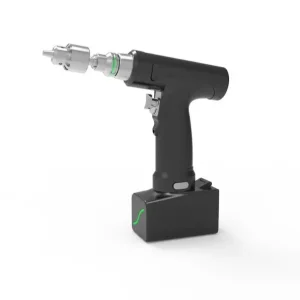



Request technical specifications, MDR compliance documentation dossiers, or initiate custom diameter trephine prototyping with our engineering team. Rapid evaluation samples dispatched globally within 48 hours.
