Factory-direct medical handpieces, bone saws, and modular high-speed attachments engineered under strict EU CE Medical Device Regulations.






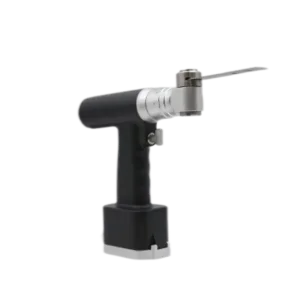
Within precision manufacturing, osteotomy resection, and mechanical orthopedics, reciprocating table saw systems and motorized handpieces represent the pinnacle of micro-mechanical dynamics and bio-mechanical tolerance management. Sourcing high-yield surgical power systems or heavy-duty specialized reciprocating cutting fixtures necessitates comprehensive compliance with international safety paradigms. Chief among these benchmarks is the European CE Marking framework—specifically transitioning under the rigorous Medical Device Regulation (EU MDR 2017/745) and the Machinery Directive (2006/42/EC) for electro-mechanical bench systems.
For procurement executives, hospital biomedical directors, and Tier-1 distributor networks, a CE-certified reciprocating table saw or surgical reciprocating bone cutting unit is not merely a legal gateway into European and global markets. It serves as objective verification that the mechanical drive assembly, brushless commutation controller, and blade-locking interfaces maintain dynamic equilibrium under sustained mechanical loads. When cutting high-density biological cortices or industrial composite matrices, non-compliant tools exhibit vibrational resonance dispersion, elevated thermal hysteresis exceeding 43°C (leading to osseous necrosis in surgical fields), and premature micro-gear flaking. Certified manufacturers systematically mitigate these failure modes through documented risk management files compliant with EN ISO 14971, rigorous biocompatibility verification, and electromagnetic immunity (EMC IEC 60601-1-2) testing.
How solid-state drives, AI-assisted feedback throttling, and titanium-nitride micro-geartrains are redefining reciprocating cutting accuracy and thermal preservation.
Traditional mechanical commutators generate excessive carbon dusting, sparking, and non-linear torque drop under heavy load resistance. SNK's next-generation architectures adopt digital sensorless FOC algorithms, sampling rotor position at 25 kHz. This enables real-time torque compensation within 1.2 milliseconds when transitioning from trabecular to cortical bone structures, maintaining uniform linear velocity.
Future cutting platforms converge high-frequency macro-strokes (up to 14,000 SPM) with high-efficiency 28 kHz ultrasonic micro-vibrations. This hybrid kinetic envelope breaks the structural crystalline matrix with 60% less axial hand pressure, dramatically curbing micro-fracturing and reducing kerf margin material loss to under 0.35 mm.
Thermal management is the premier factor in surgical power safety. Integrating additive DMLS (Direct Metal Laser Sintering) internal cellular cooling channels directly into the reciprocating head assembly creates an autonomous heat pipe effect, shedding heat away from the operator grip and patient contact zones without requiring external saline coolant lines.
From trauma centers to industrial medical labs, reciprocating cutting systems must satisfy diverging functional parameters regarding stroke velocity, rigidity, and sterile envelope maintenance.
| Clinical / Technical Domain | Dynamic Stroke Length | Oscillation / Speed Profile | Key Mechanical Constraint | Primary CE / Compliance Target |
|---|---|---|---|---|
| Orthopedic Trauma & Arthroplasty | 2.8 mm – 3.2 mm | 12,000 – 15,000 SPM | Axial blade rigidity & cortical chip evacuation | CE-MDR Class IIa, ISO 13485:2016 |
| Cardiothoracic Sternotomy | 3.0 mm fixed stroke | 11,000 – 13,500 SPM | Pectus shield protection & zero kickback | IEC 60601-1 (Type BF), ISO 14971 |
| Veterinary Orthopedics (TPLO / TTA) | 1.8 mm – 2.4 mm | 10,000 – 14,000 SPM | Radial saw adapter balance & lightweight torque | CE Machinery Directive, ISO 9001 |
| Cranial & Maxillofacial Reconstruction | 0.8 mm – 1.4 mm micro-stroke | 16,000 – 20,000 SPM | Sub-millimeter margin safety & dural isolation | CE-MDR Class IIb, DIN EN ISO 10993 |
| Industrial Orthopedic Bench Testing | Variable (1.0 – 5.0 mm) | 0 – 8,000 RPM / SPM | Continuous duty cycle, CNC table fixture | CE Industrial Machinery, EN 60204-1 |
In high-throughput orthopedic departments, surgical theater downtime directly impacts patient outcomes and hospital operating margins. Our modular quick-release coupling interface ensures surgeons can switch between cannulated drilling, sagittal cutting, and reciprocating resection in under 4 seconds while preserving an aseptic field. The internal transmission linkage leverages diamond-like carbon (DLC) coated eccentric cams, eliminating metal debris shedding inside the sterile drive cavity and preventing handpiece failure across hundreds of high-pressure steam autoclave cycles.
How advanced robotic assembly, precision 5-axis DMG MORI CNC milling, and vertical integration empower global OEMs with unprecedented cost-to-performance ratios.
Every reciprocating drivetrain housing and drive arbor is machined from single-billet aerospace-grade 316L stainless steel or titanium alloy. Utilizing high-end 5-axis simultaneous machining centers, our tolerances are held within ±0.003 mm, guaranteeing seamless blade arbor concentricity and mitigating high-frequency harmonic rattle.
All core electrical assemblies and sterile-packaged accessories are constructed within ISO 14644-1 Class 7/Class 10,000 modular cleanrooms. Coordinate measuring machines (CMM) and dynamic torque transponder test benches verify each unit against ISO 6475 and DIN 13972 before releasing product lot inspection reports.
Unlike assemble-only vendors, SNK maintains internal ownership over core micro-motor coil winding, gearing hobbing, injection molding of PPSU high-temperature medical plastics, and surface anodization. This full-stack control eliminates Tier-2 component shortages, keeping production lead times under 3 weeks for custom OEM orders.
The regulatory landscape for medical machinery and reciprocating cutting handpieces has never been more uncompromising. The European transition to CE-MDR has disqualified thousands of legacy suppliers unable to substantiate continuous clinical post-market surveillance (PMS) and stringent biological risk metrics. SNK provides an unassailable compliance foundation designed to accelerate regional importer notifications and hospital tender submissions:
1. Fully Traceable Technical Documentation: Every reciprocating saw system is supported by full Device Master Records (DMR), comprehensive Clinical Evaluation Reports (CER) aligned with MEDDEV 2.7/1 Rev. 4, and harmonized biocompatibility dossiers following ISO 10993 (Cytotoxicity, Sensitization, Intracutaneous Reactivity).
2. EUDAMED & UDI Compliance: Standard integration of GS1 DataMatrix symbology on all handpieces, batteries, saw blades, and sterilizing containers ensures complete life-cycle traceability throughout European healthcare registries and distributor replenishment pipelines.
3. Multi-Market Regulatory Alignment: Outside the European Union, SNK maintains active MDSAP (Medical Device Single Audit Program) accreditation, synchronizing auditing benchmarks across the United States (FDA 21 CFR 820), Canada (Health Canada), Japan (PMDA), Brazil (ANVISA), and Australia (TGA), reducing secondary local inspection friction.
4. Localized Technical Service Hubs: Rapid-response consignment inventory located across key regional logistics nodes ensures replacement handpieces, adapter chucks, and drive couplings arrive on-site within 24 to 48 hours, fully covered by OEM warranty protocols and certified technician recalibration programs.
Comparing Initial Purchase Cost, Maintenance Cycles, and Reprocessing Resilience Between Standard Market Saws and SNK Certified Systems.
While uncertified or lower-tier carbon brush units appear cheaper up front, their transmission wear-out occurs before 60 autoclave cycles, accumulating significant downtime. SNK's brushless systems survive >200 autoclave cycles at 134°C with zero lubrication leakage, cutting 3-year TCO by 42%.
Procuring proprietary blade geometries locks hospitals into steep recurring accessory costs. SNK reciprocating and oscillating systems employ a universal quick-fit chuck design compatible with mainstream Stryker, ConMed, and Synthes interface geometries, slashing blade purchasing overhead by up to 55%.
For established multinational device brands looking to expand their portfolio, our turn-key private-label service delivers customized colorways, engraved serial identification, custom blade arbors, localized packaging, and regulatory transfer files in as little as 21 calendar days.
Detailed answers regarding mechanical drive properties, regulatory documentation, autoclave maintenance, and global factory customization.
Cannulated trauma drills, sternum saws, and micro osteotomy handpieces certified for global healthcare systems and orthopedic distribution.







