

Certified Class IIa/IIb high-performance platforms designed for intramedullary nailing, K-wire insertion, and trauma reconstruction.


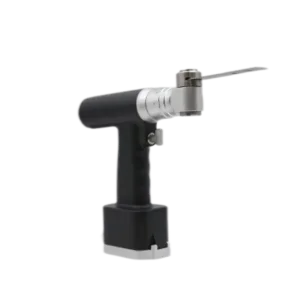



In modern orthopedic reconstructive and trauma procedures, the rotational kinematics of cannulated drills represent a delicate balance between mechanical osteotomy efficiency and thermal tissue preservation. Traditional high-speed bone drills operating above 1,500 RPM generate rapid cortical friction that frequently exceeds the critical threshold of 47°C—the widely recognized biological trigger for osteocyte necrosis and delayed bone remodeling.
The medium-speed operating envelope (specifically 650 to 1,000 RPM) engineered into brushless cannulated platforms optimizes chip evacuation along fluted Kirschner wires while maintaining continuous interface heat beneath osteolytic margins, eliminating deep structural micro-fractures during cortical perforation.
Micro-machining tolerances along the longitudinal cannulation canal guarantee an axial concentricity tolerance within ±0.02 mm. This mechanical precision prevents guide pin deflection during high-density diaphyseal drilling, substantially lowering the incidence of intraoperative K-wire shearing.
Digital vector control circuitry continuously samples motor load impedance at microsecond intervals. When transitioning between softer trabecular cancellous bone and hard cortical layers, drive torque automatically scales up to 16-20 N·m without stalling or inducing handpiece rotational recoil.
Analysis of global procurement patterns across the EU, North America, APAC, and emerging Latin American markets reveals a rapid structural pivot away from proprietary, single-use closed ecosystems toward modular, cross-compatible Class II power tool suites. Tier-1 hospital networks and medical device distributors demand resilient, high-duty platforms that offer measurable Total Cost of Ownership (TCO) efficiency.
| Procurement Pillar | Legacy Western Multinationals | Tier-3 Local Assemblers | SNK Industry 4.0 China Platform |
|---|---|---|---|
| Motor Technology | Brushless (High initial CAPEX) | Brushed Carbon (High thermal wear) | Next-Gen Vector Brushless & High-Torque Carbon |
| Sterilization Resiliency | 100 Steam Cycles Validation | < 50 Cycles (Sealing degradation) | > 200 Cycles Autoclave & Plasma (<0.03mm drift) |
| Regulatory Readiness | CE-MDR / FDA / MDSAP | Incomplete Local Filings | Full CE-MDR (EU) 2017/745, ISO 13485, 21 Free Sale Certs |
| OEM Tooling Lead Times | 12 - 24 Weeks | Unpredictable / Non-ISO | Rapid 3-Week Prototyping & Pilot Manufacturing |
| Logistics Buffer | High Component Backorders | Zero Buffer Inventory | 200+ Standby Units; ≤24h APAC / ≤48h EU Dispatch |
Based in Shanghai’s advanced bio-industrial manufacturing cluster, Snaikang (SNK) leverages a vertically integrated smart manufacturing architecture designed to eliminate global supply chain fragility. By integrating CNC Swiss multi-axis machining, automated cleanroom assembly lines, and proprietary dyno-testing benches under a single ISO 13485:2016 framework, SNK achieves unmatched quality consistency and rapid volume scalability.
Intelligent robotic assembly cells maintain continuous, repeatable torque calibration, resulting in an industry-leading post-market adverse event rate below 0.03 ppm across large-volume production batches.
Every medium-speed cannulated drill handpiece undergoes dynamic concentricity, rotational thermal monitoring, and continuous load fatigue assays according to ISO 6475 and DIN 13972 verification standards.
Annual industrial output exceeds 38,000 surgical power systems, supported by localized tier-1 raw metallurgical sourcing that insulates global OEM buyers from geopolitical supply chain bottlenecks.
From custom gear ratios (500 to 15,000 RPM) to bespoke anodized ergonomics, custom chuck adapters, and branded packaging, turnkey distributor configurations transition from CAD to market ready in 3 weeks.
Medium-speed cannulated orthopedic drills provide specialized mechanics across diverse trauma, sports medicine, joint reconstruction, and veterinary surgical workflows.
In closed femur and tibia fracture stabilization, the cannulated drill slides seamlessly over 2.0 mm to 3.2 mm guide wires. The controlled medium-speed rotation (850 RPM) allows smooth reamer advancement, preventing cortical perforation and guide-pin binding inside sclerotic intramedullary canals.
During total hip arthroplasty (THA) and total knee arthroplasty (TKA), the drill's versatile quick-coupling chuck interfaces with acetabular reamer heads. Low heat accumulation preserves critical subchondral bone structures, accelerating long-term cementless implant osseointegration.
High surgical versatility makes these systems ideal for veterinary orthopedic procedures (TPLO, TTA) and corrective osteotomies, delivering stable torque dynamics across varied cortical bone densities without requiring bulky external control consoles.
Direct technical and regulatory guidance for biomedical engineers, hospital procurement committees, and medical equipment distributors.
Precision-engineered attachments and reamers built for high-demand trauma centers, neurosurgery, and total joint arthroplasty.






