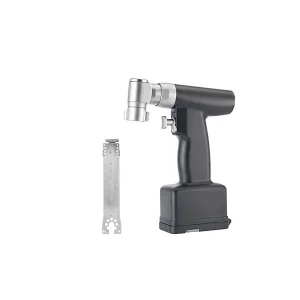
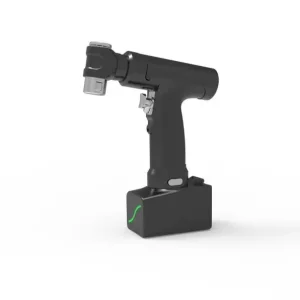
High-frequency mechanical assemblies, surgical adapters, and rapid cutting drive units built for rigorous performance criteria.
Analyzing precision reciprocating mechanics, thermal dissipation curves, and mechanical endurance in rigorous OEM/ODM manufacturing environments.
Modern commercial and surgical saws utilize closed-loop brushless architecture that limits friction, minimizes heat transference below critical physiological thresholds (<41°C), and operates maintenance-free across sustained high-stress duty cycles.
Integrated hardened metallurgical alloy drivetrains reduce axial backlash to under 0.03 mm. This preserves cut accuracy, prevents blade wandering in deep resection channels, and significantly dampens operational vibration transmitted to operators.
Precision o-ring architectures and hermetic driver encapsulation facilitate repeated high-pressure autoclave and industrial fluid sterilization routines exceeding 200 consecutive cycles without structural lubrication failure.
Quick-charge Li-ion energy systems communicate directly with onboard power distribution ICs, stabilizing torque under escalating blade load to eliminate stalling when cutting dense cortical structures or reinforced polymers.
Vertical integration from raw alloy smelting to automated robotic assembly lines delivers unprecedented cost efficiencies without compromising engineering tolerances.
Located in specialized industrial clusters like Shanghai and Jiangsu, Tier-1 manufacturing facilities secure high-grade CNC machining, surface passivation, micro-motor winding, and electronic PCB controllers within a 50 km logistics radius.
Automated 5-axis CNC work centers and ISO 14644-1 Class 7 cleanrooms eliminate human handling errors. Annual facilities scale to 38,000 complete assemblies while maintaining adverse operational failure rates below 0.03 ppm.
While traditional European toolmakers operate on 8-to-12-week design prototyping sprints, agile Chinese manufacturing hubs complete full custom adapter prototypes, motor reprogramming, and branding changes in roughly 3 weeks.
Procurement directors and hospital distributors utilize structured benchmarks to determine total cost of ownership (TCO) across powered hand tools.
Procuring single-purpose power tools leads to capital bloat. Global buyers prioritize modular universal drive handpieces that accept reciprocating, oscillating, cannulated drill, and cranial burr adapters on a single battery architecture.
Hardware quality alone cannot pass port clearance. Auditable sourcing demands full traceability, inclusive of ISO 13485:2016 declarations, CE-MDR conformity dossiers, Rohs/REACH chemical reports, and EUDAMED safety entries.
Handpiece longevity is dictated by thermal dissipation. Industrial evaluators monitor operating surface heat after 15 minutes of uninterrupted high-load reciprocating oscillation, requiring skin-contact surfaces to stay below 43°C.
Unscheduled machine downtime halts operating theaters and construction sites alike. Procurement criteria enforce local buffer storage guarantees, requiring suppliers to ship standard adapters and spare components within 24–48 hours.
Navigating global trade mandates with certified regulatory frameworks for European, North American, and Asia-Pacific markets.
All surgical-grade reciprocating saws undergo full Technical Documentation audits conforming to European Medical Device Regulation requirements, including comprehensive post-market surveillance protocols and clinical evaluations.
Manufacturing facilities implement Medical Device Single Audit Program (MDSAP) procedures, unifying quality management across regulatory bodies in Australia, Brazil, Canada, Japan, and the United States under a singular quality standard.
Export clearance is accelerated via existing legal filings across 21 sovereign ministries of health, accompanied by localized IFUs (Instructions for Use) in English, German, French, Spanish, and Portuguese.
From trauma operating theaters to precision industrial rework benches, reciprocating tools solve demanding cutting challenges.
Designed for rapid, controlled osteotomies, femoral shaft resection, and joint replacement procedures where directional cut integrity and surrounding soft-tissue clearance are paramount to patient recovery metrics.
High-frequency reciprocating saw systems paired with protective guard guides provide rapid, reliable sternum bisection in median emergency cardiothoracic procedures, mitigating tissue tearing and blade deflection.
Durable carbon-motor reciprocating systems offer a cost-effective, high-torque alternative for veterinary medical centers managing high volumes of canine tibial plateau leveling osteotomies (TPLO) and fracture repairs.
Micro-reciprocating configurations are widely used by industrial research facilities for composite material sampling, precision pipe bisecting, and clean deburring within tight mechanical enclosures.
Technological shifts revolutionizing power delivery, wireless telemetry, and surgical robotic navigation over the coming decade.
Next-generation reciprocating platforms will feature Bluetooth Low Energy (BLE) microcontrollers reporting motor current draw, total run hours, sterilization cycle counts, and bearing wear patterns directly to hospital asset management networks.
Precision tools are integrating optical tracking arrays and electromagnetic positioning sensors directly into the handpiece casing, synchronizing cut paths in real-time with digital surgical stereotactic navigation displays.
Moving beyond machined aircraft aluminum, cutting-edge manufacturers are integrating carbon-fiber PEEK matrices to decrease operational tool weight by 35%, cutting down hand surgeon fatigue during protracted, multi-hour osteotomies.
Clear answers to technical, commercial, and regulatory questions submitted by distributor sourcing panels.
Brushless motors use electronic switching rather than mechanical brushes. This eliminates wear particles, reduces operating temperature under load, stabilizes torque, and provides longevity across repeated autoclave sterilization. Carbon-brush motors have a simpler drive design and a lower cost, which makes them practical for budget-sensitive tenders, veterinary clinics, and secondary hospital systems.
The product portfolio complies with the European Union Medical Device Regulation CE-MDR (EU) 2017/745 for Class I, IIa, and IIb medical systems, with full EUDAMED registration data. Facilities are certified under ISO 13485:2016 and MDSAP, alongside registered Free Sale Certificates across 21 sovereign target jurisdictions.
Yes. Handpieces and blade chuck assemblies undergo verification for both steam (autoclave at 134°C) and Ethylene Oxide (EO) protocols. Internal drive shafts maintain a runout transmission deviation below 0.03 mm following 200 consecutive autoclave rounds, and are also fully compatible with low-temperature hydrogen peroxide plasma processes.
Complete custom adaptations—including speed reprogramming (500 to 15,000 rpm), specialized torque limits, custom chuck couplings, custom-anodized housing colors, and distributor private labeling—typically ship prototype units within 3 weeks, compared to conventional industry wait times of 8 weeks.
Standard logistics channels process within 48 hours for European distribution points and within 24 hours across the Asia-Pacific territory. More than 200 standby handpiece units and replacement parts are kept in stock for immediate dispatch, while emergency surgical repair kits ship within 24 hours of notice.
Distributors receive full documentation packets, including Declarations of Conformity, certified ISO test summaries, biocompatibility evaluations according to ISO 10993, and pre-formatted local dossier files to accelerate local ministry registrations.
Precision micro-oscillating saws, acetabular drills, and modular attachments engineered for institutional surgical reliability.