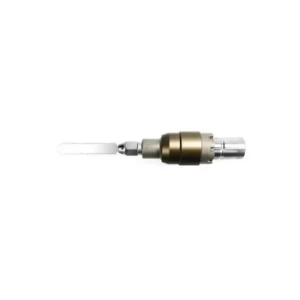
Explore our high-demand surgical handpieces and modular end-effectors certified for clinical precision, minimal thermal output, and high-volume sterilization durability.




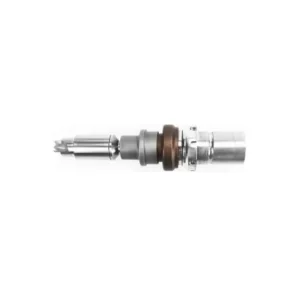


The transformation from pneumatic and legacy brushed DC motors to electronically commutated Brushless DC (BLDC) surgical power systems represents a critical turning point in operating room safety and instrumentation longevity.
Traditional brushed surgical motors rely on mechanical carbon brushes sliding against a rotating commutator. Over repeated operating cycles, mechanical friction produces micro-fine carbon dust that poses contamination risks in clean surgical fields.
Bone tissue exposure to temperatures exceeding 47°C for more than one minute triggers irreversible thermal osteonecrosis, compromising bone grafting and implant osseointegration.
Dense cortical bone in femoral shafts or acetabular reaming causes legacy tools to stall or drop revolutions, resulting in uneven kerfs and blade jamming.
Biomedical procurement teams, GPOs (Group Purchasing Organizations), and medical device distributors evaluate power tools using a multi-dimensional matrix of regulatory compliance, reliability, and lifecycle costs.
With the transition from MDD to EU-MDR (EU) 2017/745, regulatory compliance has become the primary barrier in medical device sourcing. Sourcing teams prioritize validated technical files.
Frequent reprocessing in CSSD (Central Sterile Services Department) exposes handpieces to steam, vacuum shocks, and chemical sterilants that compromise standard seals.
Initial acquisition cost represents less than 30% of total lifecycle investment. Unscheduled downtime and proprietary repair monopolies significantly increase operating overhead.
| Evaluation Parameter | SNK Medical Brushless System | Legacy Brushed Power Tools | Pneumatic Surgical Systems |
|---|---|---|---|
| Commutation Method | Electronic commutation (Zero wear) | Mechanical carbon brush (Friction & dust) | Compressed gas rotor vane |
| Operating Noise Level | <62 dB(A) at 15,000 RPM | 74 - 82 dB(A) with mechanical whine | >85 dB(A) gas discharge turbulence |
| Sterilization Durability | 200+ Steam Autoclave / EO / Plasma Cycles | <80 Cycles before bearing breakdown | Requires regular lubrication & teardown |
| Torque Stability | ±1.5% Closed-loop control | ±6.5% Dependent on brush contact | Unstable, dependent on line pressure |
| CSSD Processing Time | Direct autoclave, no teardown needed | Frequent brush cavity cleaning required | Hose decontamination & drying cycles |
Operating from our advanced Shanghai medical industrial campus, SNK integrates precision multi-axis CNC micromachining, robotic winding, and cleanroom automated assembly under ISO 13485:2016 management systems.
We deploy 16 automated production lines incorporating Swiss-type 5-axis CNC machining centers. This enables monolithic machining of drive shafts, cannulated bores, and eccentric gear heads with sub-micron tolerances.
Quality control is embedded directly into the production workflow via automated coordinate measuring machines (CMM) and dynamic balance analyzers.
SNK shortens development cycles for international brand owners, medical innovators, and regional healthcare distributors through dedicated in-house rapid prototyping.
From complex orthopedic trauma centers in North America to high-volume veterinary orthopedic referral practices in Western Europe, SNK surgical power systems adapt to challenging procedural demands.
Intramedullary nailing and dynamic hip screws require continuous cannulated drilling through dense bone. Our hollow-core handpieces deliver a 16 N·m sustained torque curve.
Total knee arthroplasty (TKA) and total hip arthroplasty (THA) depend on flat, accurate planar cuts and controlled acetabular reaming without overheating adjacent bone.
Minimally invasive transforaminal lumbar interbody fusion (MIS-TLIF) demands low profile handpieces with tight rotational clearances near delicate neural structures.
Cranial opening procedures require quick perforations followed by smooth bone flap resection, with automatic clutch mechanisms protecting the underlying dura mater.
Primary coronary artery bypass and emergency thoracic explorations require rapid longitudinal bisection of the sternum with reliable tissue guards.
Cranial cruciate ligament rupture in canines is widely treated using Tibial Plateau Leveling Osteotomy (TPLO), demanding specialized radial crescent saw blades and high-speed adapters.
Comprehensive engineering, regulatory, and logistics answers for hospital biomedical engineers, distributors, and OEM purchasing managers.
Explore our complete surgical power instrumentation line, including high-torque cannulated drills, cranial attachments, reciprocating saws, and premium blades.